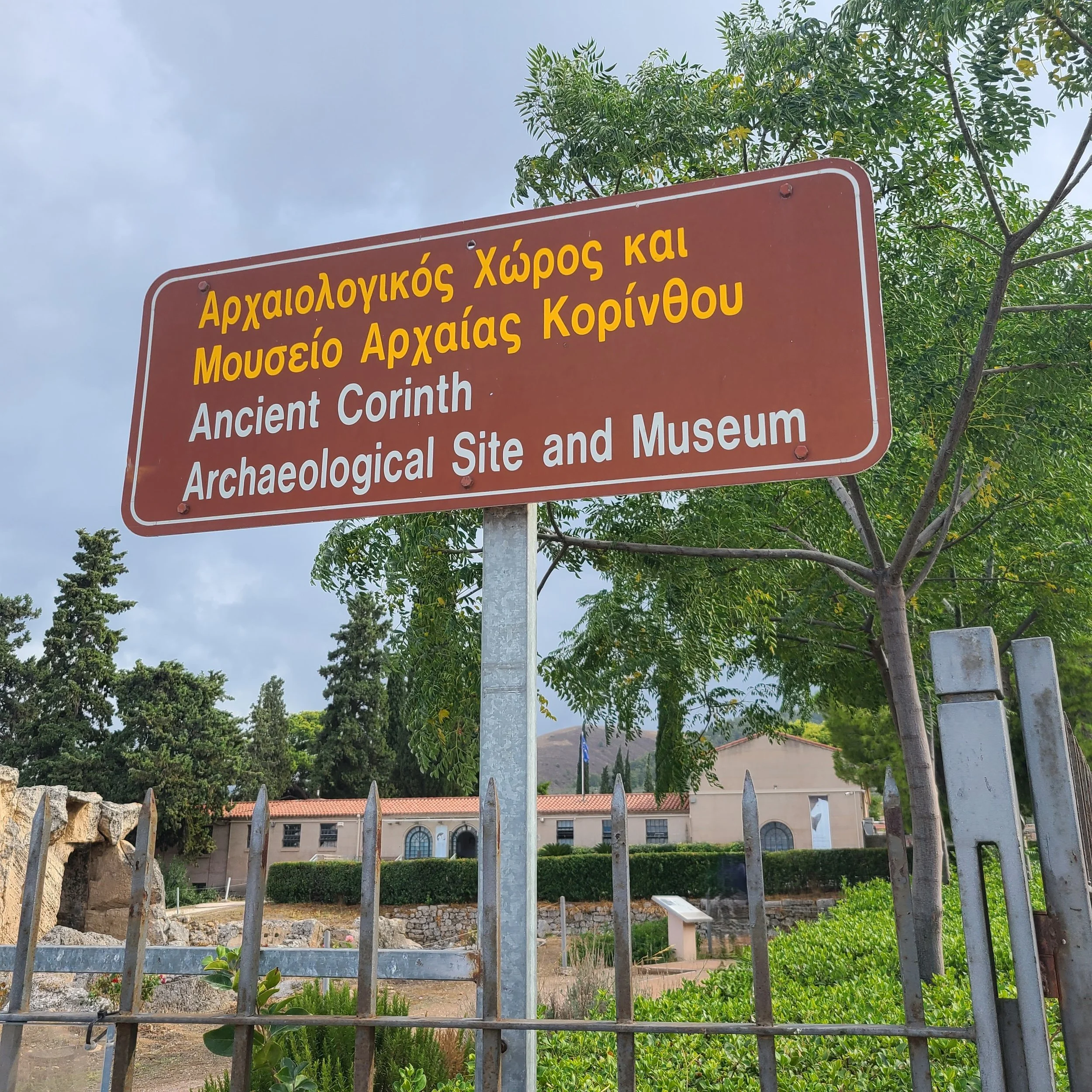
Αρχαία Κόρινθος in Greek
From Athens, we took the bus to Ancient Corinth. Even after all these years, the connections to inter-city transit can be challenging. I’m told however that the train from Corinth goes directly to Larissa Station in Athens, and one can transfer easily to the Metro - or go straight to the airport.
Caroline (who had travelled with me on this trip) had volunteered at the museum of Ancient Corinth back in 2005 and we thought it would be relatively easy to get a temporary membership to stay at the American School of Classical Studies in Athens (ASCSA) at their Corinth base so we reached out to see if they would recognize our membership with the Canadian Institute in Greece (CIG) and the Ministry of Culture passes we had already obtained. It wasn’t that up-front, but the Corinth school welcomed us nevertheless. I would like to personally thank all the staff at Ancient Corinth for their wonderful hospitality.[1]
We met some other lovely scholars there who were also very open about their research and sharing their thoughts with us. I want to send a big thanks to Amelia R. Brown [2], Paul Scotton [3] and Taylor Cwikla [4].
I wanted to come to Ancient Corinth because it is quite a large site, but also because of the Corinth canal.[5] The last time I came to the Peloponnese (2014), I traveled over the canal in the dark. I’m really glad we came here. What an amazing archaeological feat. The ASCSA have been excavating at Corinth since 1896, and work is ongoing. You can see a history of the site here.
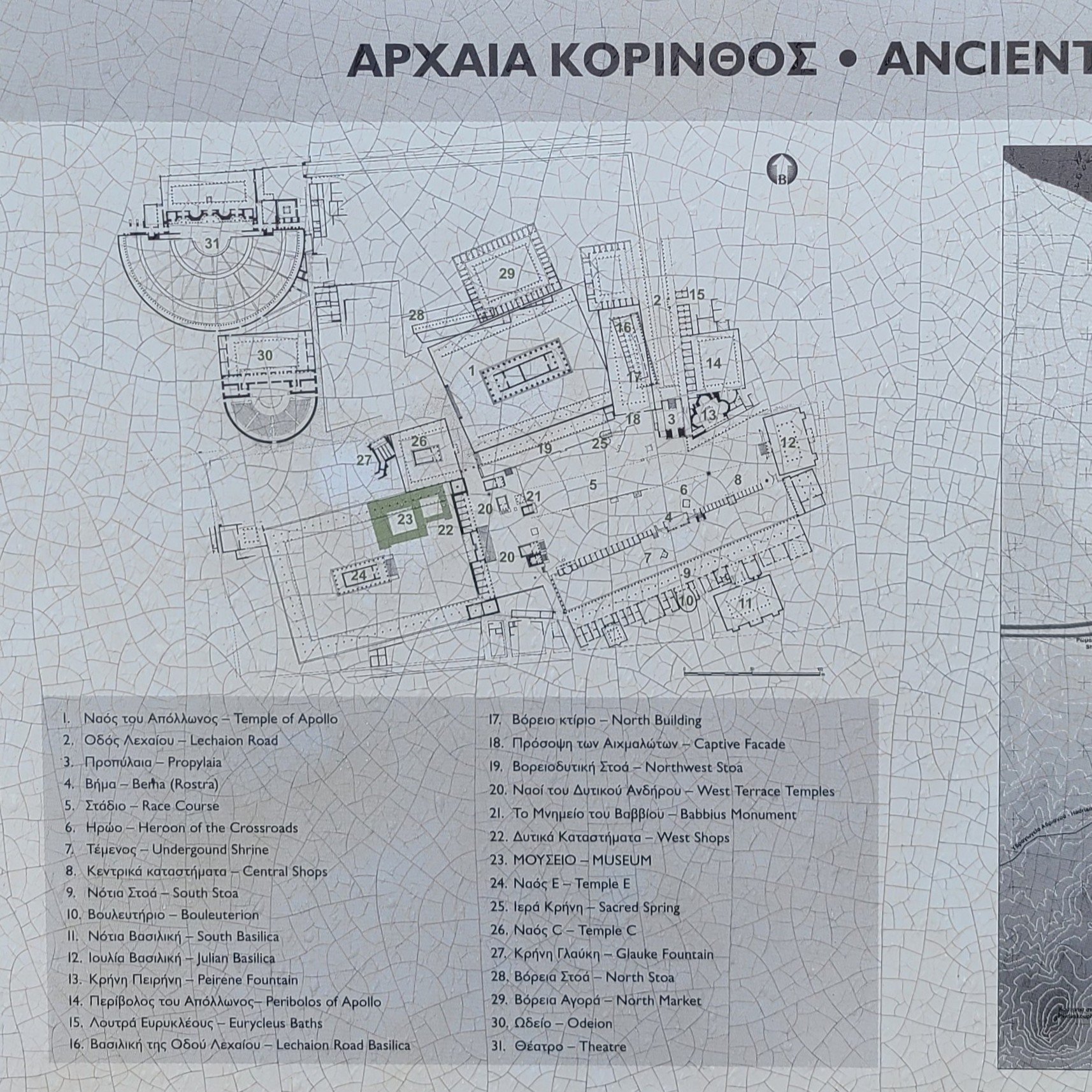
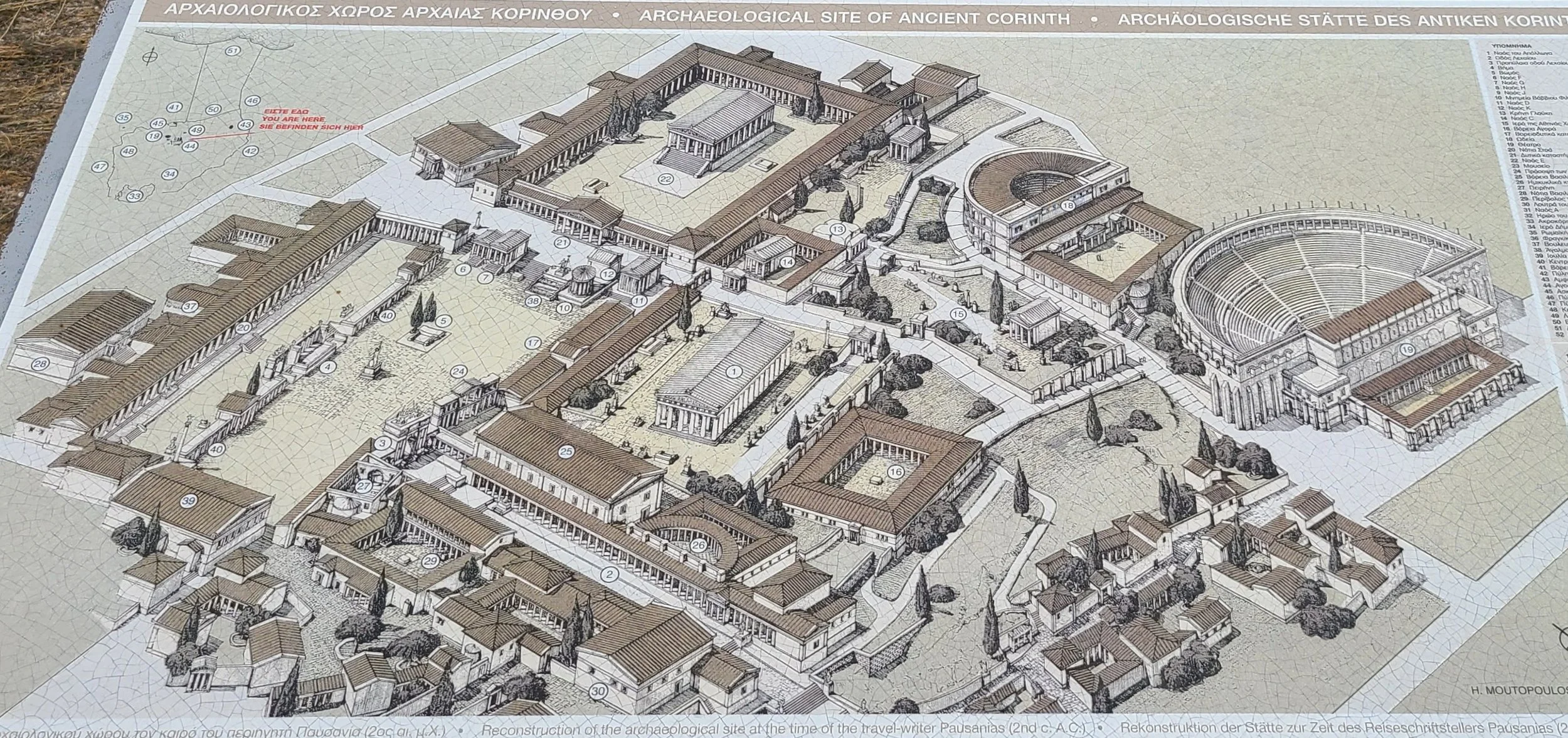
Reconstruction of Ancient Korinthos
The site can be a bit confusing if you aren’t an archaeologist, but the staff are working hard to get up more signage and seem happy to answer questions. Caroline and I did a tour of the site the first day, then reviewed some maps and literature, later we walked around the outside of the site, which allows an overhead view of some of the areas, and then I got a personal tour from Taylor a couple of days later, and she helpfully filled in the gaps that I was having difficulty visualizing on the ground. That last walk happened after a light rain, so some of the blocks had more contrast for photography. Following are images of some (but not all) of the important areas.
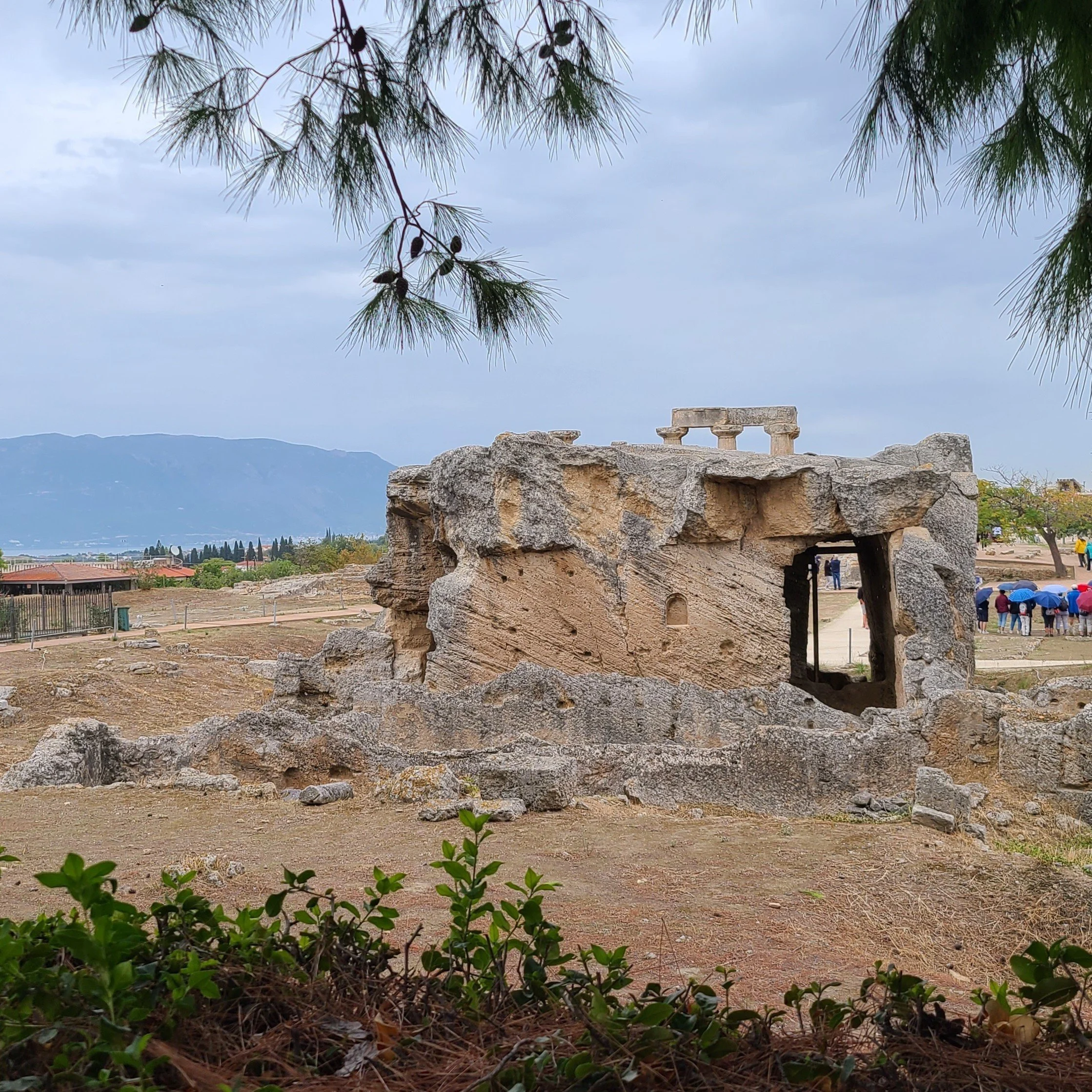
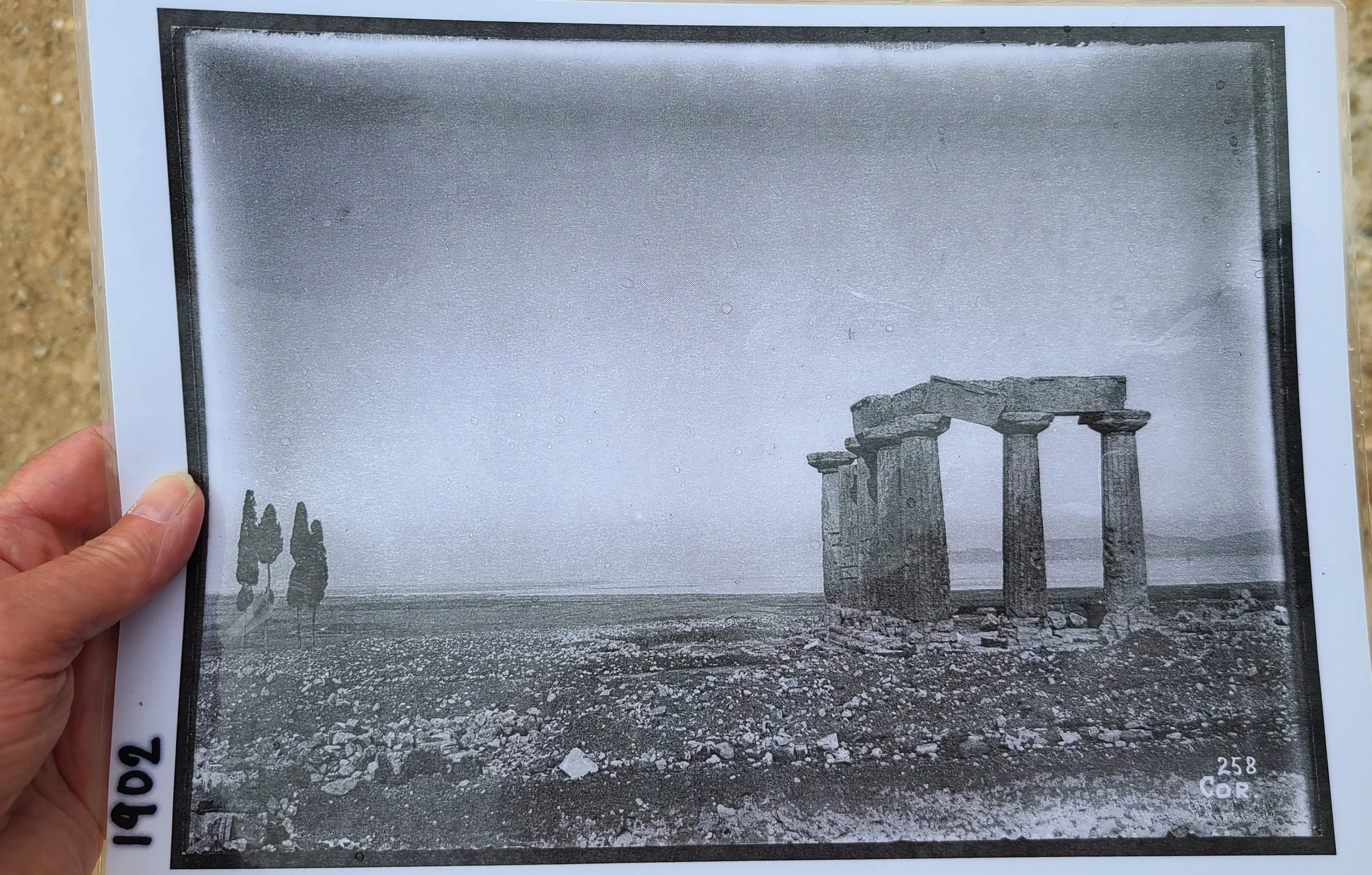
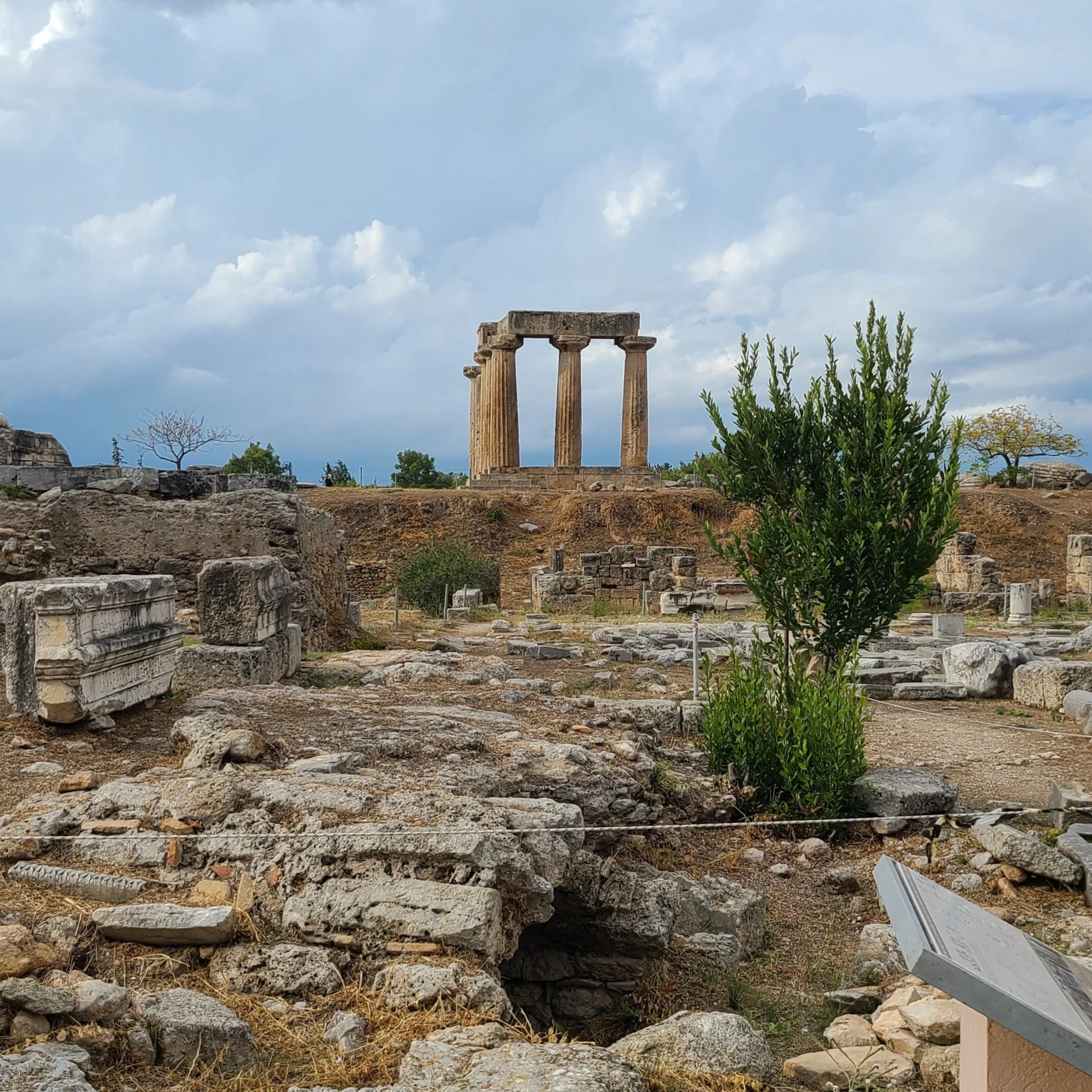
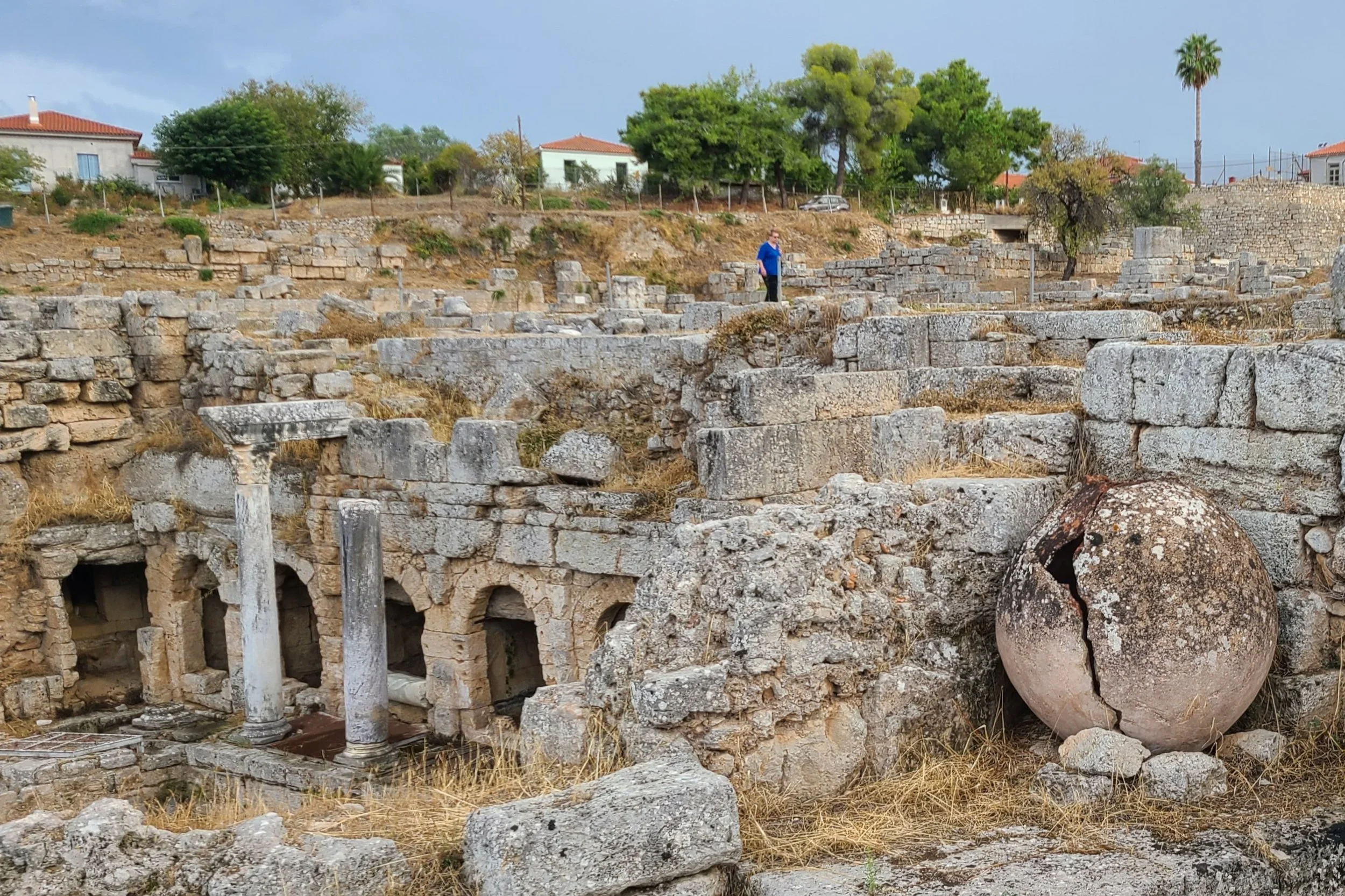
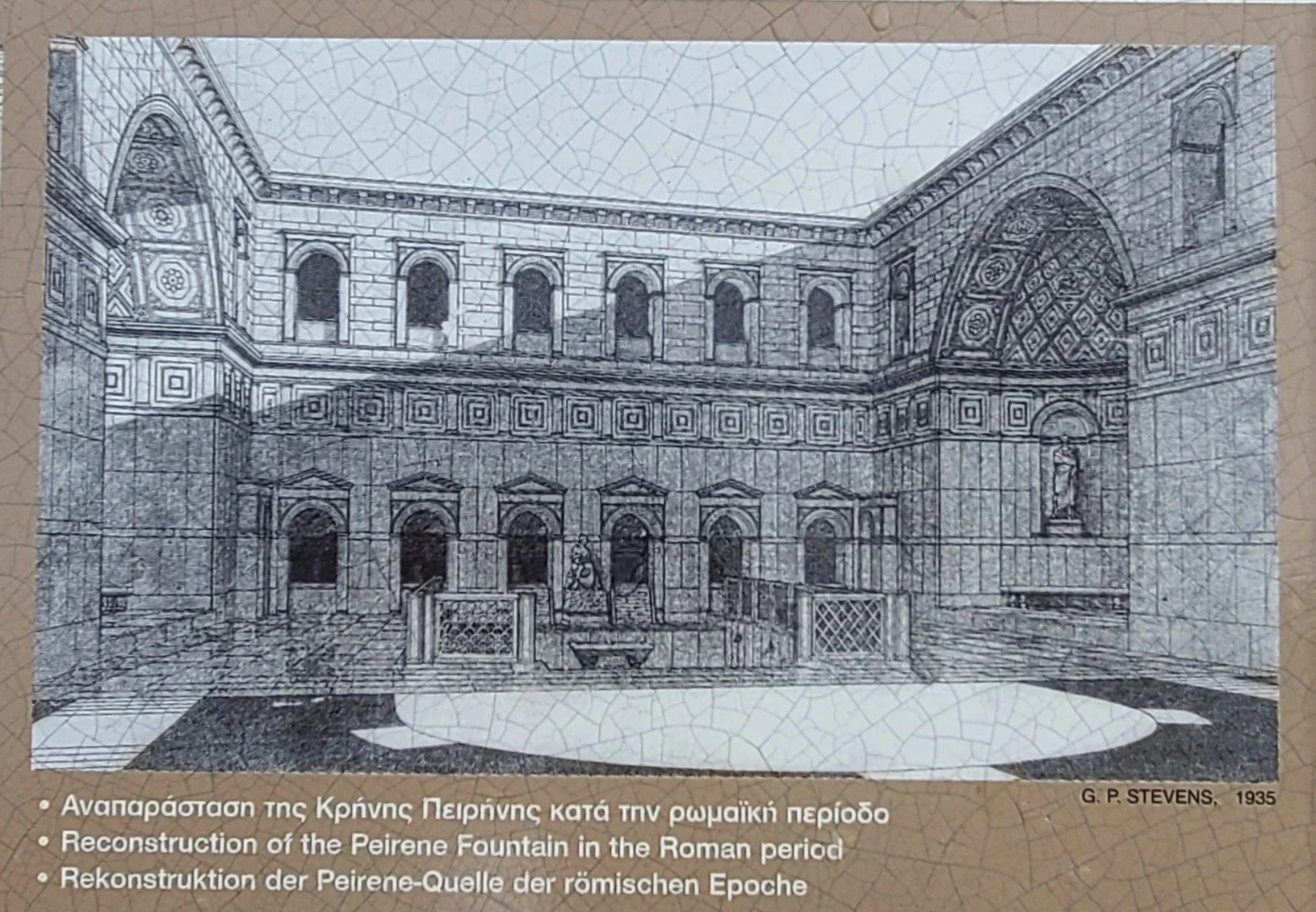
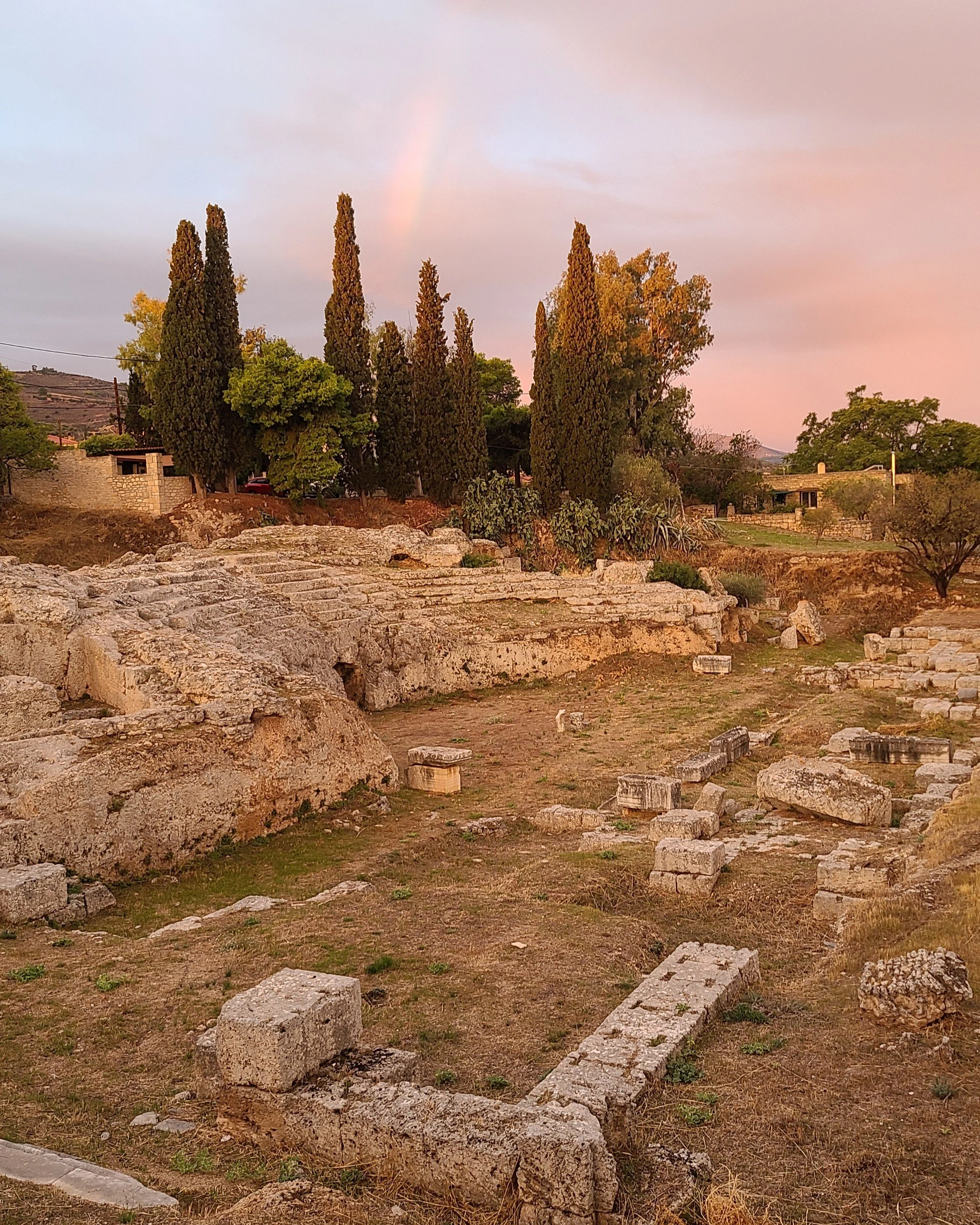
There is a wonderful post about the Peirene Fountain on the Getty website.[6] A description of the phases of construction of the Odeon of Ancient Corinth has been summarized by archaeologist Kissas Konstantinos.

Some really magnificent trees are on the site too! 💚
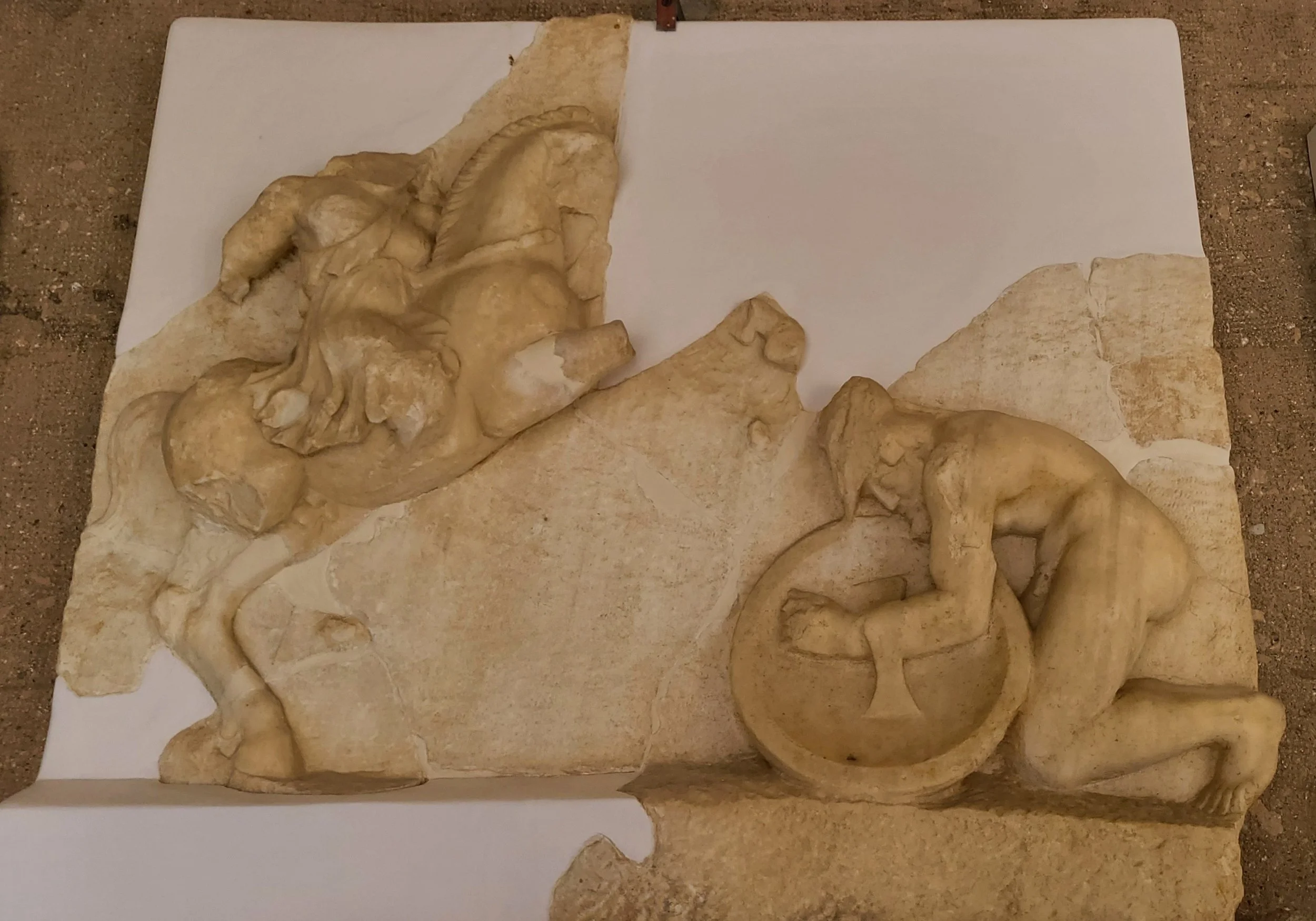
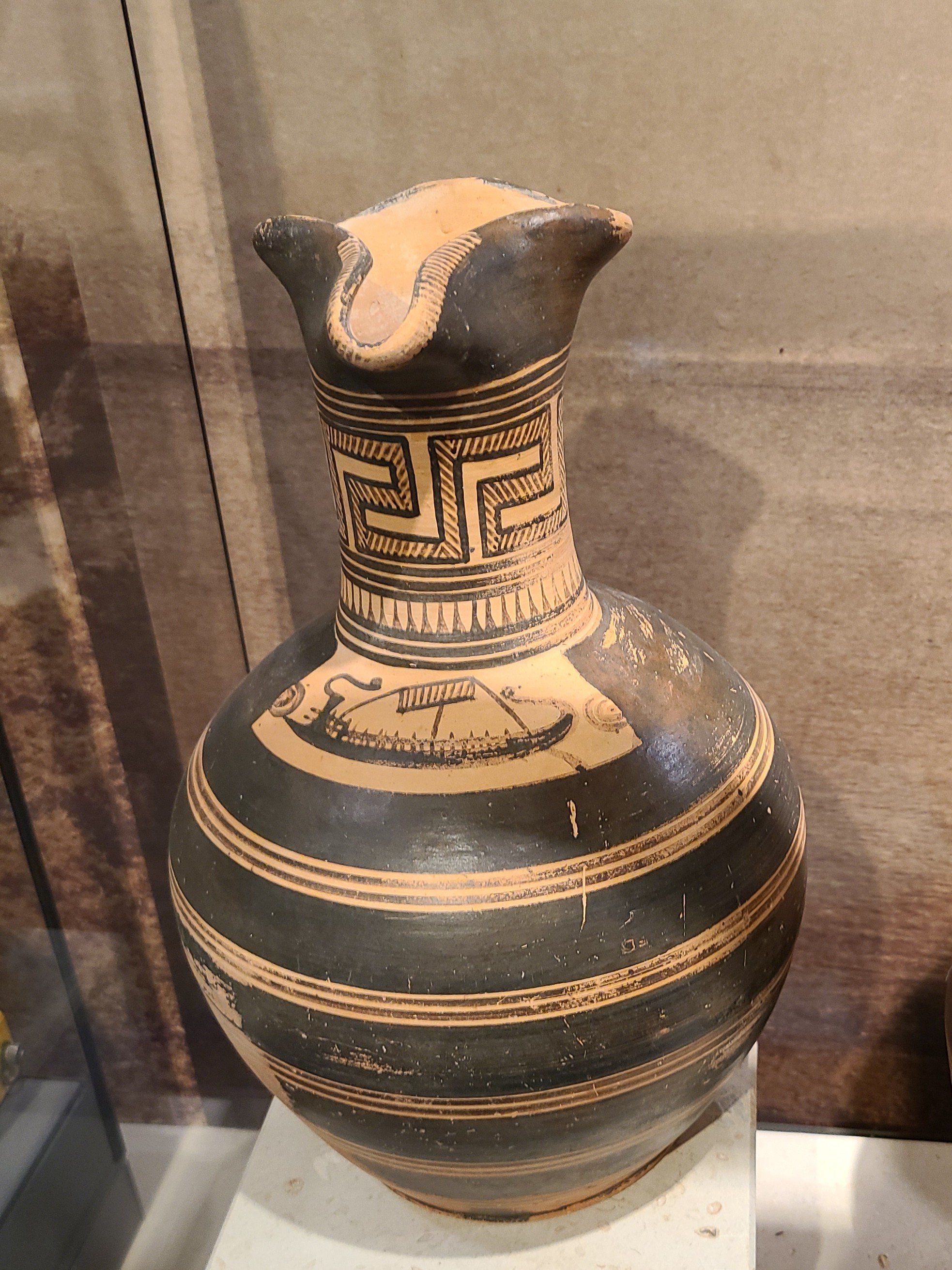
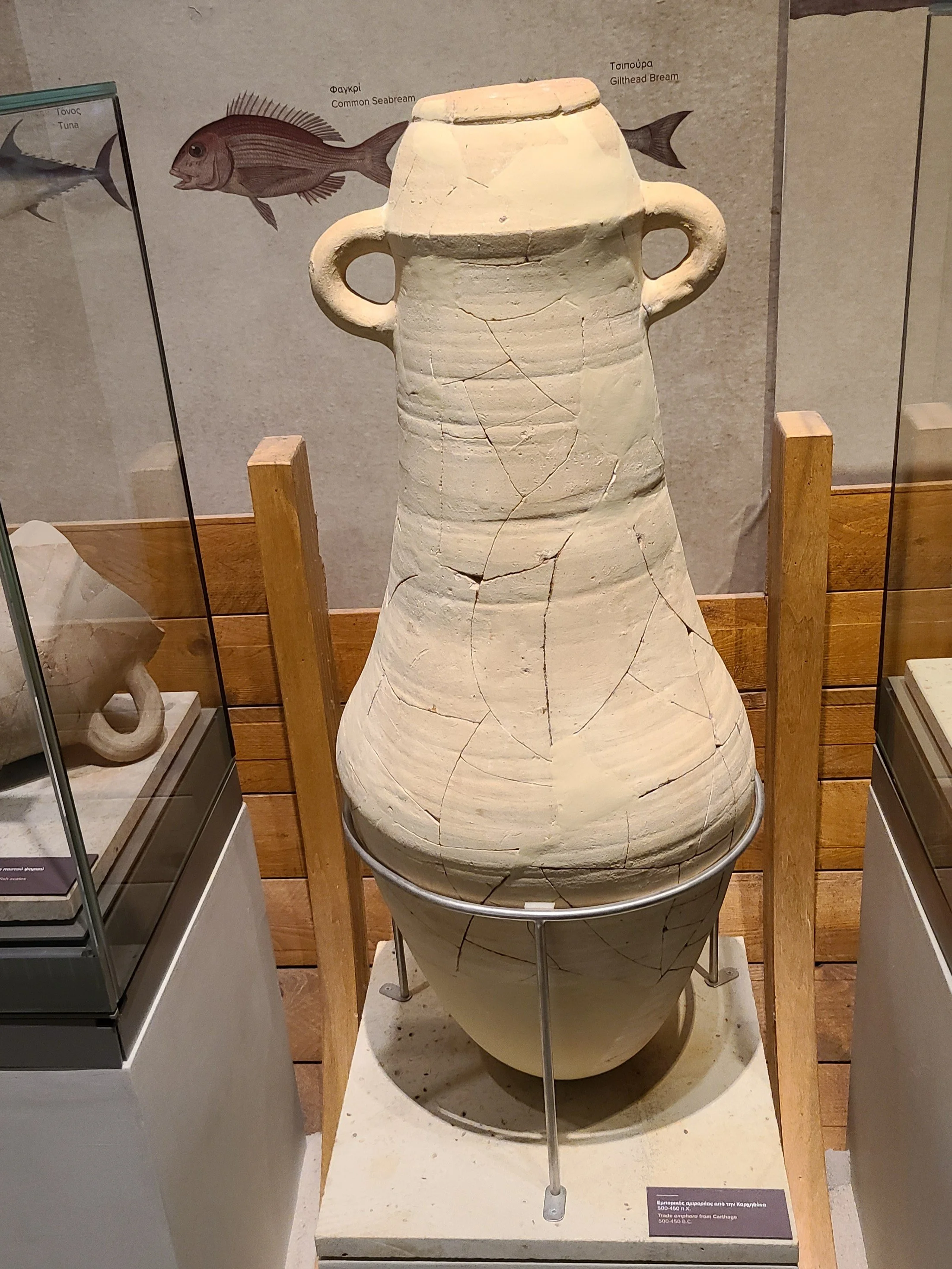
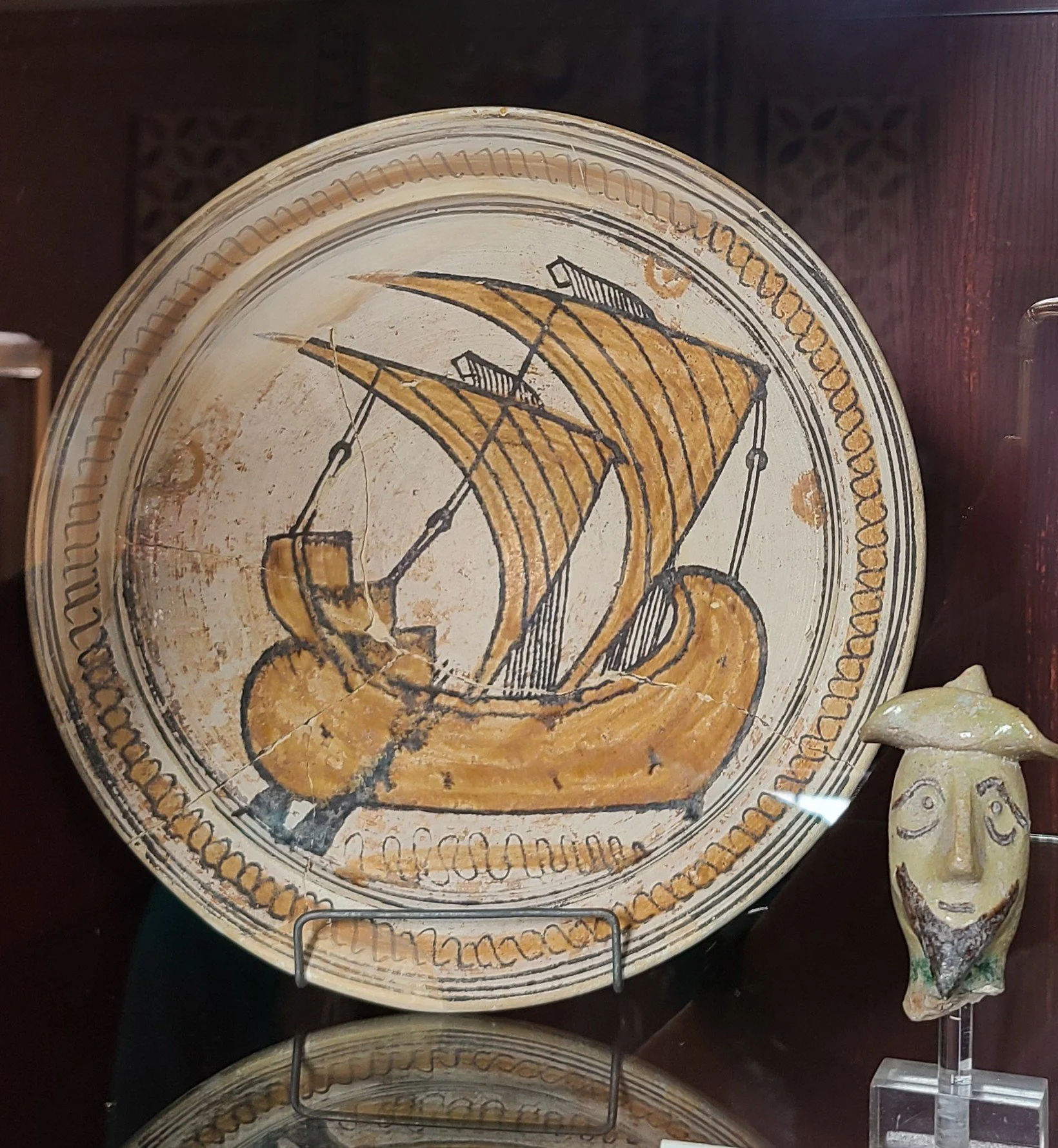
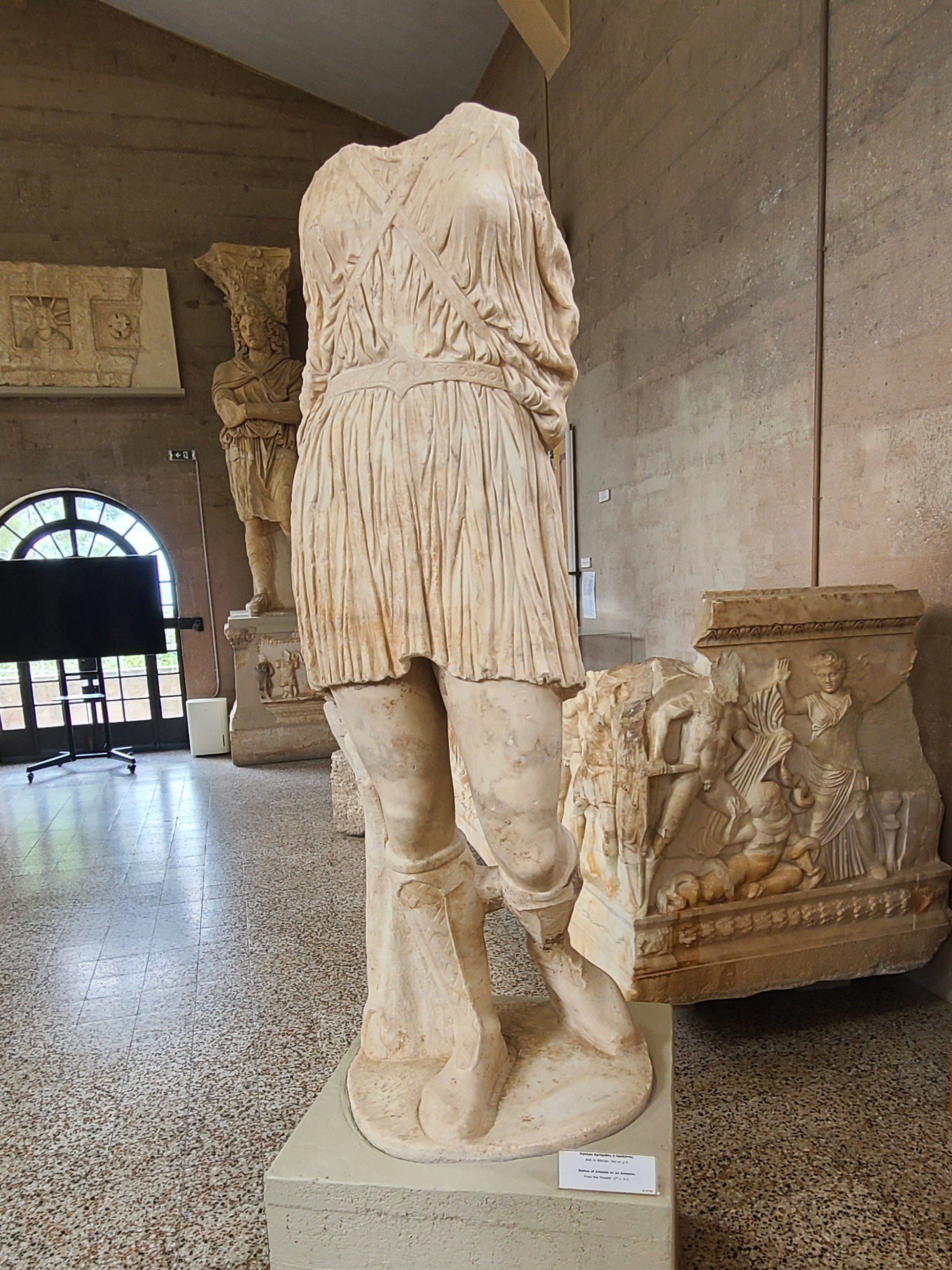
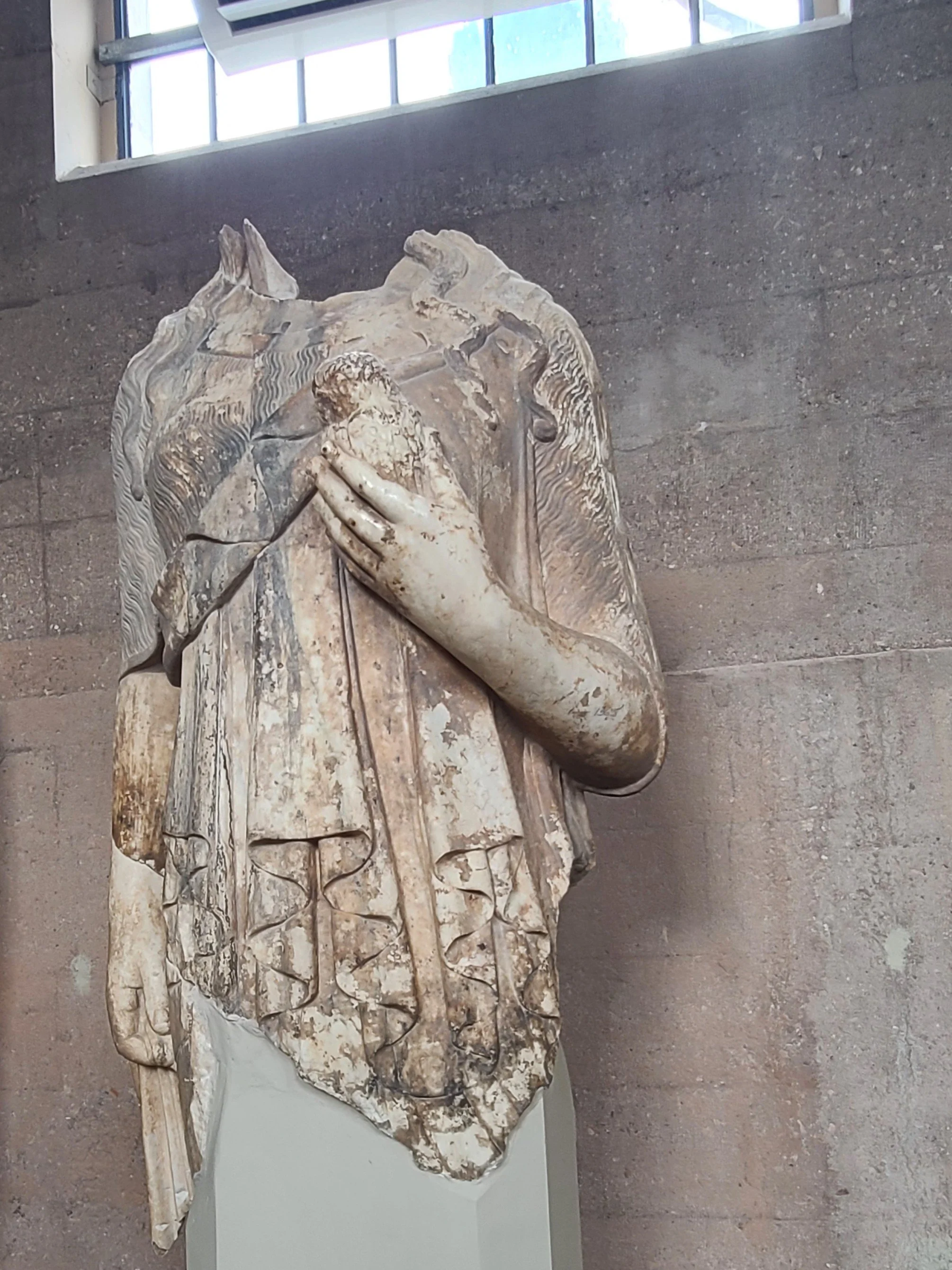
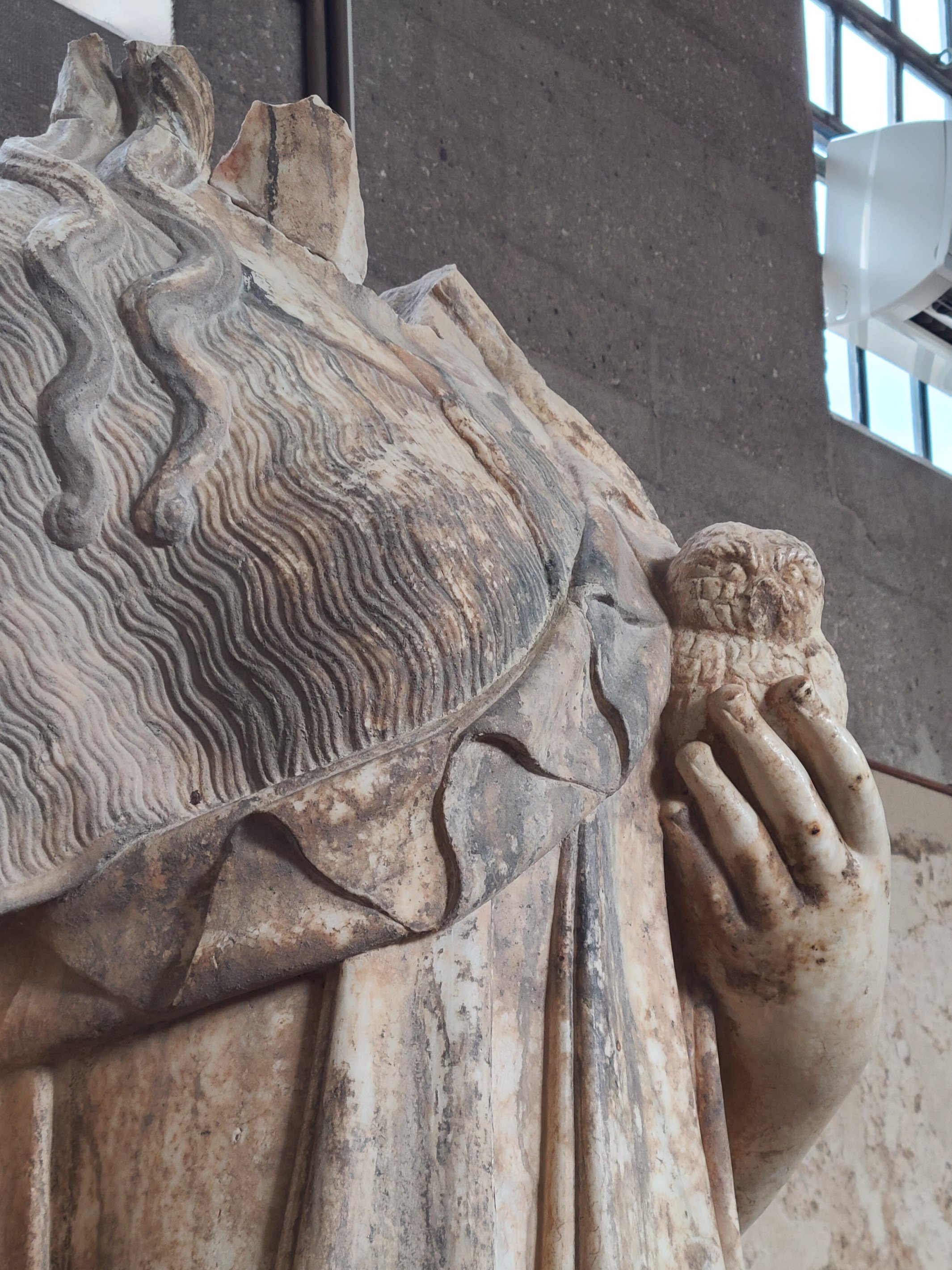
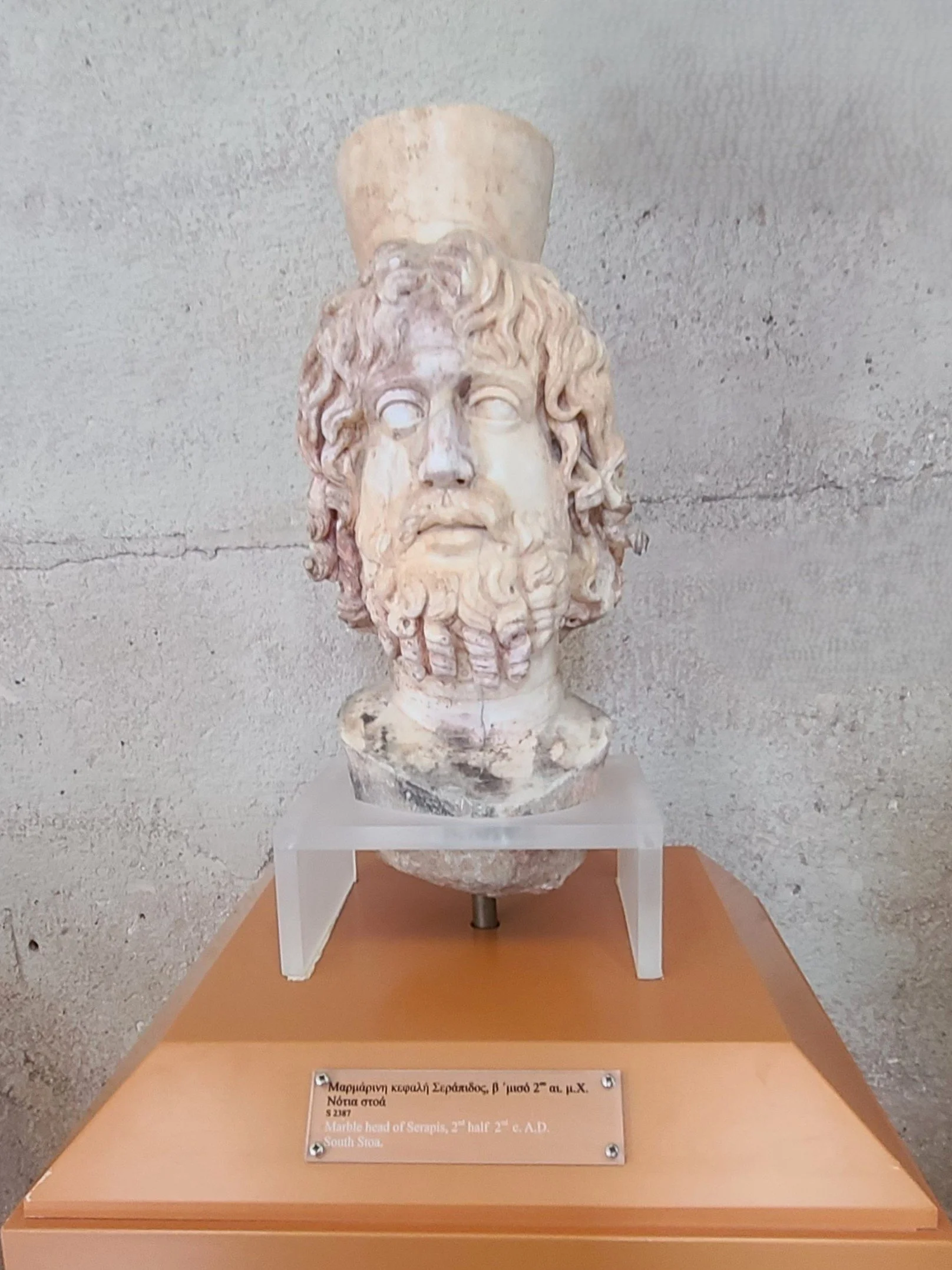
Some of my favourite items from the museum.[7]

One of the most exciting statues I saw was a partial, seated statue of Serapis with Cerberus.[8] I read the description in Corinth - Vol IX (1931) but had not seen the item in the museum gallery. A couple of days later I found it outside, behind the museum. Below is the black and white photos from the publication, and some photos I took. This was clearly a masterpiece of carving.
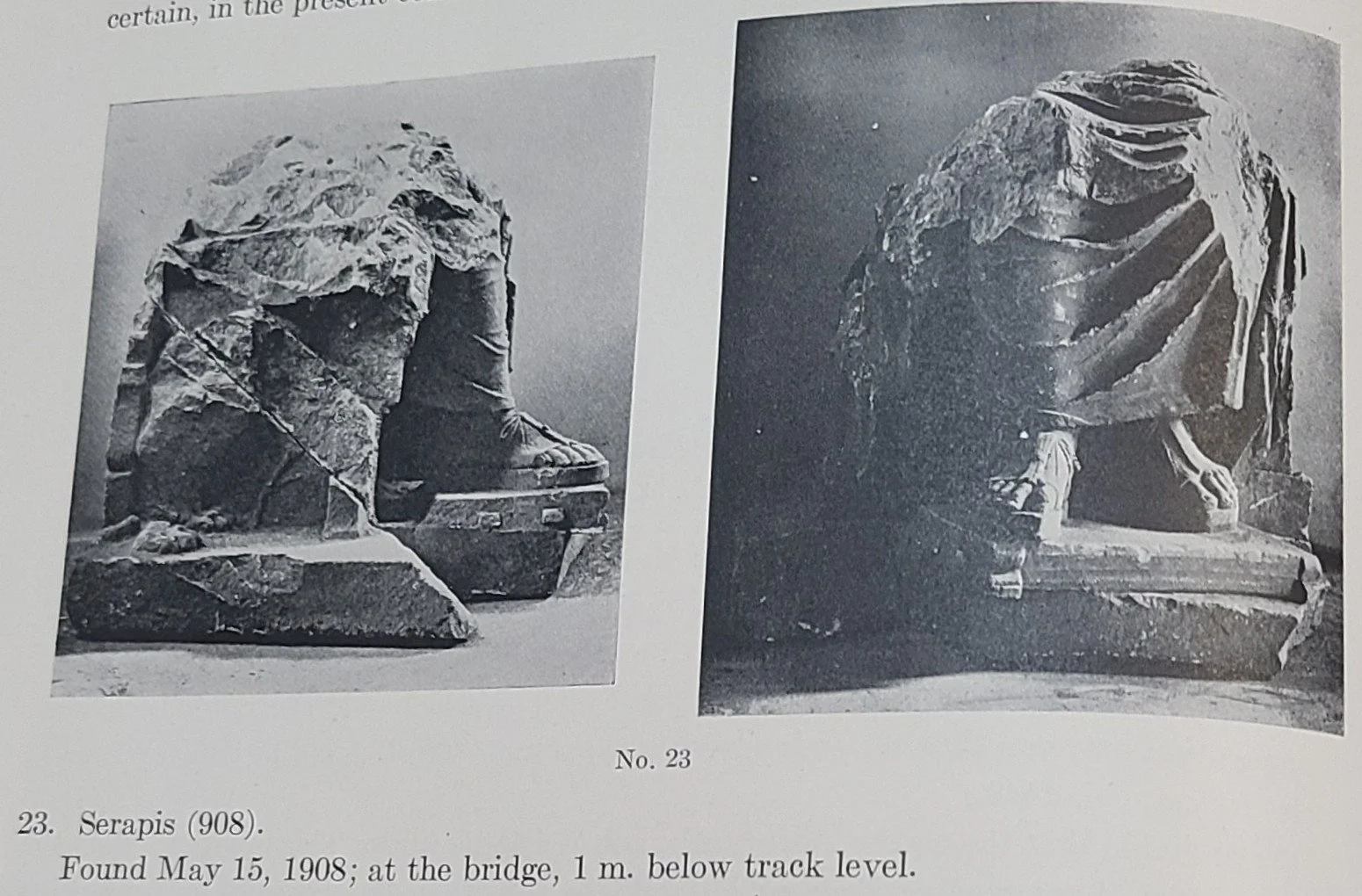
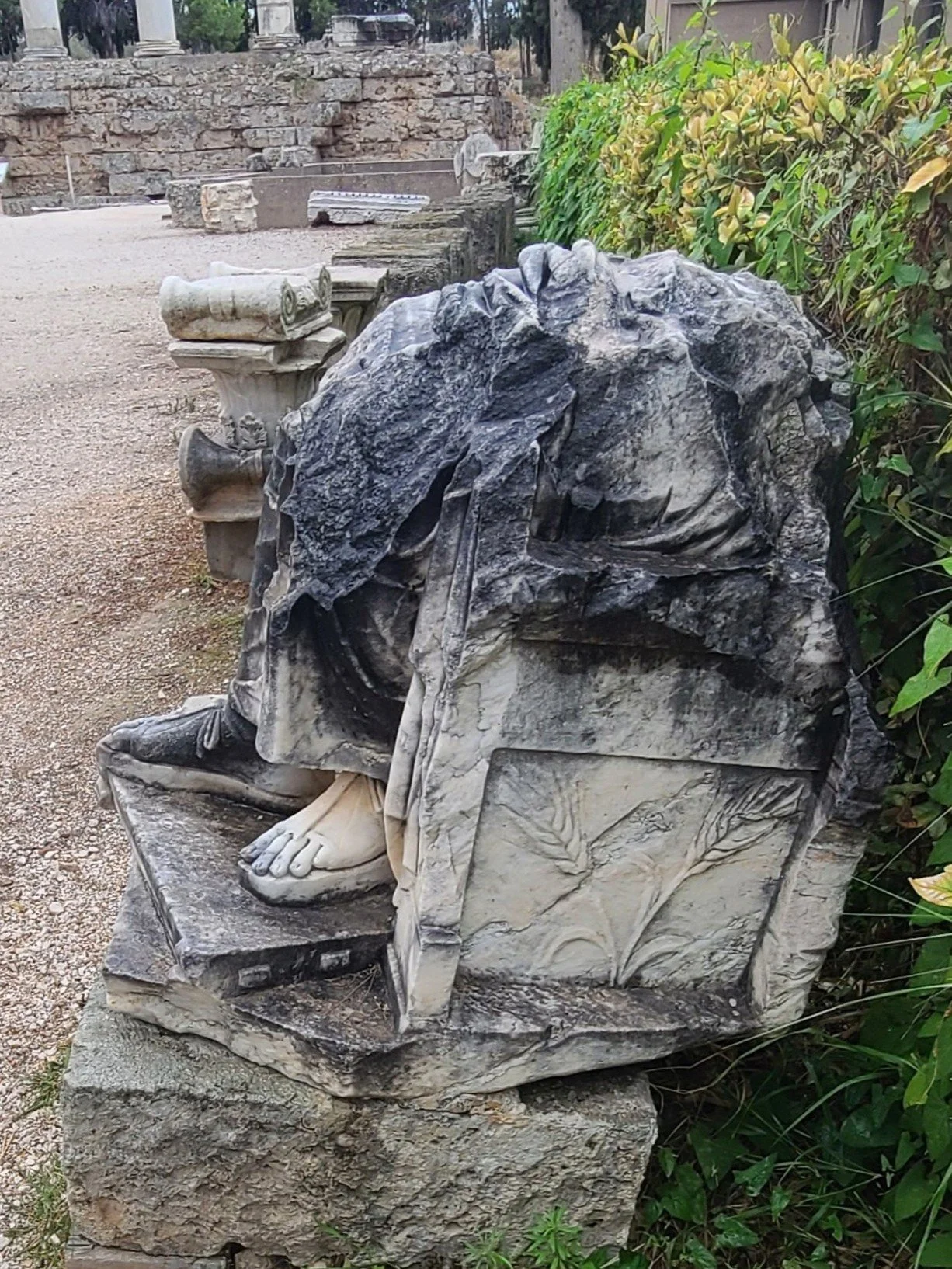
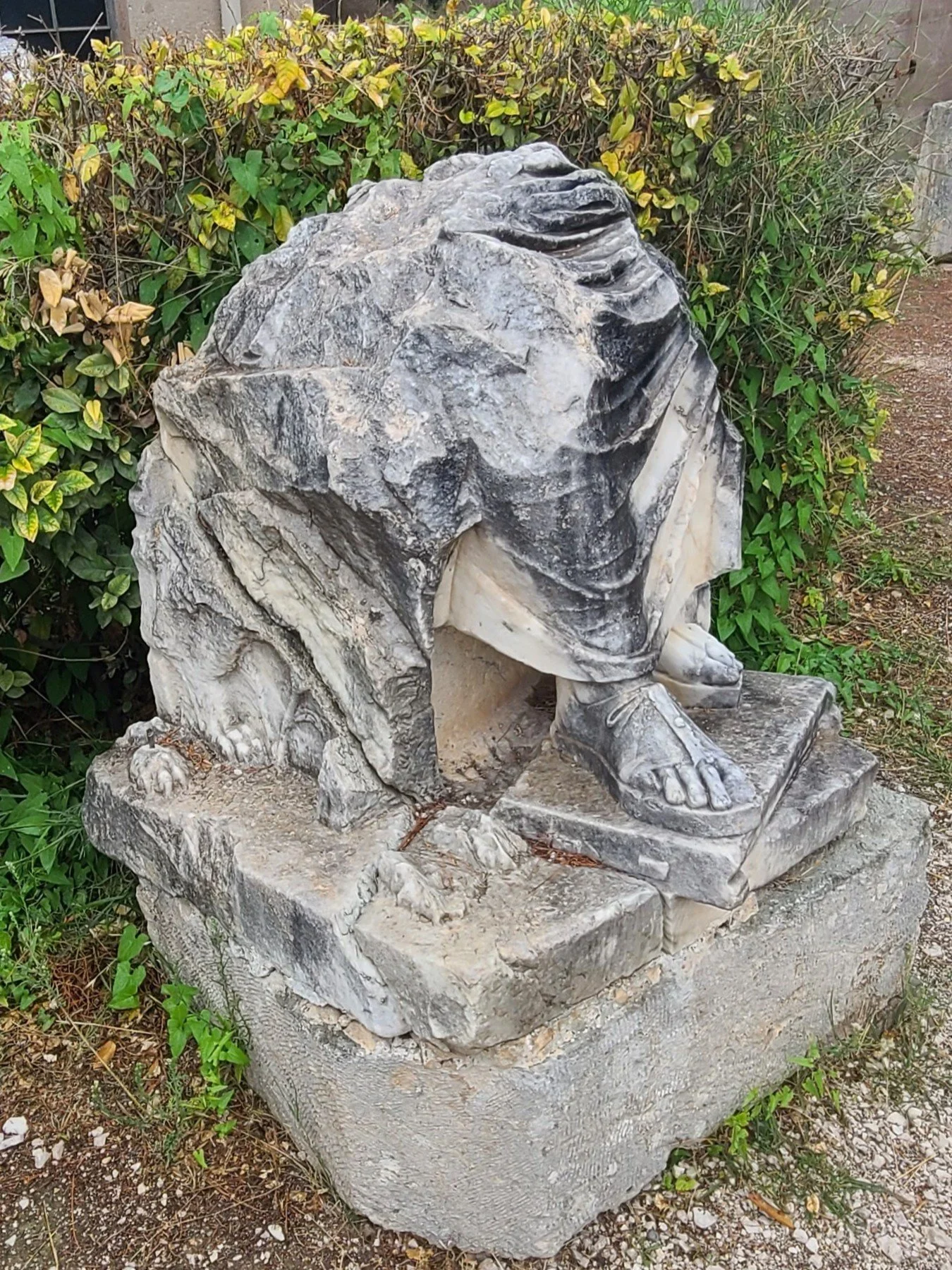
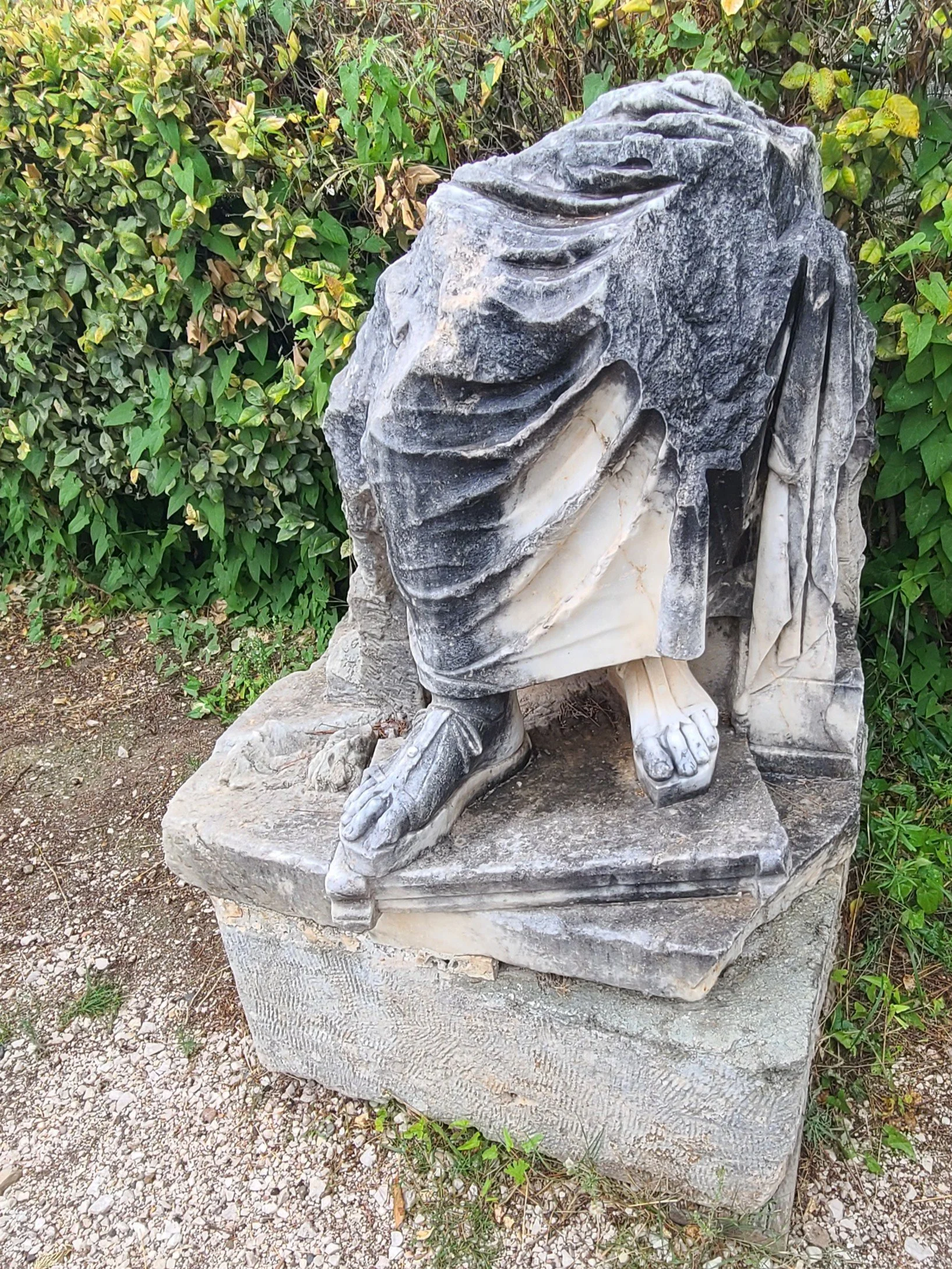
“...the figure corresponds closely to the usual type of Serapis, which is justly ascribed to Bryaxis... The animal is Cerberus and indicates that in this copy of Serapis was identified with Pluto.”
I took over 600 photos on this site and from the museum, so I can’t possibly cover the entire enormity of Ancient Korinthos in a single blog. Upcoming blogs will include information on some of the Ottoman buildings at Corinth, the Temple of Demeter, Kore and the Fates, and Acrocorinth (so stay tuned).
What I can say is this is a spectacular site, and ongoing excavations means they are uncovering more every year. If you are making that trip to visit the canal, ancient Corinth is not much further, and I highly recommend it. I had a wonderful time, and look forward to a return visit.
[1] Paticularly Manolis Papadakis, Operations Manager and Collections Support at Corinth - https://www.linkedin.com/in/manolis-papadakis-61690482/ ; https://www.ascsa.edu.gr/about/staff/greece
[2] https://mq.academia.edu/AmeliaBrown
[3] https://www.ascsa.edu.gr/about/american-school-fellows/paul-scotton ; https://www.csulb.edu/earth-science/lechaion-harbor-environmental-archaeology-program
[4] https://www.ascsa.edu.gr/news/newsDetails/new-steinmetz-family-foundation-museum-fellow-at-corinth
[5] You can read about my trip to Isthmia to see the Corinth Canal and visit the Archaeological Museum there: An archaeologist’s view of Isthmia
[6] Stephan, Annelisa (2012) Unlocking the Secrets of an Ancient Fountain. Getty - Iris Blog. Posted online January 6, 2012.
[7] Corinth database of artifacts - https://metis.ascsa.edu.gr/search
[8] bw 4078 Serapis / S908 https://metis.ascsa.edu.gr/resource/cbc6ab982cd29397b797a405c2fc1fa3?tab=artifacts ; Reference: Johnson, Franklin P. (1931) Corinth – Volume IX – Sculpture 1896-1923. ASCSA, Harvard University Press, Cambridge, Massachusetts. pp. 30-31.
You can see an overview of the east part of the site on video here: https://www.youtube.com/watch?v=zs-x9_JFOQE, and a reel of the area of the theatre here: https://www.instagram.com/p/DPY0edaj_21/ ; and my short on YouTube of hoopoes in some trees on site.