My Emergency Go Bag
I grew up in the bush of northern British Columbia.🍁 We lived on a small farm outside of a small town. We didn’t have running water or indoor plumbing, and the area is known to have occasional flooding (Skeena River), mud slides and massive winter storms. I remember waking up and opening the front door to see a wall of snow that had fallen overnight (that you had to tunnel through to make it to the outhouse). Sometimes we couldn’t leave the house because there were black bears in the yard. I learned the importance of resiliency early on.
Then I joined the military. What I hadn’t already learned about survival was now drilled into me. I also extensively studied emergency management and worked for the Government of Ontario in that capacity, and have volunteered with the Canadian Red Cross. I feel I am adequately skilled to share my thoughts with all of you.
Canadians in general are probably better prepared for emergencies than most. We have all kinds of storms, hurricanes, earthquakes, tornados, etc., to contend with, and we live in pretty rugged terrain. Even just living in the North you never know if the transport trucks are always going to make it through so most people stock up on essentials out of habit.
Canada is unfortunately in a very, tense situation with the Orange Menace south of our border. With the current political forecast I thought it was time to repack my Go Bag for a more extensive siege. Following are the contents of my pack if I had to leave my house without a vehicle.
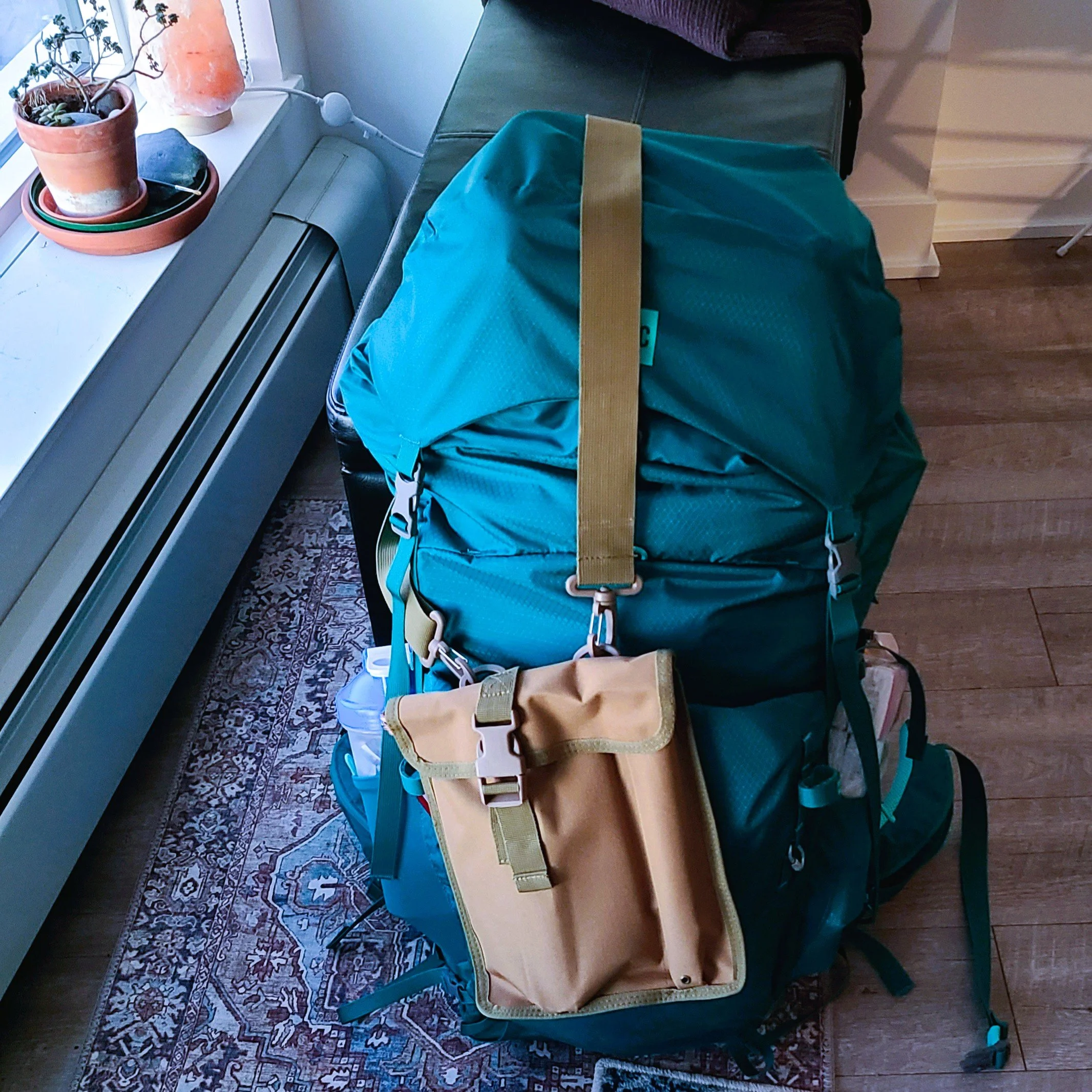
Completely full,
but not unmanageable
A good quality backpack - one that fits you well and is within your physical carrying capacity. Mine is a MEC 45L fitted pack that I’ve used for several years. It’s blue (and not camouflage or olive) so you don’t look like you are military or para-military and draw unwanted attention. I first put in a large recycling bag before packing it to help keep items dry.
Fire making supplies - lighter(s) and fire striker (always duplicate and keep in separate areas)
Lighting - solar lamp, flashlight and a head lamp
Shelter - tent, tarp, sleeping bag, pillow case (without the pillow - you can put clothes in it for a pillow; it can also be used to carry other things in)
Hygiene - bar soap/shampoo, towel, toothbrush and paste, deodorant, toilet paper, hair ties (younger women might also need to pack feminine hygiene products)
Personal Care - sunscreen, sunglasses, lip balm, scarf (for warmth, to stave off sun and coverage for mosquitoes), First Aid Kit,[1] tea tree oil, mirror (can also be used for signaling), medications/vitamins, reading glasses, lightweight sandals or sneakers (at night to rest your feet from your hiking boots)
Clothing - I follow the premise “wear one, wash one, and one extra” when it comes to socks and underwear, 2 pairs of cargo pants, long johns, bras, and shirts, and at least one sweater/fleece and a rain jacket, toque and gloves, and a small sewing kit.[2] I recommend (in Canada) to use merino wool or quick-drying fabrics. A pair of the best quality hiking boots that you can afford and are already broken in. Don’t expect to evacuate with new boots. Weather is the main issue in Canada. It has been known to snow in every month of the year and temperatures can fluctuate a lot. Wearing layers is very important.
Food & Water - stainless steel water bottle full of water and water purification system; food for at least 3 days including spices and bullion cubes for flavour, tea a/o coffee. If you are heading into the woods you should also bring a bear barrel.🐻 I also recommend carrying food you normally eat because you don’t want digestive issues when you are trying to evacuate.
Cooking - pan(s), kettle, chopsticks and a bamboo spoon, bowl (lightweight camping gear)
ID & Important Documents - driver’s license and passport, maps, health card and important medical and insurance documents, contact and bank info.
Cash - Everyone has their own idea of amount, but internet, credit cards and ATMs may not work so ensure you have sufficient cash for at least a few days
Security - a good quality knife and an axe/hatchet/saw (for processing wood), whistle, emergency radio, cell phone/charger/extra battery, tactical shovel [3]
Extras - family photo(s), favourite snack (for morale), trade item(s), bungee cords a/o duct tape, small notebook and pencil for leaving messages or taking notes, hiking pole(s) - in winter I might also pack snowshoes,
Take only what you can comfortably carry. Remember to talk to your family in advance to let them know your plan. Preparing a bag means also preparing to carry it. Don’t overpack or you will wear yourself out or end up dumping things.
If I’ve missed anything feel free to share in the comments below.
Stay safe and stay positive!
[1] I have a small first aid kit that has been personalized with added items (like moleskin for blisters) to make it more robust.
[2] toque and gloves even in summer - it can get very cold at night
[3] I have the Fivejoy multi-functional Backcountry Shovel - shovel, axe, hoe, saw, hammer, rescue knife, wire cutter, bottle opener, fire starter, whistle, glass breaker, paracord