Yunnan: Part I - Pre-trip Research
Of course, before I left on my Tea Tour I wanted to research the areas I would be going to in advance. I watched a lot of YouTube videos [1] to get an idea of what to expect. I also did research on species at risk, tea types, and cultural sites.
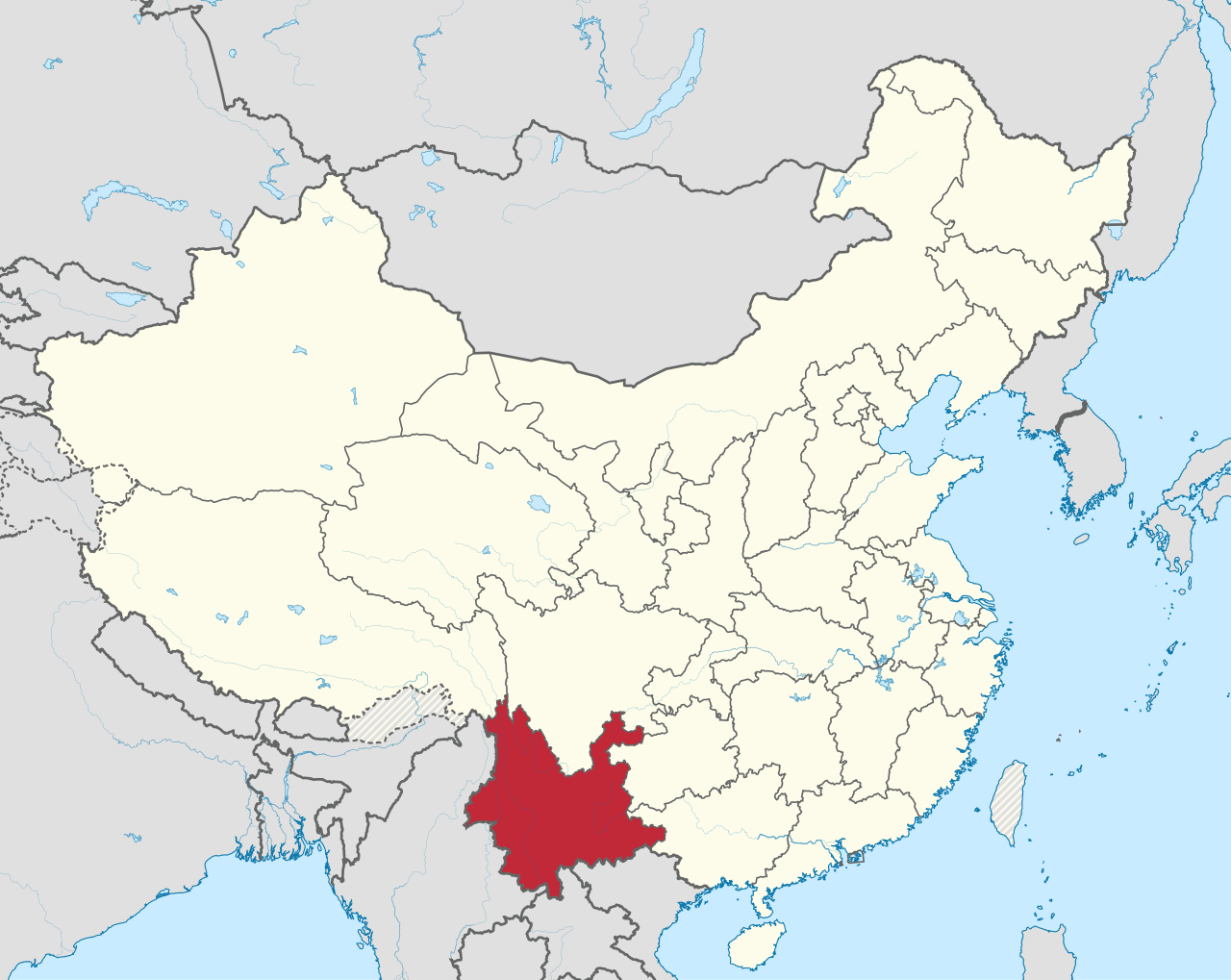
The southwestern province of Yunnan in China.
Map by TUBS - CC BY-SA 3.0
Yunnan is famous for its many ethnic groups,[2] high peaks, mild temperatures, wonderful food and Pu’er Tea. It also has a very long history. A new study in 2025 sampled the DNA of an ancient female skeleton:
“Analysis of a 7100-year-old individual from the Xingyi archaeological site in central Yunnan revealed a previously unsampled Basal Asian ancestry that is deeply diverged from East Asian ancestries and persisted in southern East Asia into the mid-Holocene. This Basal Asian Xingyi ancestry is also related to deeply diverged ghost ancestry found in Tibetan Plateau populations”
The Xingyi (兴义村) archaeological site excavated in 2015, “offered up pottery fragments, smelted copper pieces, burial sites and a massive collection of snail shells.” [4] This bronze age site has been carbon dated to at least 3,450 years ago. Many bronze pieces were found on the site and this “pushed back the length of the Bronze Age in Yunnan several hundred years, according to Zhu Zhonghua (朱忠华), director of the Yunnan Institute of Archaeology.” This analysis, along with the Early Neolithic skeleton (mentioned above), depicts a long occupation in this area of Yunnan province.
While the schedule of our Tea Tour focuses on tea (cultivars, growing methods, picking, production, tasting), I am hoping that we will get to explore some of the cultural/natural areas of Yunnan. We are definitely planning to go to Pu’er to visit the tea forests. Following are some of the other sites in Yunnan (maybe for a future visit). I will be sure to share where we went and what we saw upon my return.
UNESCO World Heritage Sites in Yunnan
Cultural Landscape of Old Tea Forests of the Jingmai Mountain in Pu’er (inscribed in 2023)
Old Town of Lijiang (1997)
South China Karst (inscribed in 2007) and as Shilin UNESCO Global Geopark in 2015
Chengjiang Fossil Site (2012)
Jianshui Pottery
Jianshui Zitao is one of the four famous Chinese pottery types [6] and is a true clay that it often used for teaware. It was developed around the village of Jianshui in central Yunnan. While Yixing Zisha ware [7] is often highly sought after and it can be very expensive, Jianshui has many wonderful minerals that work to enhance the flavour of some teas.[8] I’m hoping to have the opportunity to buy at least one piece of Jianshui teaware on this trip. For more about Jianshui, I really enjoyed this video by Oldwatch Ma.
Cuisine
There has been a lot written about Yunnan and ethnic cuisine from the region, but one thing I’m looking forward to is trying the traditional Wild Mushroom Hot Pot.
“Let us taste the unique specialty of Yunnan - the Yunnan Wild Mushroom Hot Pot! Due to the complex geological structure, diverse mountain forest types and soil types in Yunnan Province, a rich variety of natural edible fungus species have grown, accounting for more than half of the global edible fungus species and two-thirds of China’s edible fungus species. This food is simple, delicious and healthy.”
Wildlife at Risk - Guizhou and Yunnan
As I always do before I travel, I like to check out a list of endangered species in case I have the fortune to see one. I will be posting images on my iNaturalist account upon return from this trip. I did a search of the IUCN Red List by province and this is the breakdown of listed species by Red List Category.[10]

You can see by this table that the area of Yunnan is over two times the size of Guizhou, and the number of listed species is more than doubled.
Of the 3,234 species listed for these two southern provinces, the breakdown by Kingdom is: Fungi (43), Animalia (1,824) and Plantae (1,367).
I will highlight some of the Critically Endangered (CR) or interesting species below.
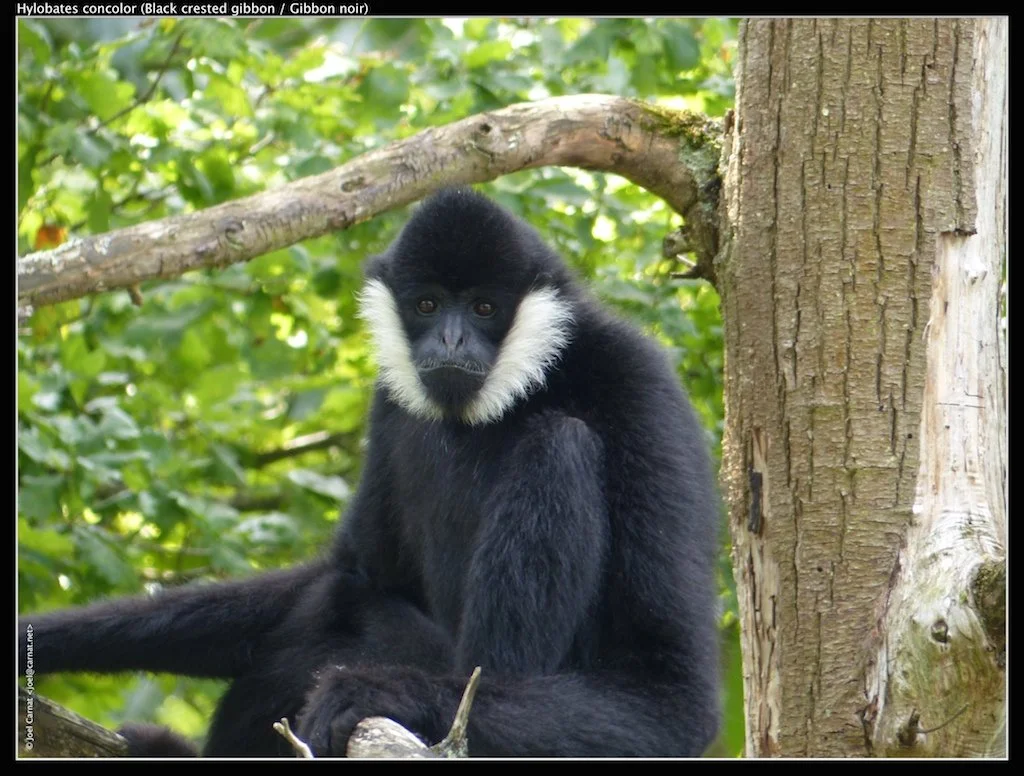
Black Crested Gibbon (Nomascus concolor) male - CR Photo: Carnat Joel (2014) CC BY 2.0
This primate is listed as Critically Endangered, with the last assessment conducted more than 10 years ago (2015) with a population estimate then of 1500 mature individuals (decreasing). The geographical range was Yunnan (China), Lao PDR, and Viet Nam.[11]
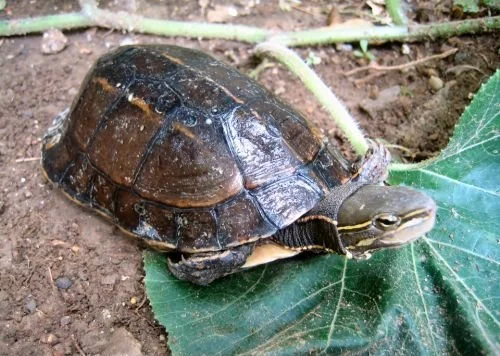
Yunnan Box Turtle (Cuora yunnanensis) - CR Photo: Cuora yunnanensis male by Ting Zhou / Torsten Blanck (2007) CC BY-SA 3.0
When last assessed in 2009 the number of mature individuals was estimated to be only 50, and decreasing, and yet it hasn’t been reassessed in almost 20 years. It was first described in 1906 in Yunnan province but its habitat (as of last assessment) was considered severely fragmented.[12]
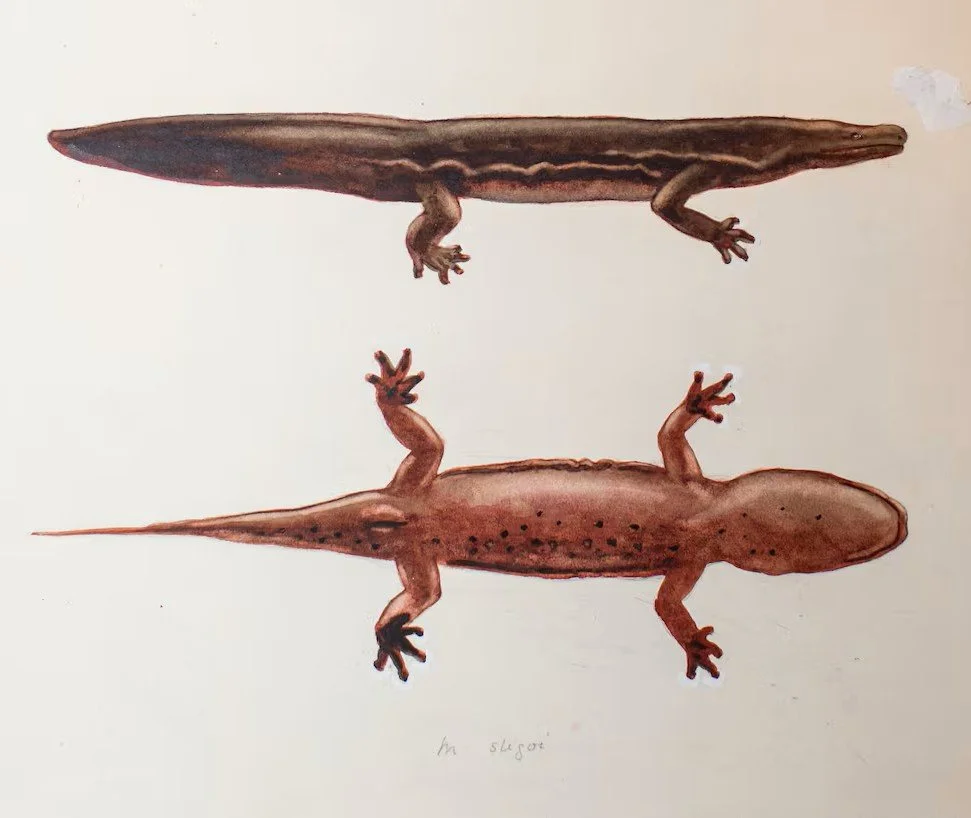
South China Giant Salamander (Andrias sligoi) - CR Photo: Zoological Society of London [13]
The South China Giant Salamander has been found in the southern provinces of Chongqing, Guizhou, and Hunan. This species was last assessed in 2020 with an unknown population size considered to be decreasing.[14]
I think it will be highly unlikely that I will catch a glimpse of these three CR species. Notably, besides Camellia sinensis (the tea plant) there are 5 other listed Camellia species that are Critically Endangered in the area, including:
Camellia cupiformis, C fascicularis, C hekouensis, C luteoflora and C ilicifolia.
Most have no photos, but I did find this photo of a planted C. fascicularis in Kunming, Yunnan. This species was last assessed in 2015, and its usual habitat is between 300 and 1800 metres above sea level, and is endemic to SE Yunnan.[15]
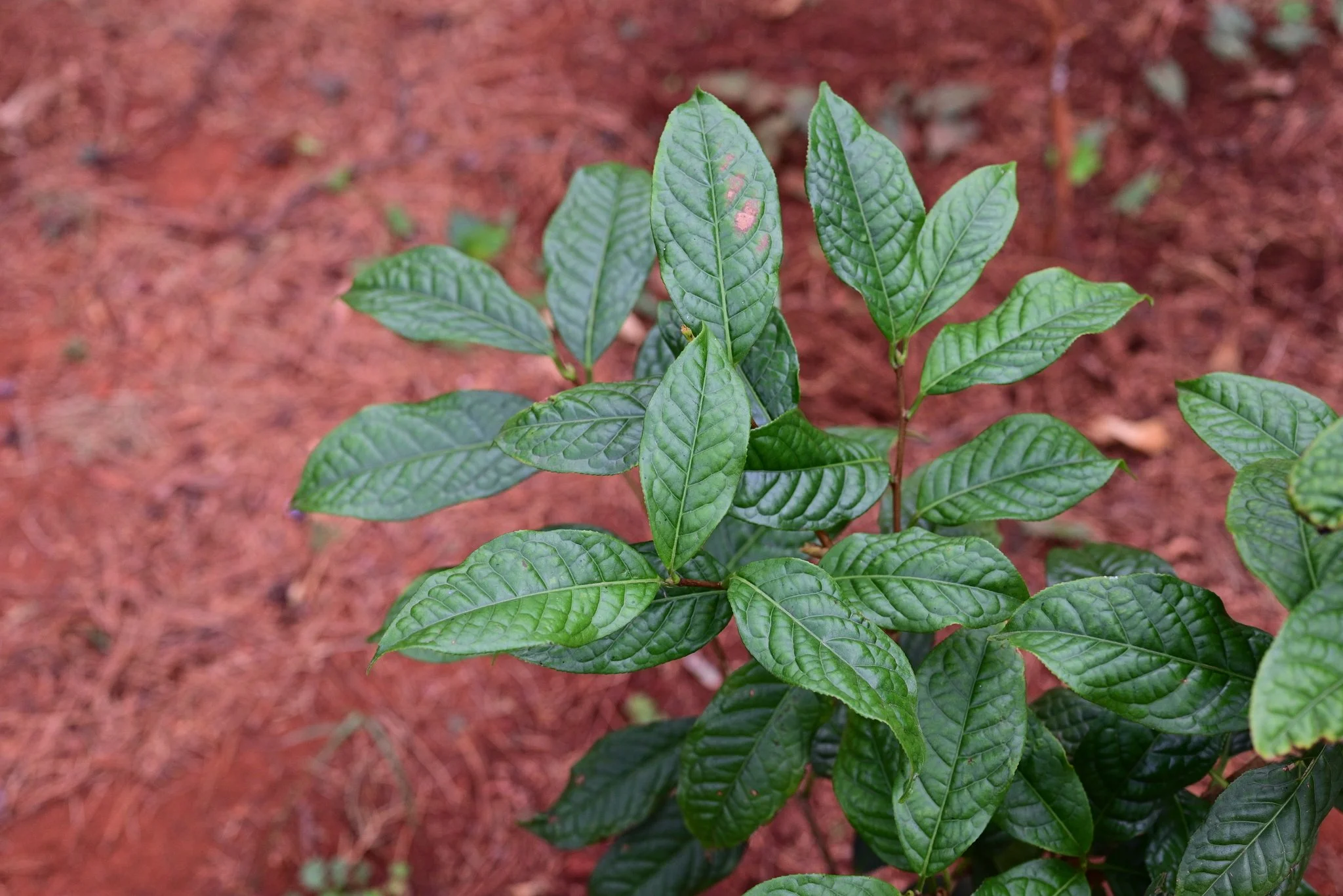
On iNaturalist by @gbno - May, 2024 in Kunming, YN, China
I’m super excited about this upcoming trip, and will be sure to share my experiences when I return. You can see my research about the province of Guizhou here.
[1] I recommend this one: @Little Chinese Everywhere - China's BEST Province To Visit - Yunnan (2025)
[2] “ It has the highest number of ethnic groups among the provinces and autonomous regions in China. Among the country's 56 recognised ethnic groups, twenty-five are found in Yunnan” - Wikipedia. Yunnan. Accessed March 9, 2026.
[3] Wang, T., Yang, M.A., Zhu, Z., Ma, M., Shi, H., et al. (2025) Prehistoric genomes from Yunnan reveal ancestry related to Tibetans and Austroasiatic speakers. Science. Vol 388, Issue 6750 DOI:10.1126/science.adq9792. Posted online May 29, 2025. https://www.science.org/doi/10.1126/science.adq9792
[4] Scally, P. (2016) Archaeological find changing understanding of Yunnan's Bronze Age. Go Kunming. Posted online October 31, 2016.
[5] @Edu-Arctic - The greatest Trade Route that the world has never heard about: The Tea Horse Road (2018)
[6] “Yixing Zisha is unique and the composition is mainly quartz, mica, hematite and clay.” The minerals are mined in Yixing, in Jiangsu province. Teavivre. A Brief Introduction to Four Famous Types of Potteries in China. Accessed March 9, 2026.
[7] More info on Yixing Zisha - Chen Qingrui (2024) Zisha teapots showcase Chinese craftsmanship, cultural charm. Global Times. Posted online September 20, 2024.
Business Insider (2022) Why Zisha Teapots Are So Expensive | So Expensive. Video.
[8] Mei Leaf (2019) Which Clay Teaware should you Choose? Comparing Yixing, Chaozhou, Jianshui & Tokoname. Video.
[9] Yufan. Yunnan Wild Mushroom Hot Pot. Taste the Globe Blog.
See also: Akira Hojo (2025) Exploring the Food Culture of Yunnan: Where Minority and Sichuan Cuisines Meet. Hojo Tea. Posted online April 23, 2025.
[10] IUCN Red List for Yunnan and Guizhou, China - downloaded March 8, 2026. Categories: EX - extinct, CR - critically endangered, EN - endangered, VU - vulnerable, LR/cd - Lower Risk/conservation dependent, NT - near threatened, LC - least concern, DD - data deficient
[11] Pengfei, F., Nguyen, M.H., Phiaphalath, P., Roos, C., Coudrat, C.N.Z. & Rawson, B.M. (2020) Nomascus concolor. The IUCN Red List of Threatened Species 2020: e.T39775A17968556. https://dx.doi.org/10.2305/IUCN.UK.2020-2.RLTS.T39775A17968556.en Accessed on 14 March 2026.
[12] van Dijk, P.P., Blanck, T. & Lau, M. (2010) Cuora yunnanensis (errata version published in 2016). The IUCN Red List of Threatened Species 2010: e.T5957A97360350. https://dx.doi.org/10.2305/IUCN.UK.2010-1.RLTS.T5957A11964406.en Accessed on 14 March 2026.
[13] Chung, E. (2019) New giant salamander species now the world's largest amphibian. CBC. Posted online September 17, 2019.
[14] IUCN SSC Amphibian Specialist Group. (2023) Andrias sligoi. The IUCN Red List of Threatened Species 2023: e.T179010130A186541067. https://dx.doi.org/10.2305/IUCN.UK.2023-1.RLTS.T179010130A186541067.en Accessed on 14 March 2026.
[15] Rivers, M.C. & Wheeler, L. (2015) Camellia fascicularis. The IUCN Red List of Threatened Species 2015: e.T62052668A62052672. https://dx.doi.org/10.2305/IUCN.UK.2015-4.RLTS.T62052668A62052672.en. Accessed on 15 March 2026.