Following are some crocodiles that I met during my latest visit to Egypt (Fall, 2025).
I include below the complete text written by Ahmed Fakhry about the Crocodile Tomb because I think it is short enough, and also provides a full description of the excavated condition of the tomb. I have added photos from my visit to the tomb in October 2025 for comparison. Notably, I did not see the scene of the tree and the foxes (deer?). Perhaps the condition was so poor that I did not bother to photograph it. Or, it may be this was the last of the four tombs I visited and it was getting quite hot out, and I was tired.
The Tomb of the Crocodile in Siwa [1]
““In the northeastern corner of the terrace there is an inscribed tomb which opens east. It consists of three rooms, each coated with a layer of white plaster. Only the first (Plan. Fig. 63), was painted, the other two left undecorated. This tomb was found in October, 1940. The family which occupied it cleared the burial chamber and the side chamber only because they reached them through a break in the rock from a neighbouring tomb. The decorated chamber, which is nearest to the entrance was full of debris, the floor being four steps lower than the threshold. It was thoroughly excavated in January, 1941.
The Decorated Walls: The walls are coated with a layer of a poor quality of plaster; the paintings were made by an unskilled hand. At the two thicknesses of the entrance, the headless bodies of three figures of deities are represented holding knives in their hands, to protect the body of the tomb owner. Originally there were four such figures, in all probability the four sons of Horus. At our righthand side, at the corner of the north wall, the goddess Hathor is seated, holding three springs (sic) of a plant in her right hand while she pours water from a vase held in her left. Another vase hangs from her wrist.
There is a niche in the middle of the wall. To its right the tomb owner is represented seated on a chair, and behind him stands the ram-headed god, Amun, holding a knife in each hand. The body of the god is coloured blue while the body of the tomb owner is light red. Beneath these is a mat decorated with two yellow lines. Below this, a crocodile appears painted in yellow; the intersecting lines representing its scales are red (Fig. 64). Under the niche is a stylized grape tree; a fox at each side eats a bunch of grapes (Fig. 65). To the left of the niche we find scenes in two registers, the upper one showing the tomb owner worshipping Osiris, the lower depicting two female deities protecting with their wings the sun-god, who is represented seated on a flower. The last painting on this wall shows the tomb owner worshipping Osiris, who sits on a chair, Isis standing behind him. On the right-hand side of the thickness of the door leading to the burial chamber there is a much damaged figure of the tomb owner, a bearded man with thick, curly hair. On the south wall, other fragments of figures remain from a scene of the god Thoth in the presence of Osiris.
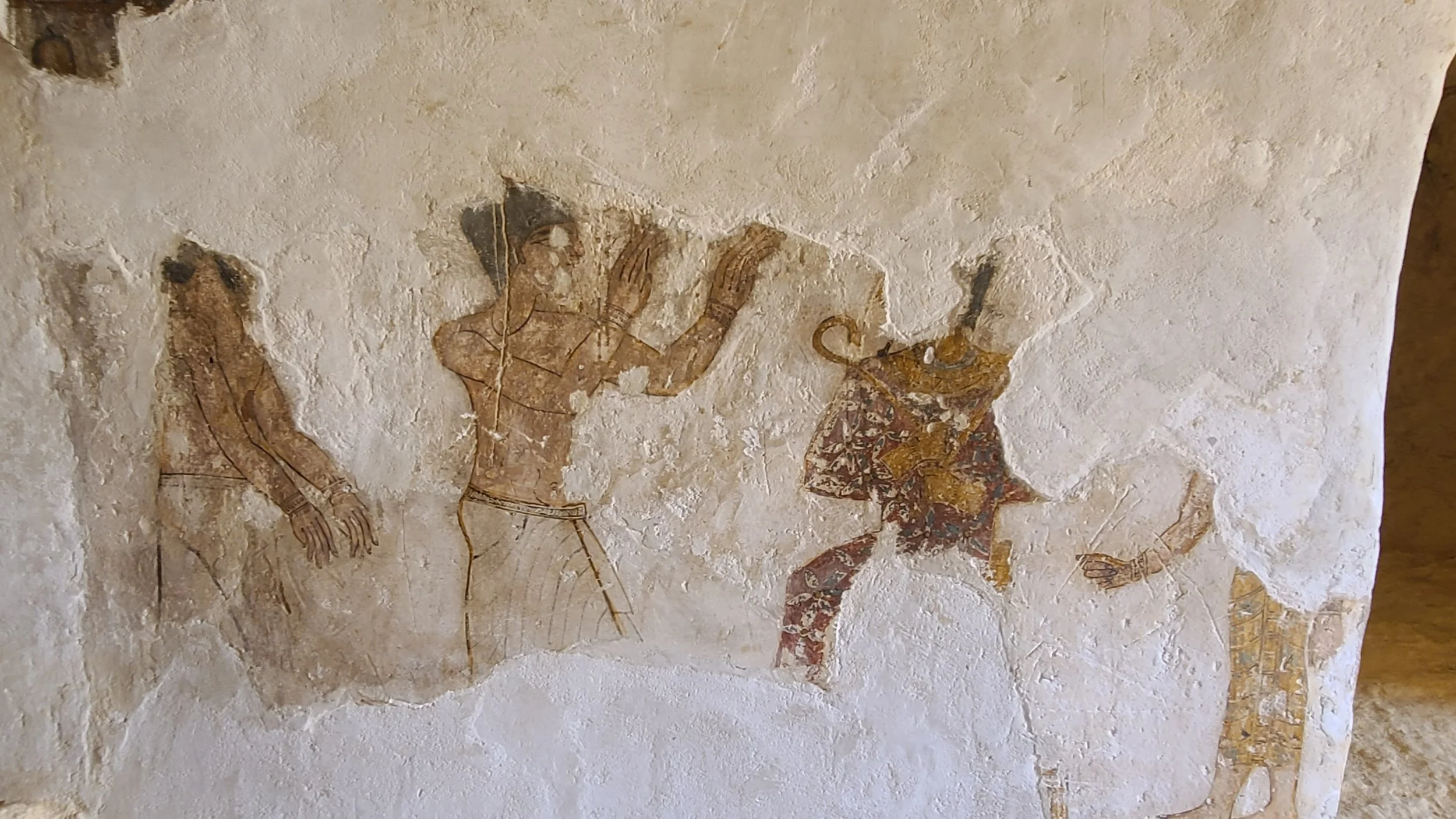
The entrance to the burial chamber, which contained religious scenes, was blocked in antiquity; most of it was destroyed when the tomb was robbed in ancient times. The south wall is badly damaged, only a part being preserved. The god Osiris sits inside a shrine with an offering table in front of him. On the other side of the table stands the god Thoth, with an ibis head on a human body, writing on a palette. His body is coloured yellow, his apron is richly decorated in red and blue (Fig. 66).
The Date of the Tomb: Late Ptolemaic or early Roman is the probable date. Some of the details of its scenes, especially the offering tables, can be compared with those painted in the tomb of Si-Amun, in the same necropolis. The name of the owner is not preserved. I prefer to call it the Tomb of the Crocodile, because the Siwans gave it this name when it was freed from debris and the paintings became visible.
It is probable that during this period at Siwa, some cult of the crocodile-god, Sobek, was thus represented in this tomb. We should bear in mind that Siwa at all periods of its history had regular relations with the Fayyum in which the crocodile god had the most prominent place.
The crocodile painting caused a great sensation among the inhabitants who flocked to see it when the tomb was cleaned, and to hear stories told by their compatriots who claimed to know all about crocodiles from their visits to the Cairo zoo. I was much amused by their descriptions. All agreed that one could swallow a man or a woman, but one character assured his listeners that it could swallow a loaded camel. As for length, their estimates varied from ten to a hundred metres! Some of them wanted to know the truth from me, but I refrained from saying anything which might spoil their fun.”
Apologies for the poor copies of the figures below - I had no access to a scanner and just shot photos of the images from the book.
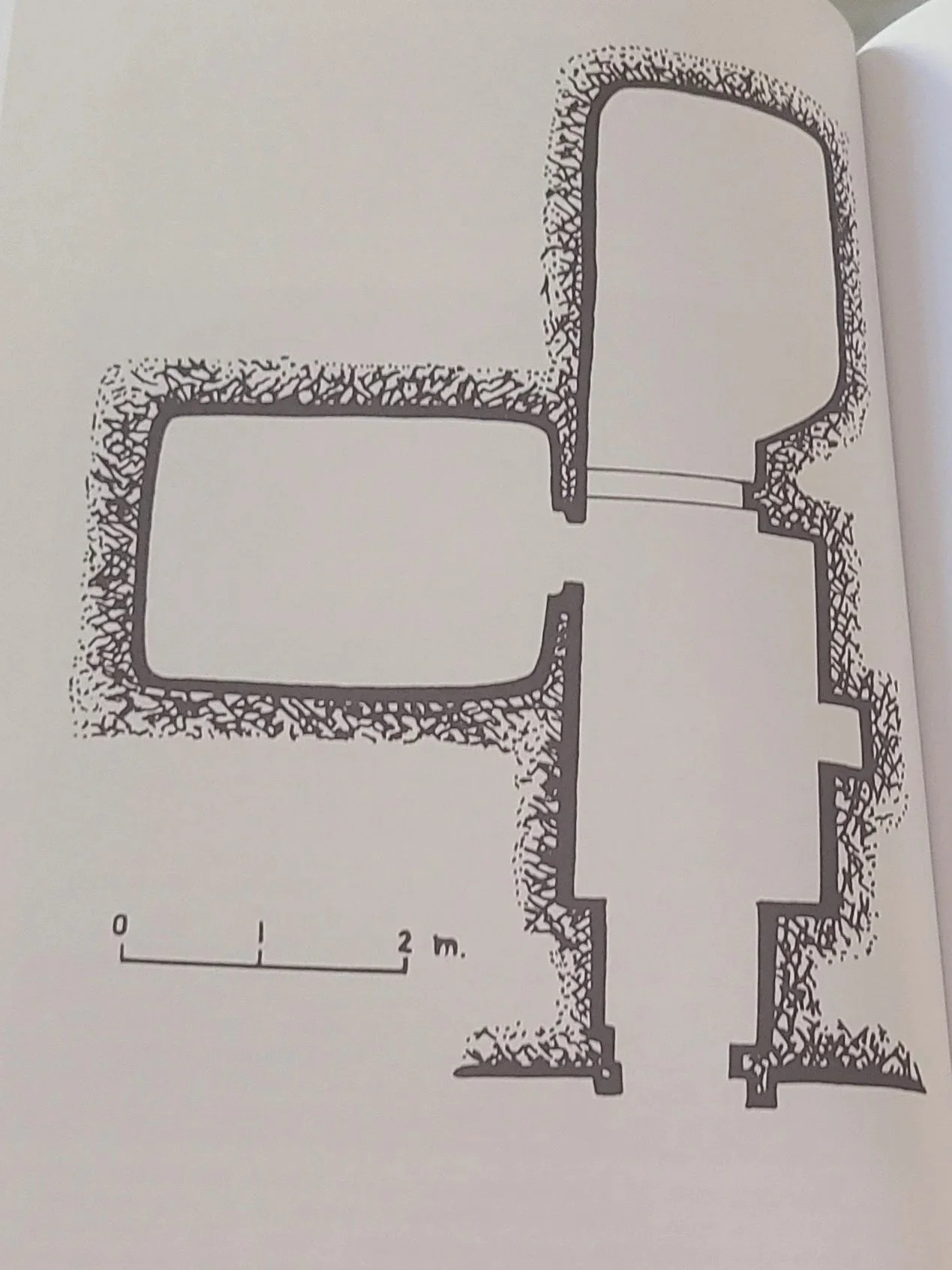
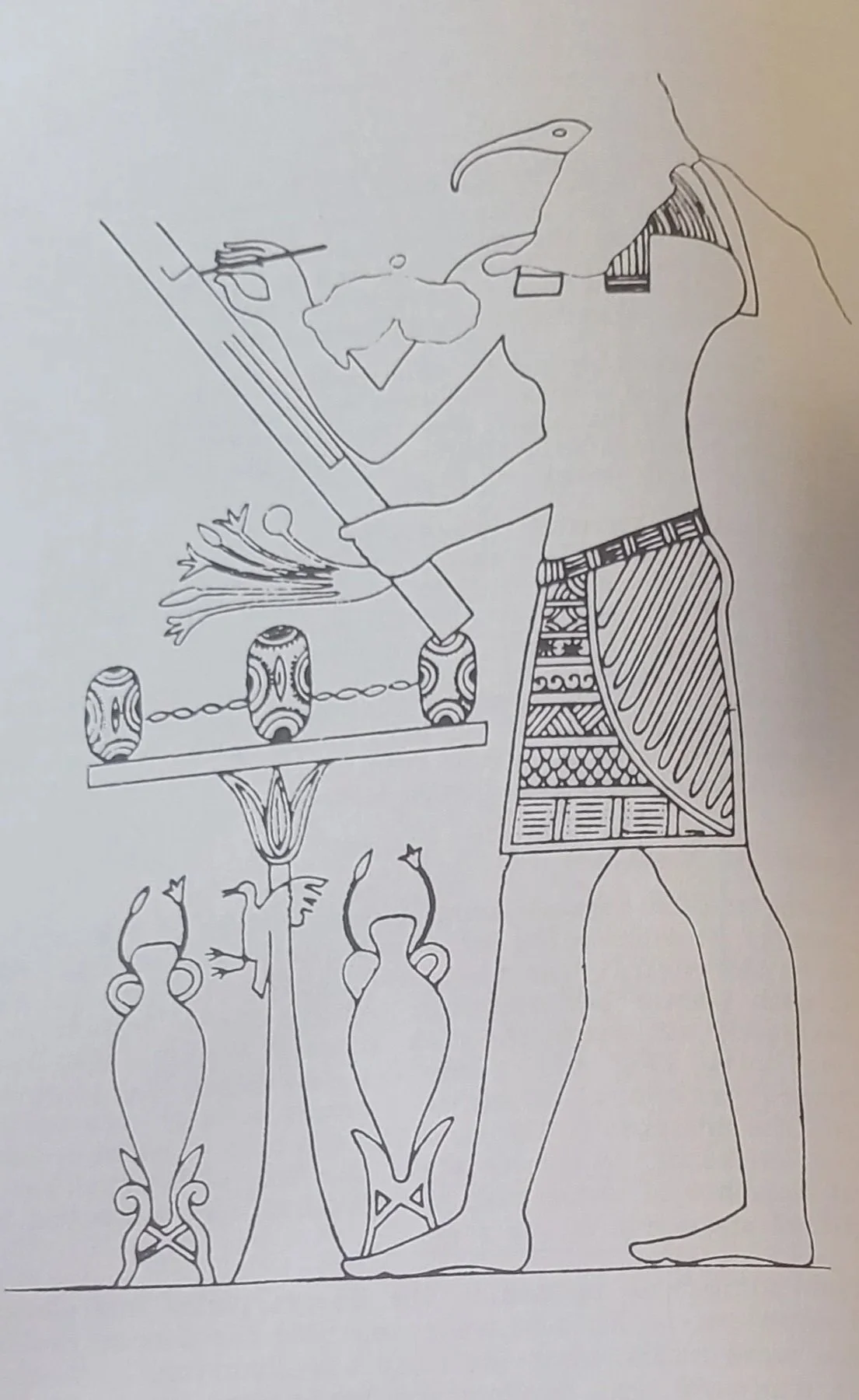
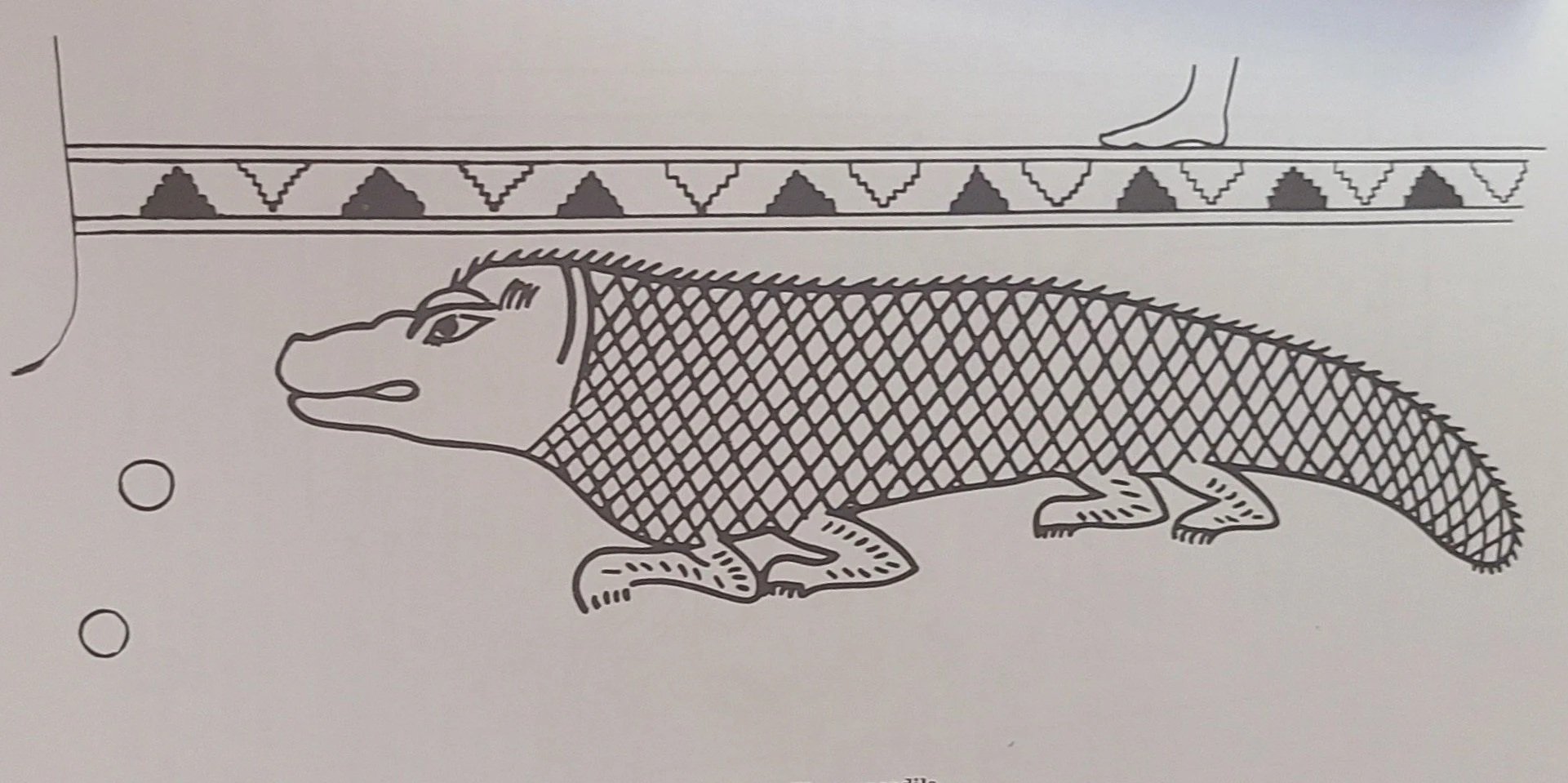
Fig 64 The Crocodile
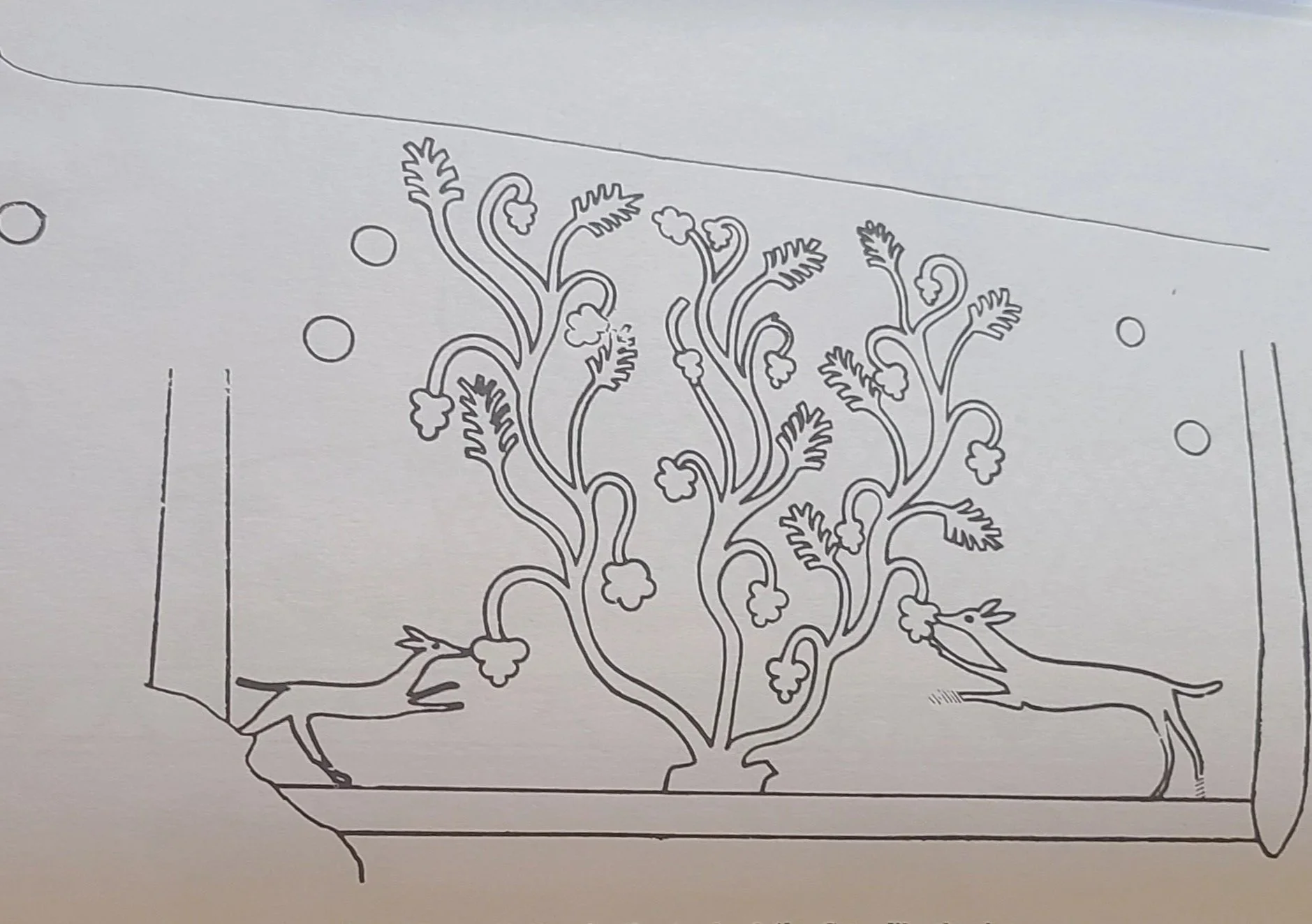
Fig 65 A painting in the tomb of the Crocodile showing Hellenistic influence.
Following are photos I shot on October 12, 2025 of the Tomb of the Crocodile (current condition)
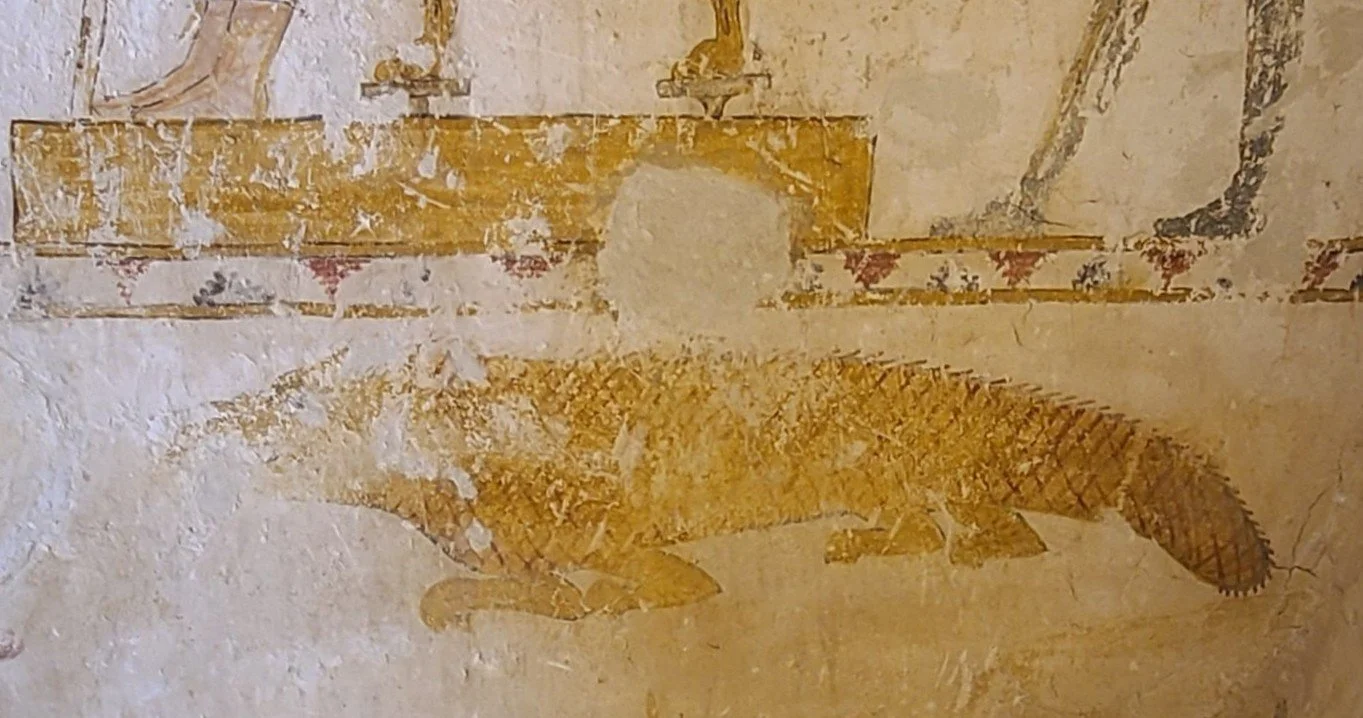
close-up of the Crocodile
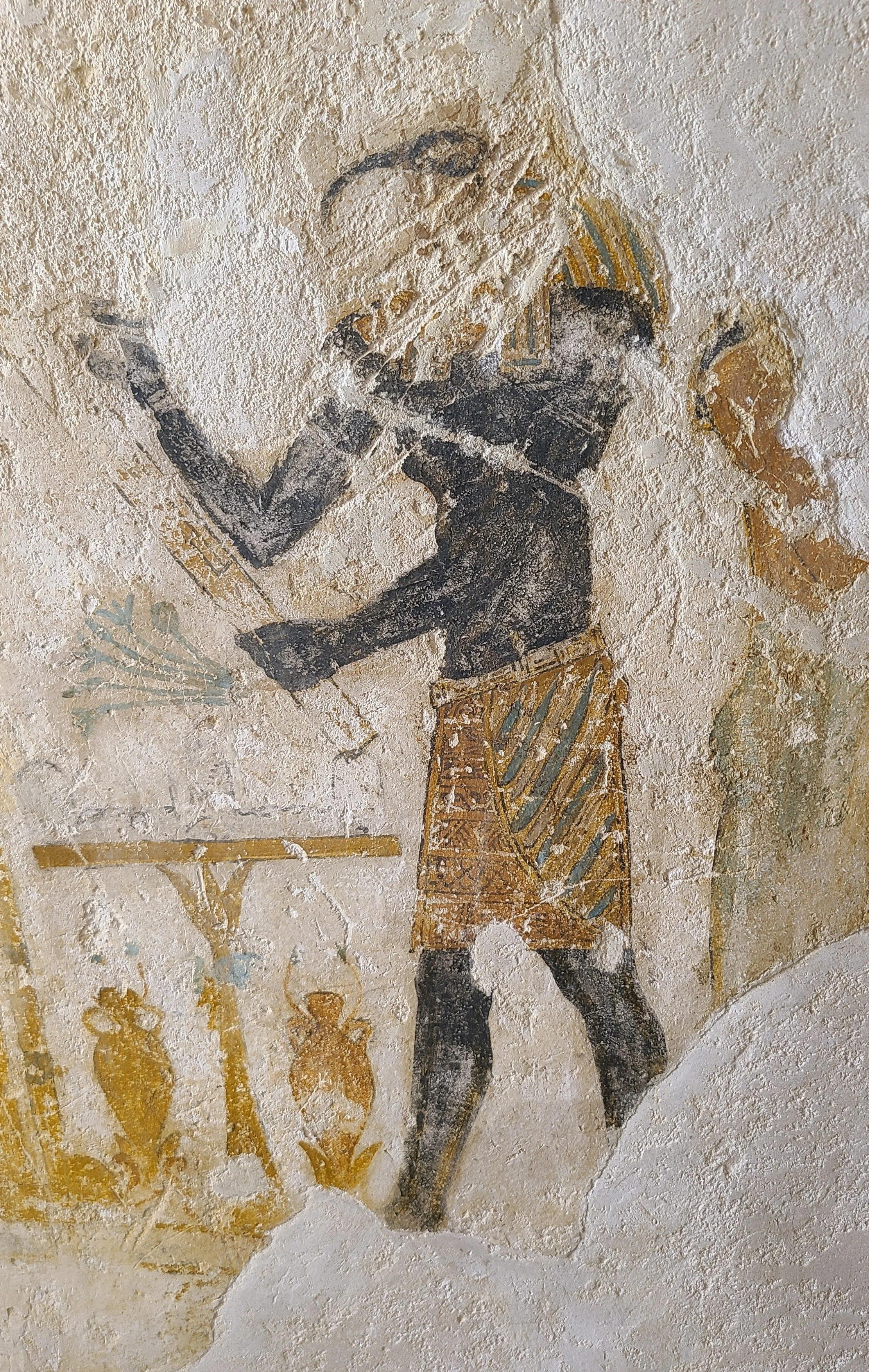
detail of Thoth - Tomb of the Crocodile (note the loss of the bottom of the register - feet of Thoth)
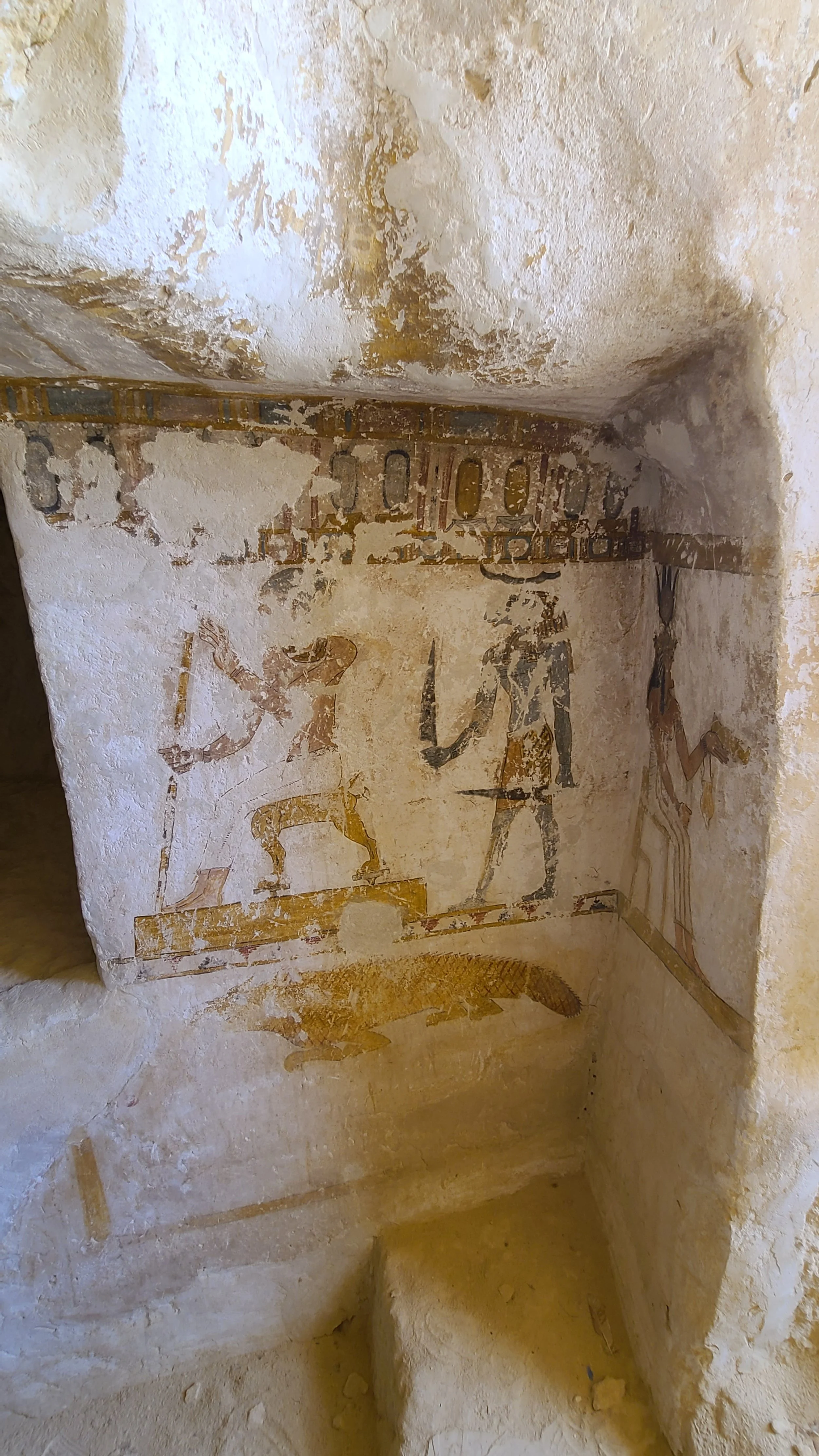
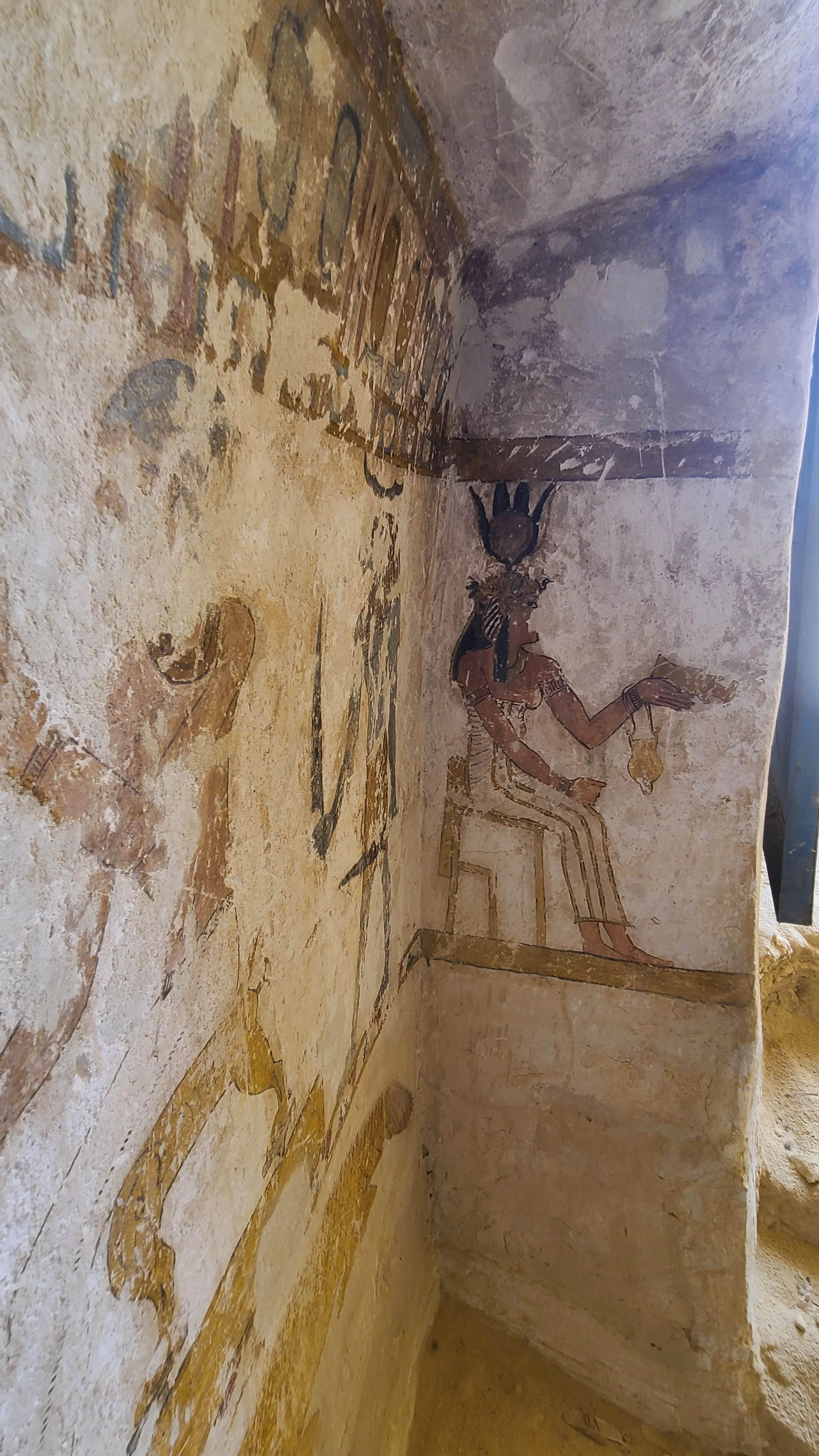
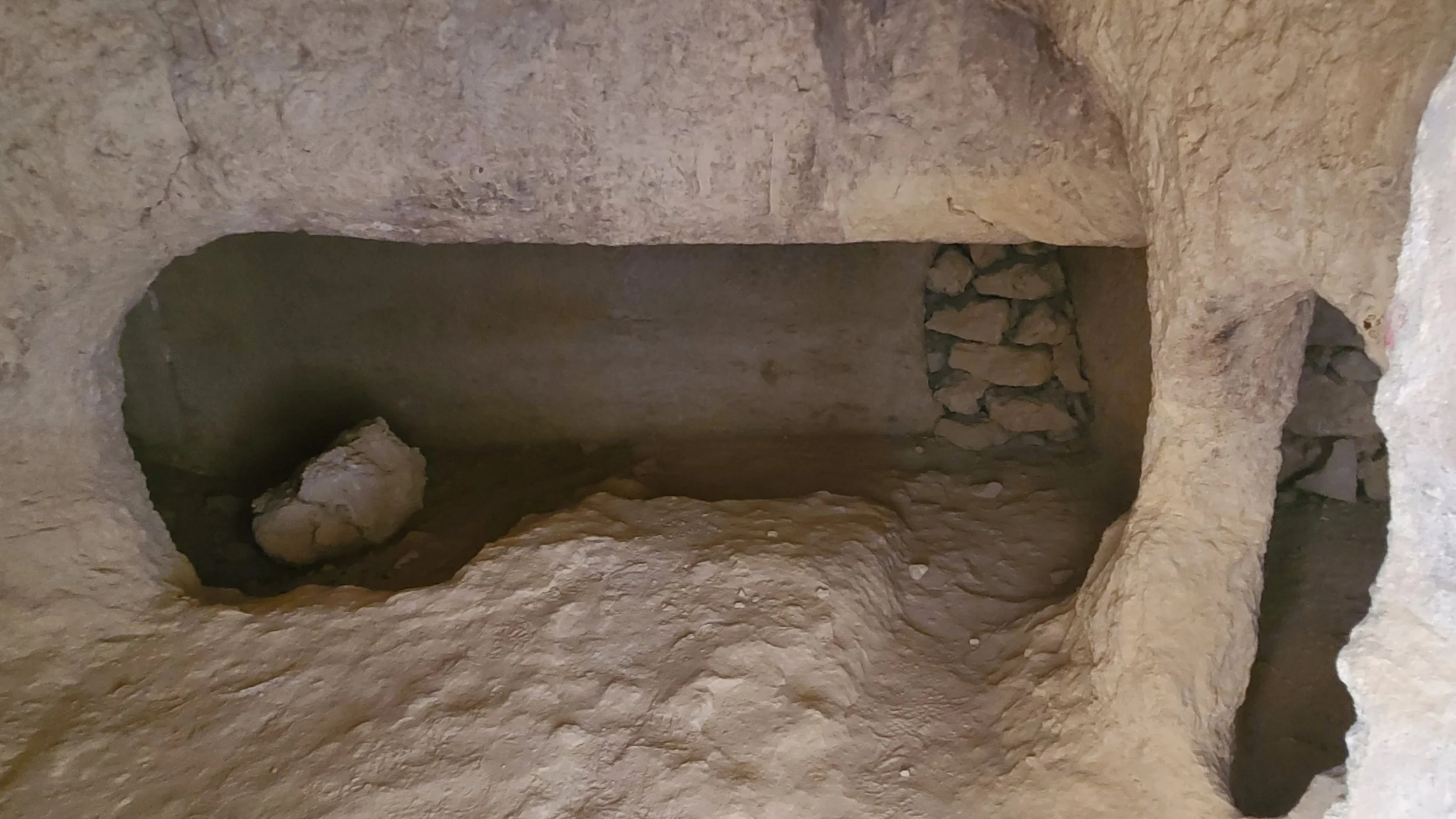
To see information on the other tombs in the Mountain of the Dead, you can see my previous post Pilgrimage to Siwa.
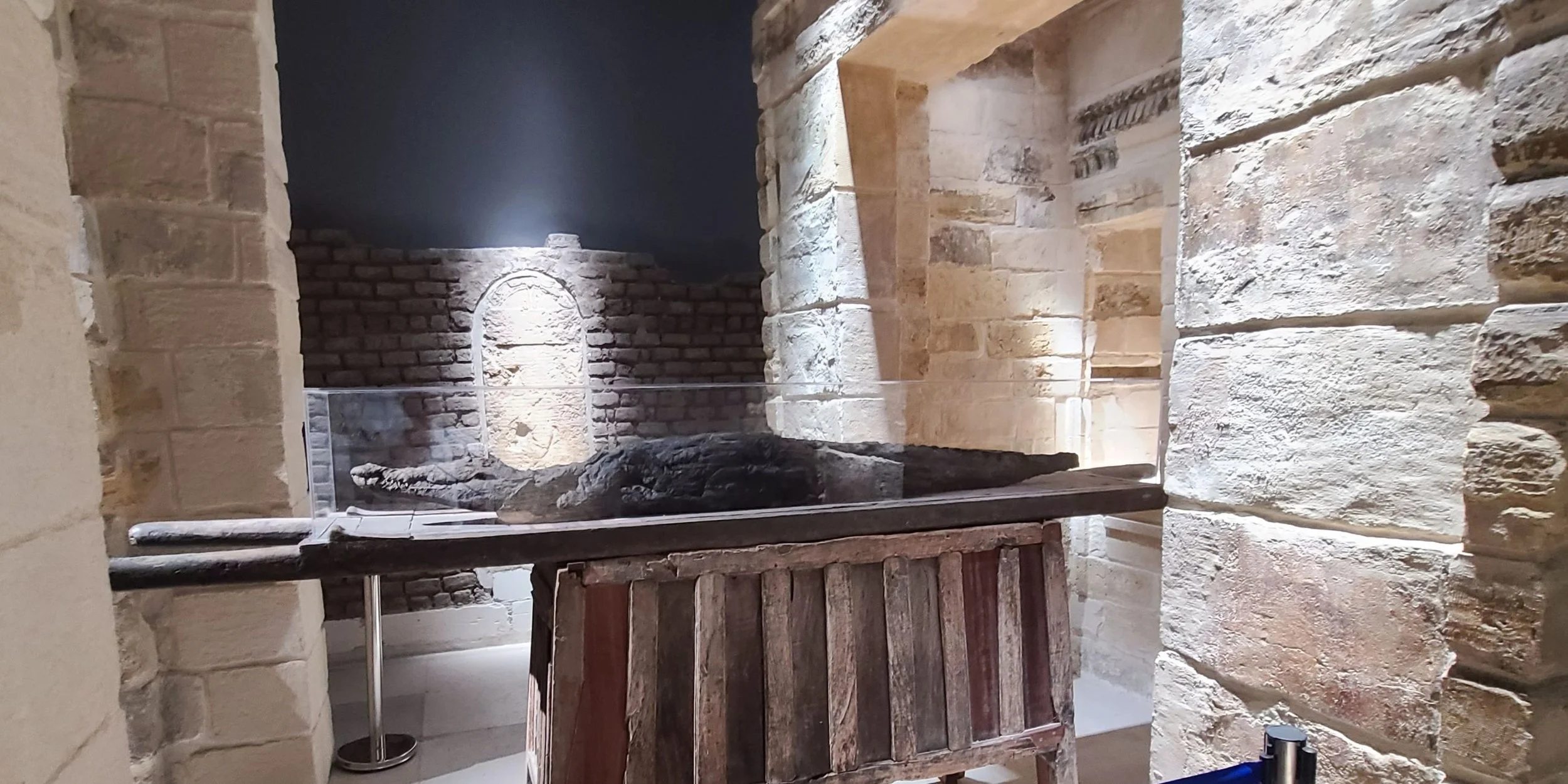
A Crocodile in the Graeco-Roman Museum (Alexandria)
The massive mummy of a crocodile which takes up a fair amount of space shouldn’t be missed. It is spectacular. It is in fact from the Temple of the Crocodile ‘Pnepheros’ (The Beautiful Face) from the Faiyum.
“Fayum was one of the earliest cult centres of Sobek which was depicted on the nome’s shrine since the First Dynasty... This temple was constructed and dedecited (sic) by the Alexandrian citizen, Agathodoros...it was consecrated on the 4th of October 137 BC, to the crocodile god Pnepheros in the Fayum town of Theadelphia (Batn Hereit), which was founded by Ptolemy II Philadelphus.”
You can see more about the museum in my post - Finally, the Graeco-Roman Museum.
Bibliotheca Alexandrina’s Crocodiles
There are a couple of wonderful stelae in the Antiquities Museum at the Library. (A separate ticket is required to access the museum.)
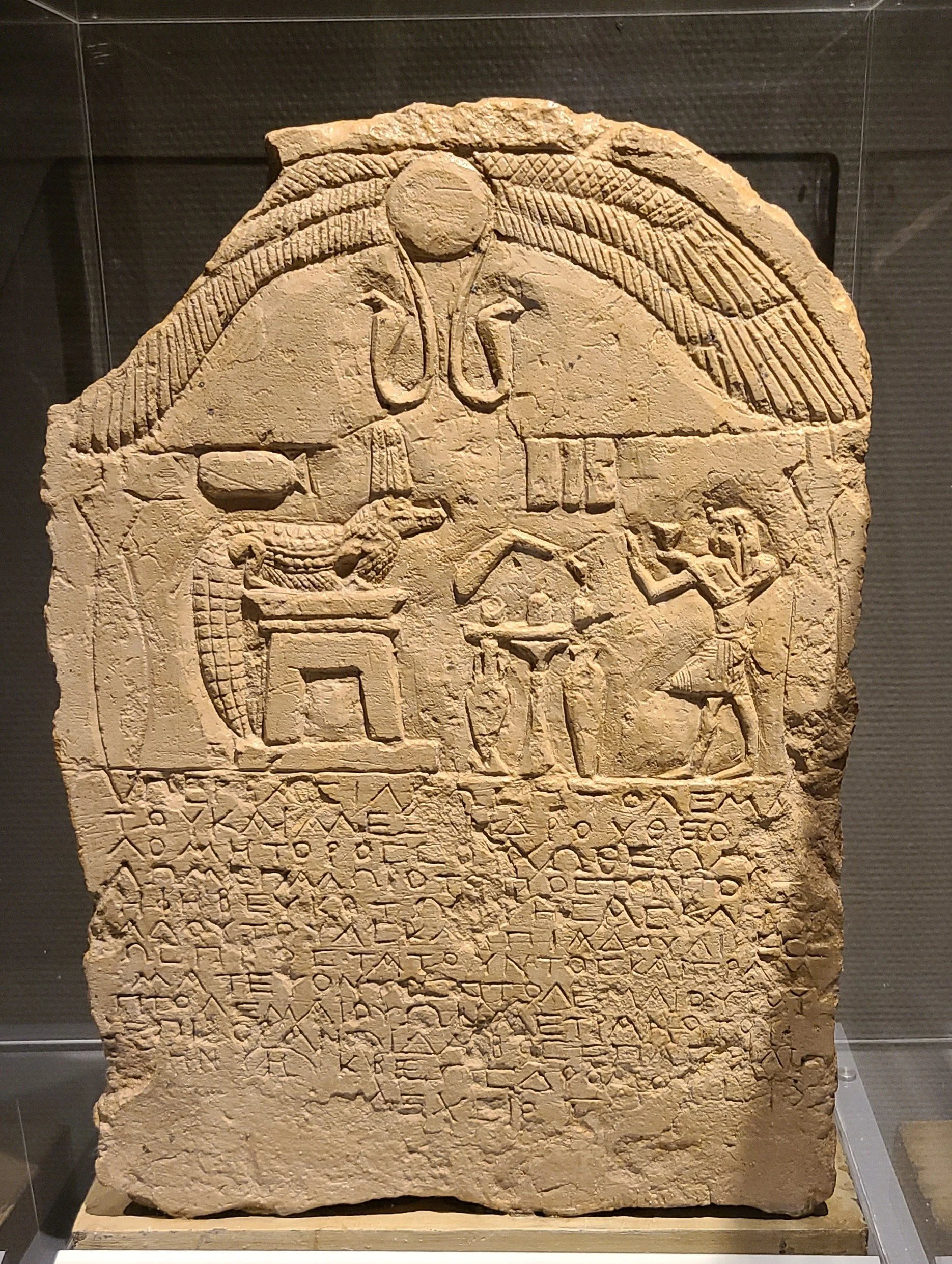
Tablet Depicting King Ptolemy X Worshiping the God Sobek
Reign of Ptolemy X (107-88 BCE), Fayoum, Limestone
“A stela with a circular top, depicting a winged sun disk surrounded by two cobras, on both sides of the main scene are two columns. King Ptolemy X is depicted standing on the right side, in front of Sobek, the crocodile god, offering sacrifices to him and holding a vessel in his left hand, while his other hand is in a worshiping position. The king is stepping forward with his right leg, and is depicted in the Ancient Egyptian form. In the middle of the scene is an offering table with two amphorae underneath. The crowned crocodile is sitting on a Naos. The lower part of the stela bears twelve-line(s) of Ancient Greek inscriptions.”
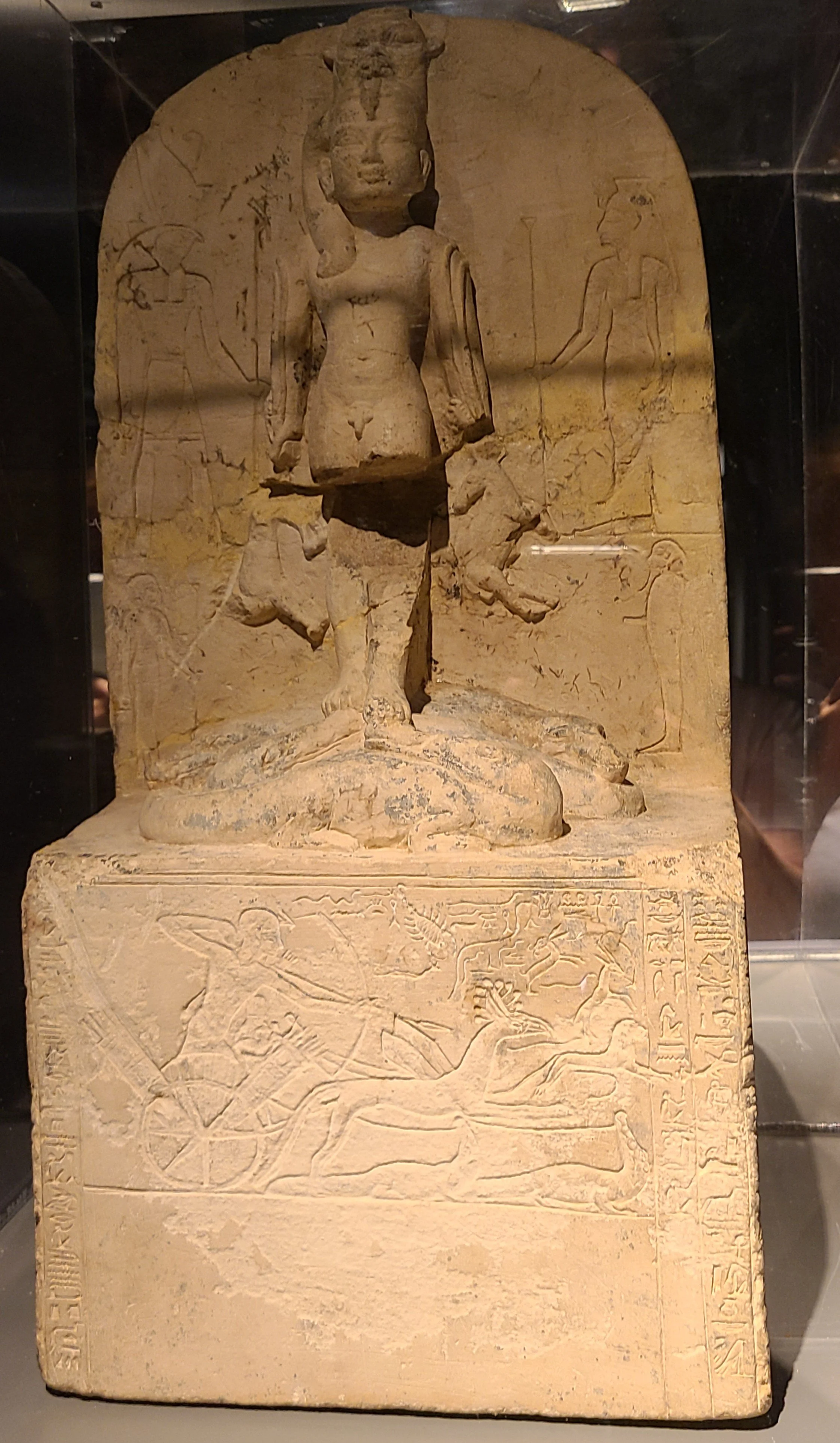
Magical stela of the god Harpocrates
The Greco-Roman Era, Limestone
“On this stela, the god ‘Harpocrates’ is represented in relief as a child, with the sidelock of youth; standing on crocodiles and snakes. The goddess ‘Isis’ is represented on his left. The god ‘Bes’, sho had the ability to ward off harm and evil spirits was depicted above his head. The Egyptians used to place this type of stelas inside their houses and gardens, and sometimes bury them, as a charm against predators and all sorts of harmful animals, and it spread widely in Ancient Egypt during the Late Period.”
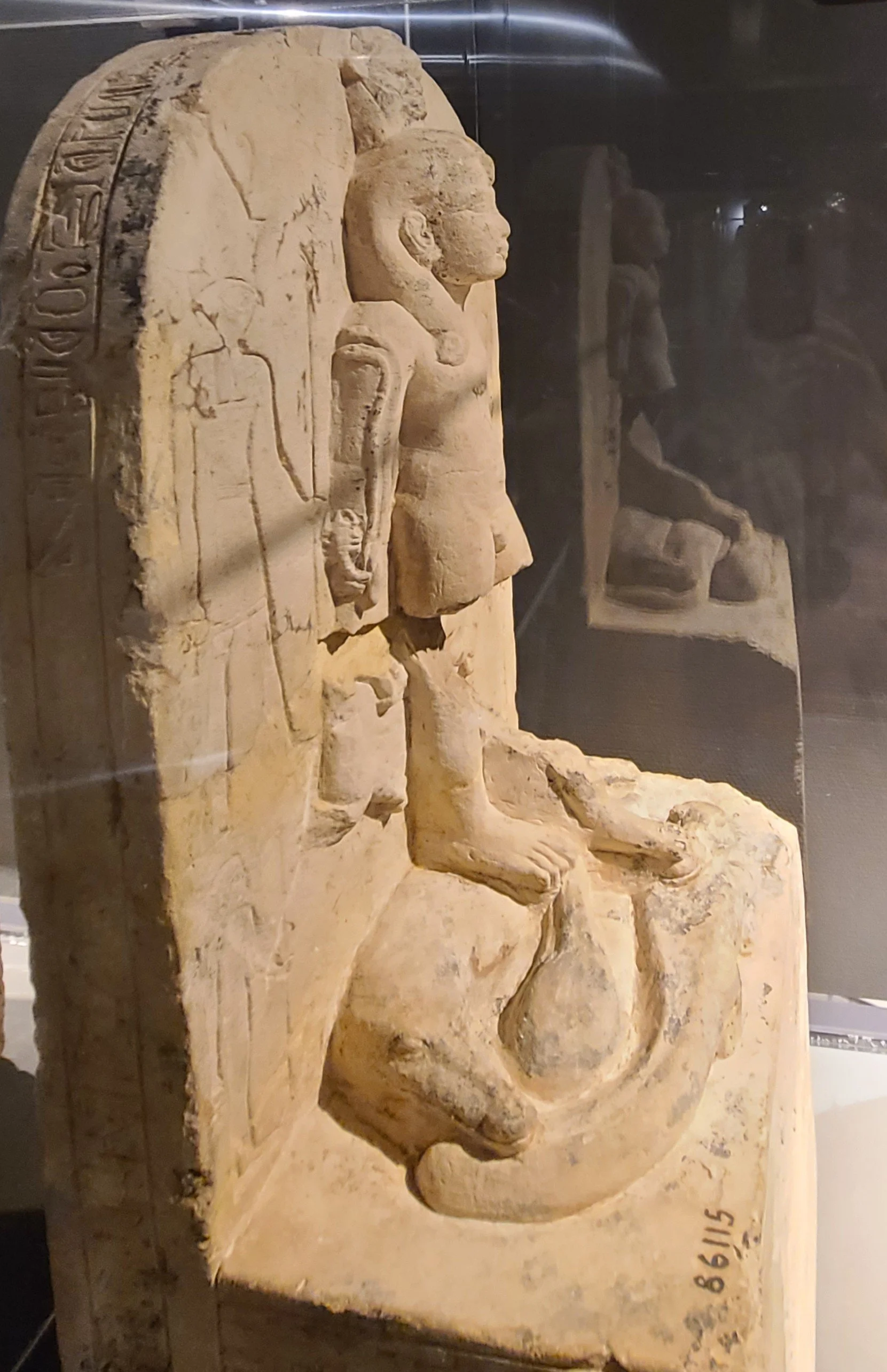
detail of Harpocrates stela from the right
Item 86115
You can see more objects in my post Library of Alexandria مكتبة الإسكندرية.
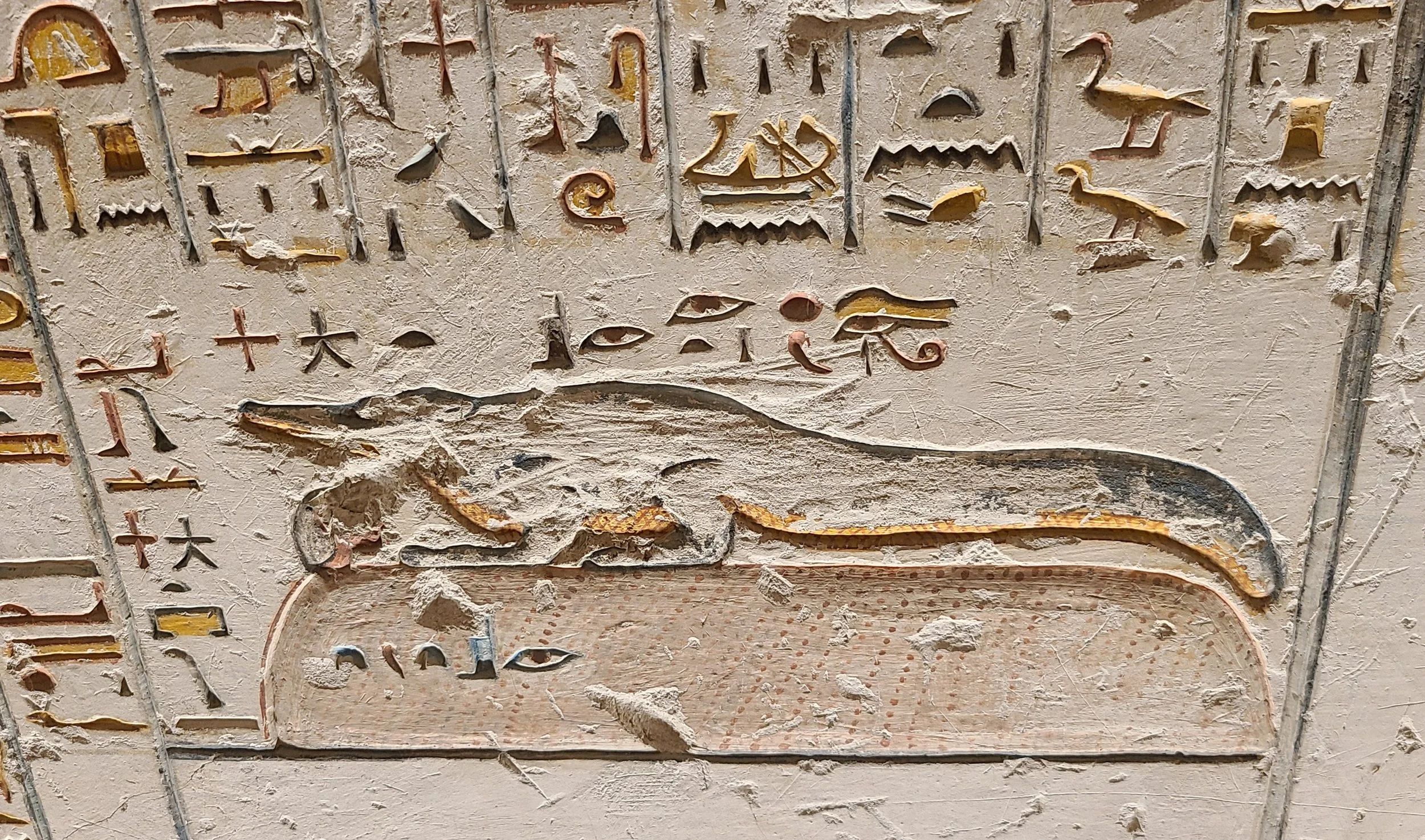
KV 9 - Ramesses V/VI Tomb
Ramesses V was the fourth ruler of the 20th Dynasty (died in 1145 BC) and was succeeded by his nephew, Ramesses VI, who reigned for a further eight years to 1137 BC.
“I am a crocodile immersed in dread, I am a crocodile who takes by robbery, I am the great and mighty fish-like being who is in the Bitter Lakes, I am the Lord of those who bow down in Letopolis .
— Book of Going Forth by Day, Chapter 88”
Tomb of Tausert and Setnakht, KV 14

Theban Mapping Project - KV 14 [3]
The Tomb was created for Tausert, then re-used and names replaced by Setnakht.
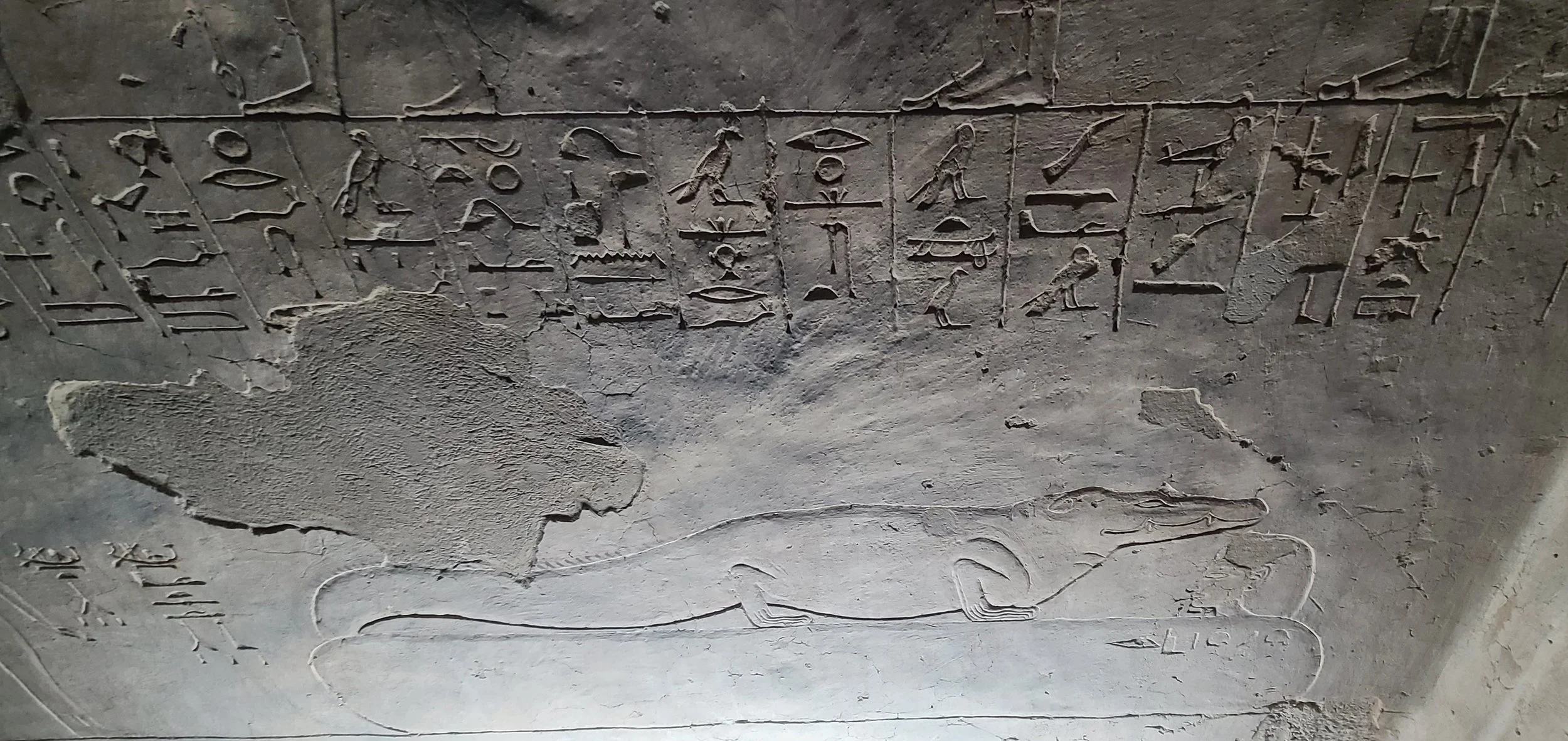
Beautifully rendered crocodile
The entrance of the tomb was dug and decorated for the 19th Dynasty Queen Tausret, and was later (Dynasty 20) usurped and expanded to include the tomb of Pharaoh Setnakht. It was excavated and recorded by the German Egyptologist, Hartwig Altenmüller from 1983 to 1987. [4]
[1] Fakhry, A. (1973) Siwa Oasis. The American University in Cairo Press. Cairo/New York. pp. 183-187, Figs. 63-66.
[2] Ikram, Salima (2010) Crocodiles: Guardians of the Gateways, in Thebes and Beyond, pp. 85-98, Ikram, S. and Hawass, Z. eds, SCA.
[3] https://thebanmappingproject.com/tombs/kv-14-tausert-and-setnakht Accessed November 14, 2025.
[4] List of pharaohs - Wikipedia - https://en.wikipedia.org/wiki/List_of_pharaohs Accessed October 26, 2025.
Wilkinson, Richard, ed. (2012) Tausret: Forgotten Queen and Pharaoh of Egypt. Oxford University Press.
Altenmüller, H. (1982) Tausret und Sethnacht. Journal of Egyptian Archaeology, 68, 107–115. https://doi.org/10.2307/3821629