The Fascinating World of Green💚
Green tea has been described by some as not very diverse, that it ‘all tastes like grass’. I wholeheartedly disagree. I wish to share some of my recent tastings of green tea below.
West Lake Long Jing, China, Green
I received a pouch of this green tea (as a bonus) with an order from Umi Tea Sets. Following is their description:
“Brand: Colorful Tea
Name: West Lake Longjing
Origin: Shifeng (The best), Longjing, Wuyun Mountain, and Hupao Mountain of Hangzhou in Zhejiang Province.
Best season to taste: Summer
Aroma: elegant and lofty, with hidden incense of fried beans or fragrance of orchid beans.
Taste: savoury and mellow, smelling like orchid with lasting scent.”
Note that I don’t like to read other people’s descriptions until after I tasted it myself. Following are my notes of ‘Dragon Well’ - brewed in my gaiwan. I was pleased that we both spoke of beans!
“Beautiful light to medium green leaves, flat (not rolled).
Scent of the brewed tea: Green apricots
Tastes of fresh green beans, but by the 4th infusion I was starting to get hints of that apricot flavour that I had smelled.
This is a really interesting tea.”
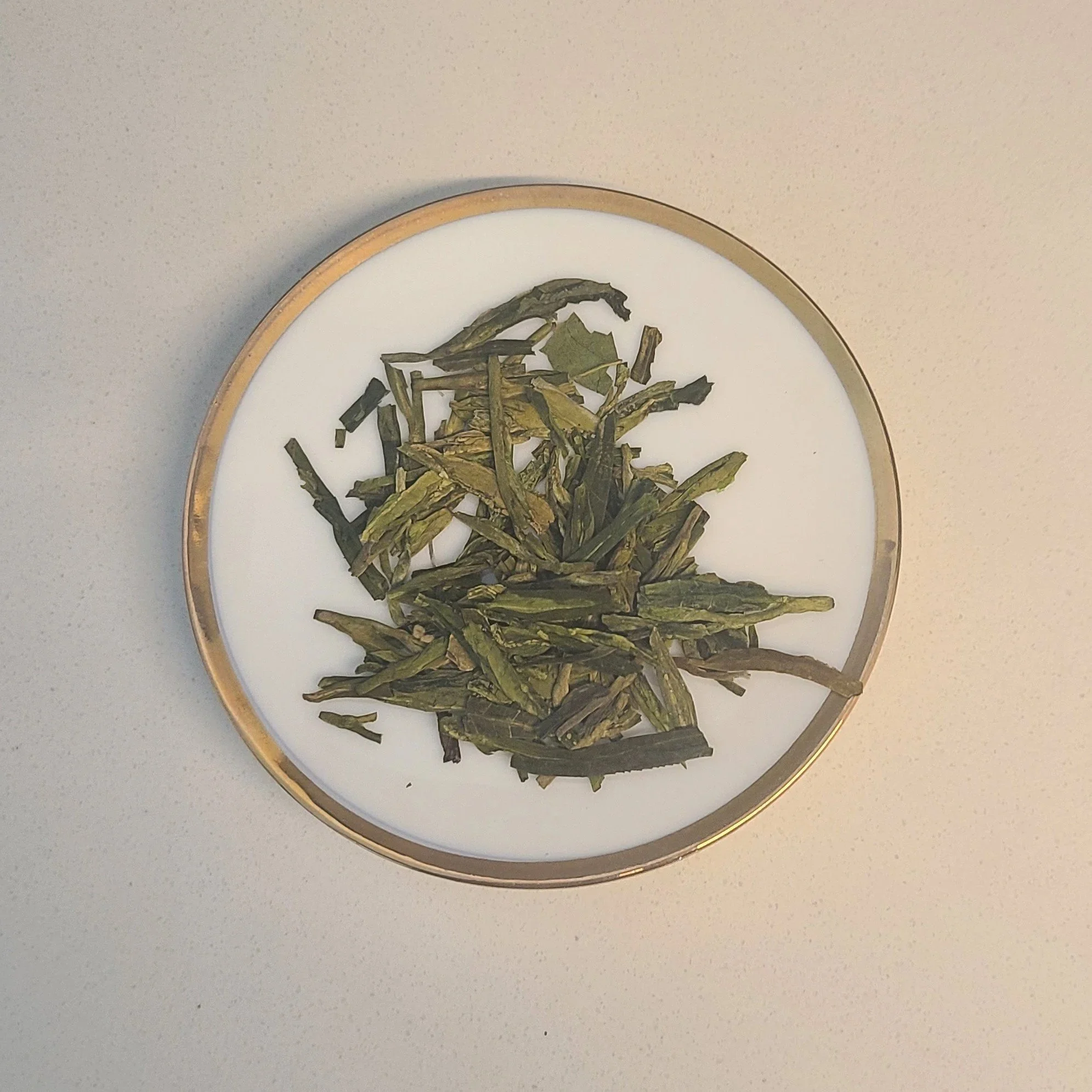
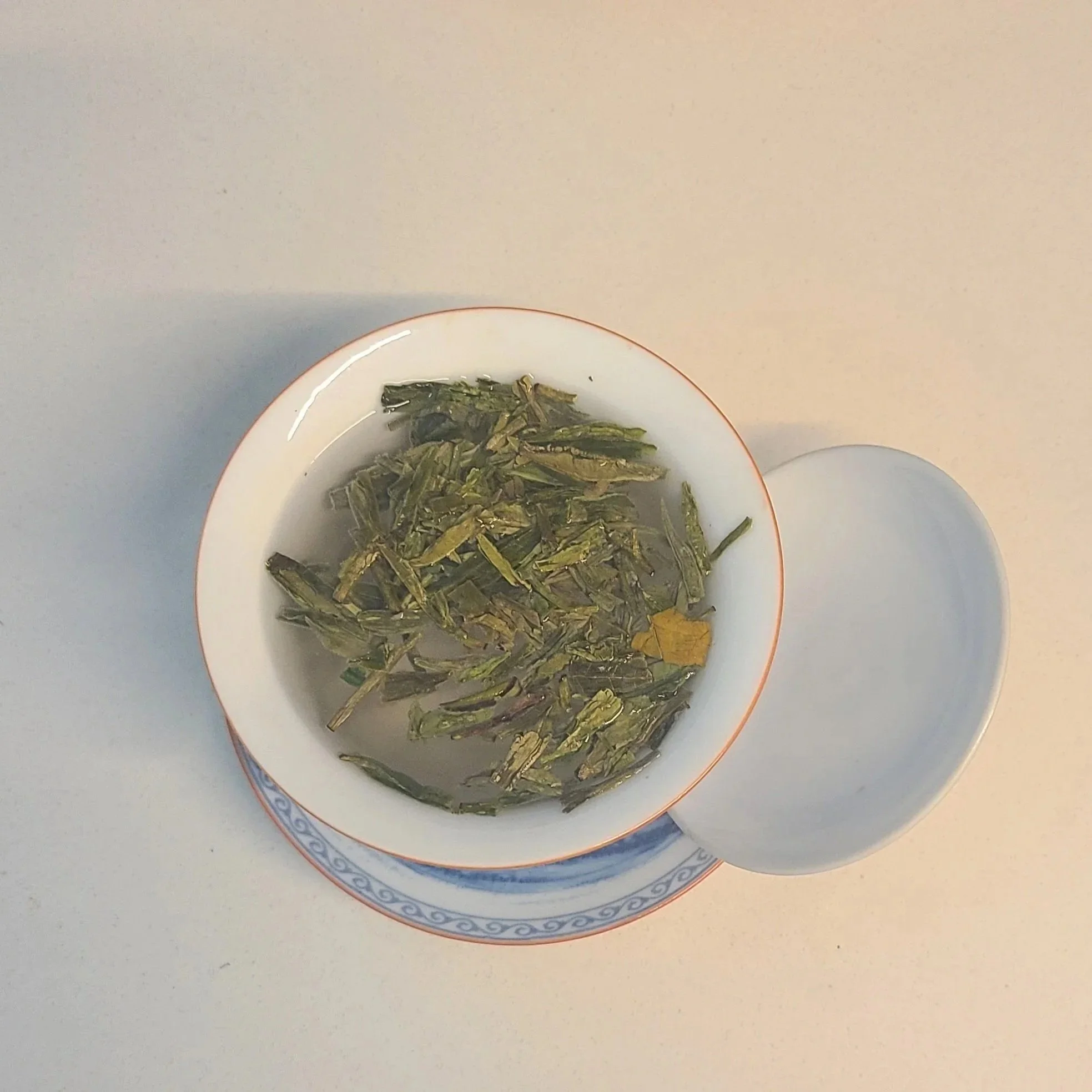
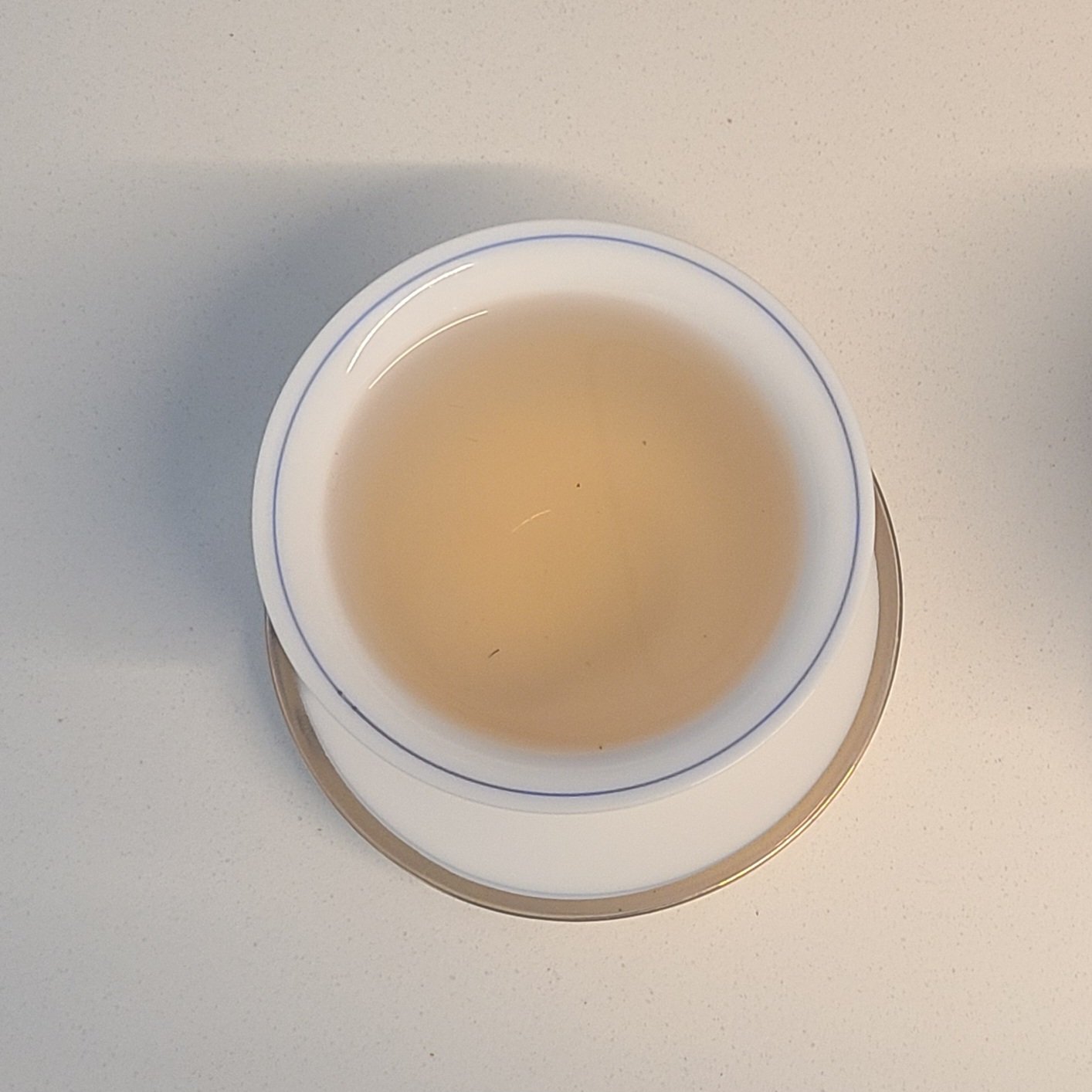
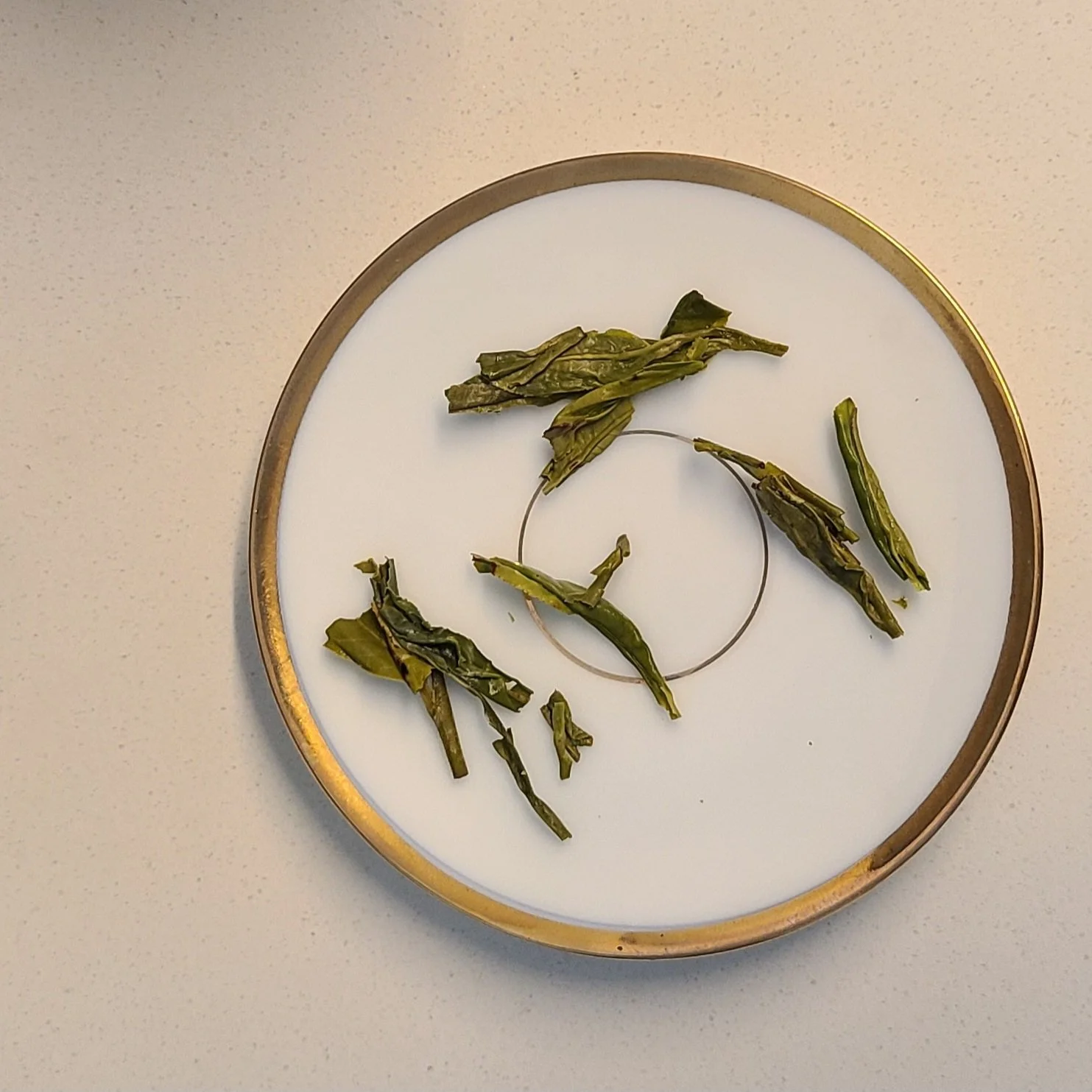
While I received this as a sample, I wished I had more. I will definitely look to purchase some next year!
Comparative tasting of some Japanese green teas
In Canada, most people think of green tea that is served at sushi bars, and maybe matcha, and perhaps ‘green tea ice cream’. I could never understand how people can drink generic ‘Green Tea’ from a tea bag. I’ve never had a really good cup of ‘green tea’ from a bag. (TRUTH)
When I was in the navy, I was once assigned as the Canadian liaison officer for a visiting Japanese naval ship, the destroyer Takatsuki. When I visited the ship the officers presented me with matcha during a tea ceremony. I was absolutely floored. It was such a beautiful ceremony, and one of my favourite memories of the Navy. After that, my interest in tea grew, and wherever I travelled I sought out tea shops or asked about local tea customs.
Japan actually has several varieties of green tea, including sencha, hojicha, genmaicha, gyokuro and tencha/matcha.
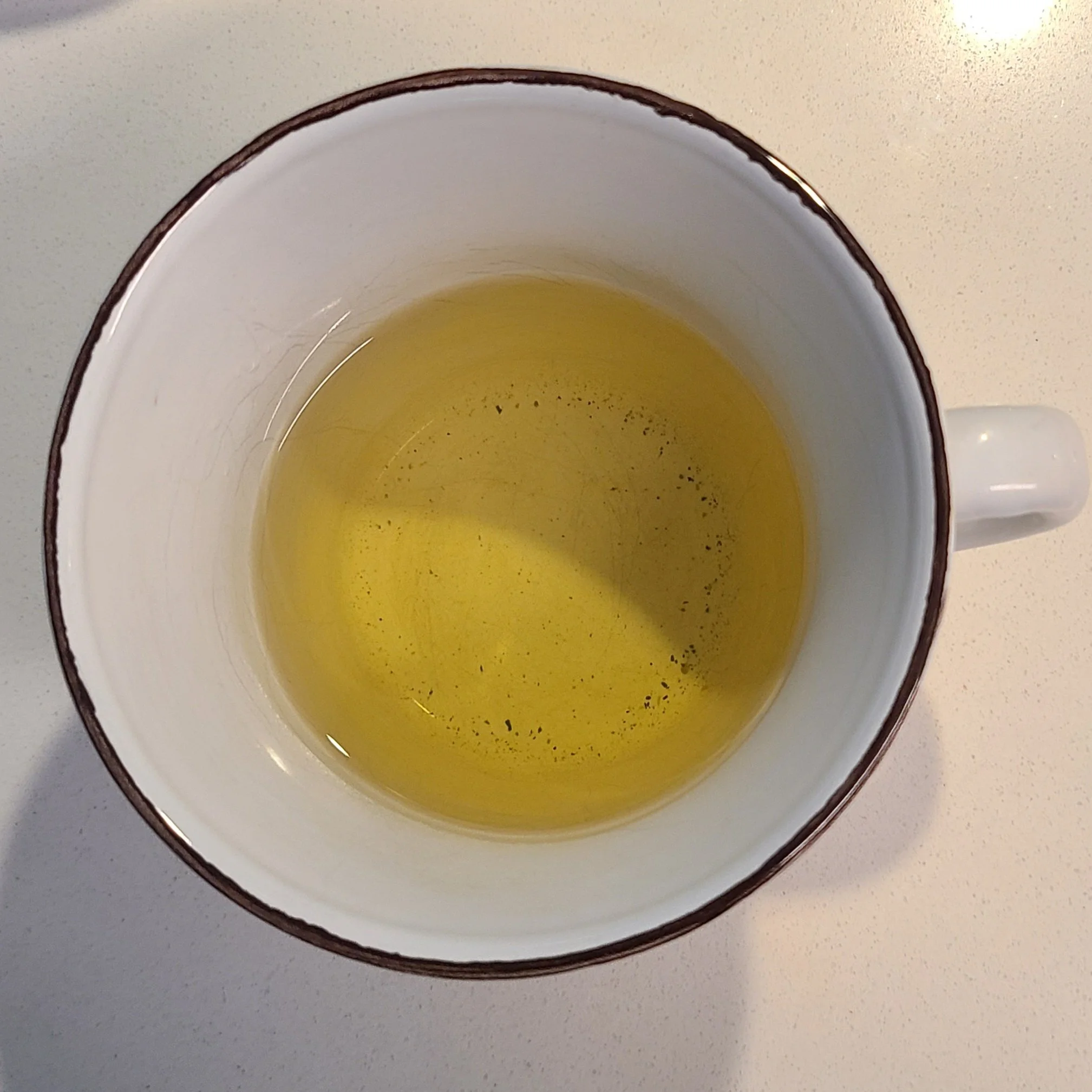
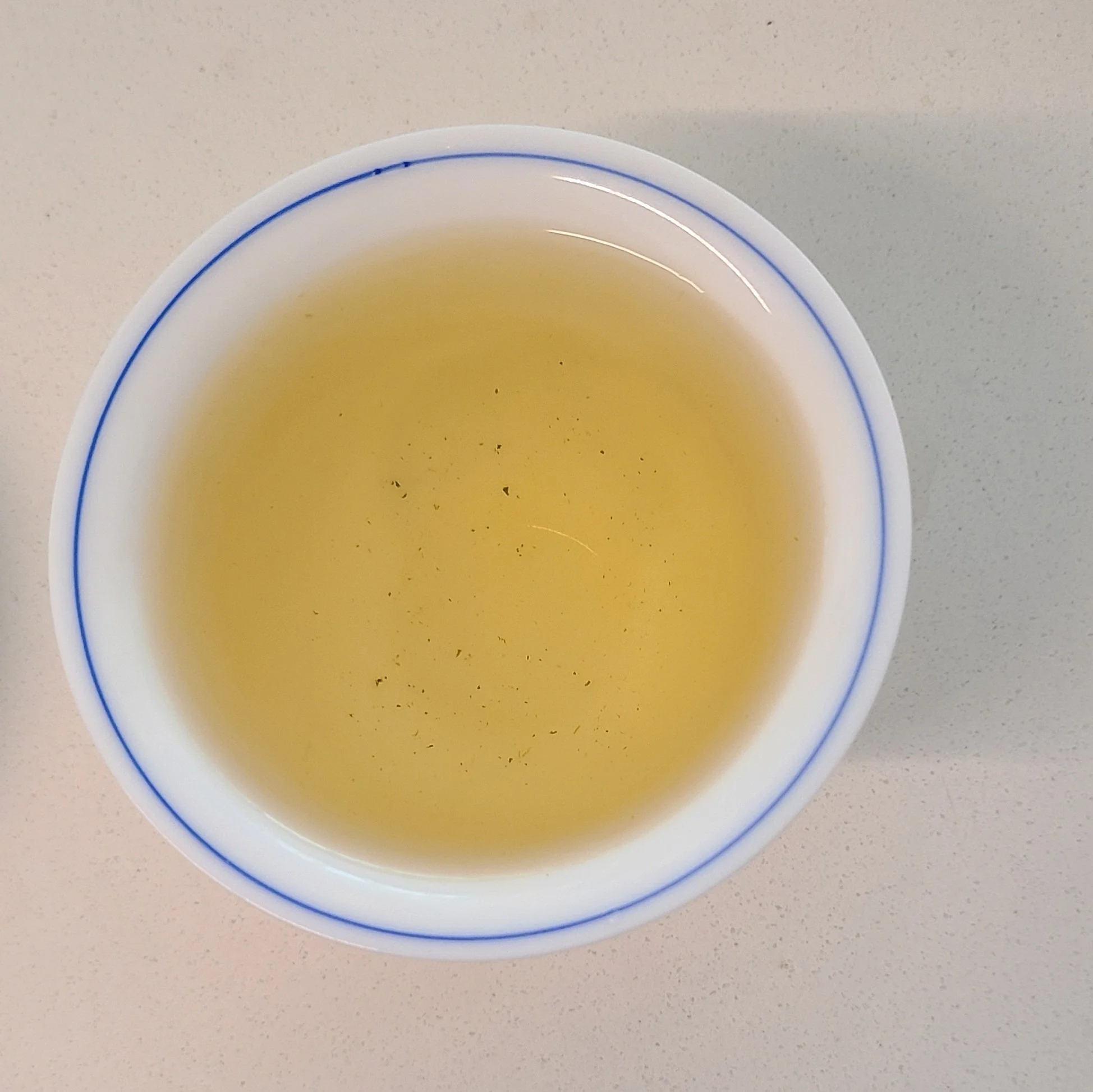
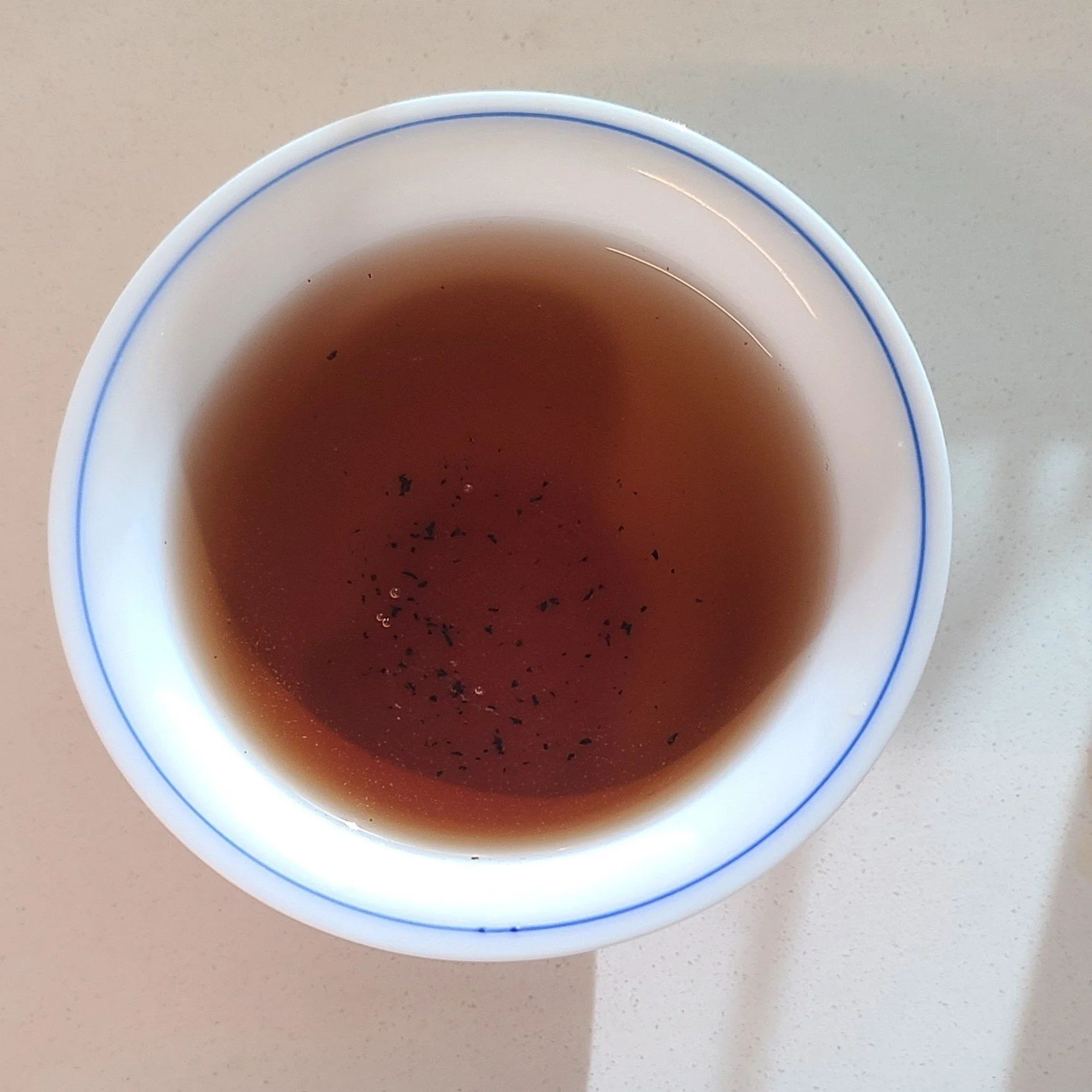
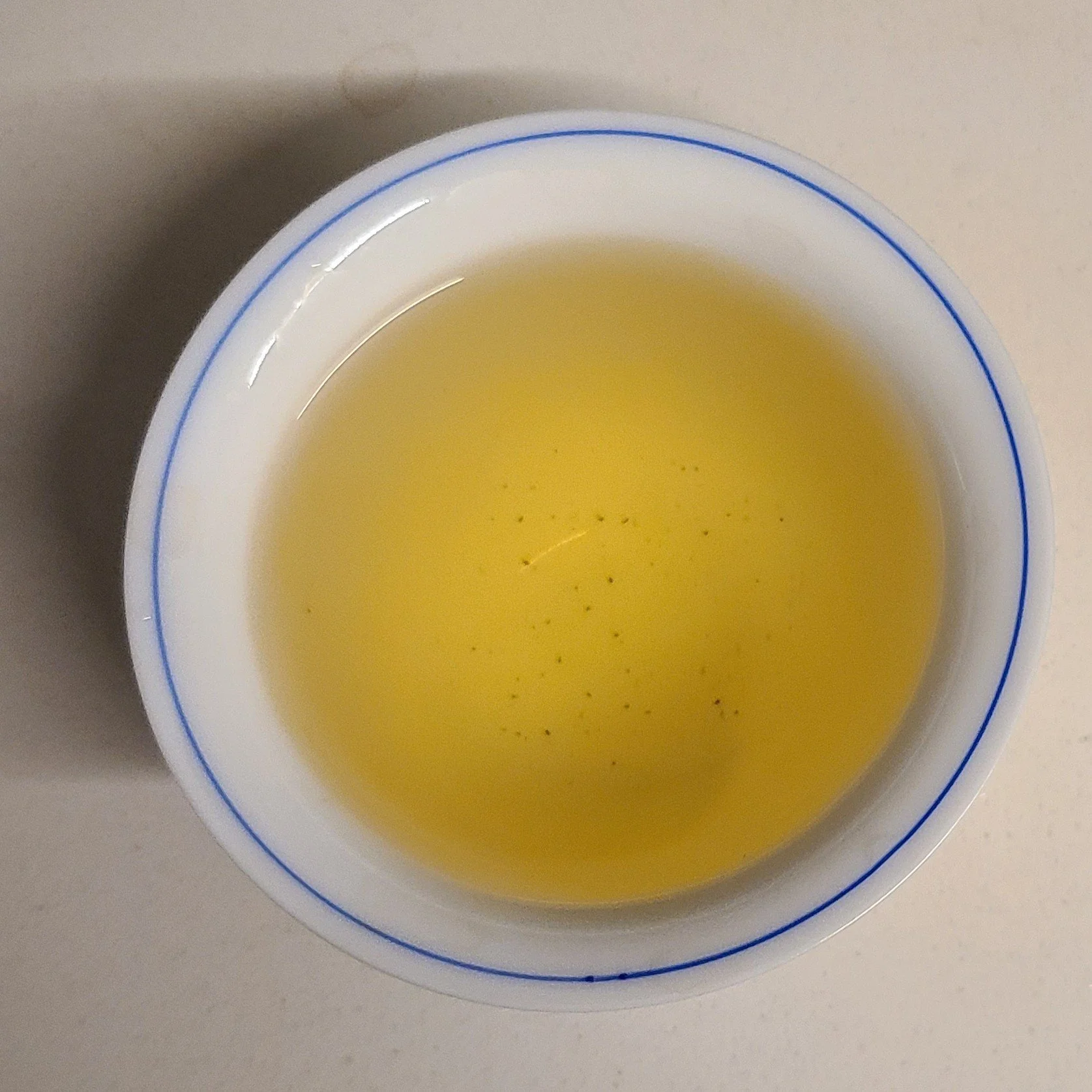
Sencha is grown in full sun. Gyokoru is tea that is grown in the shade for several weeks before harvesting, which changes the proportions of sugars, flavanols and amino acids which alters the overall flavour. Hojicha is created from the last plucking of Sencha and then is roasted, giving it a darker colour and toasty flavour - but it is still a green tea. Genmaicha is a green tea with added roasted rice to it, that adds a nutty taste.
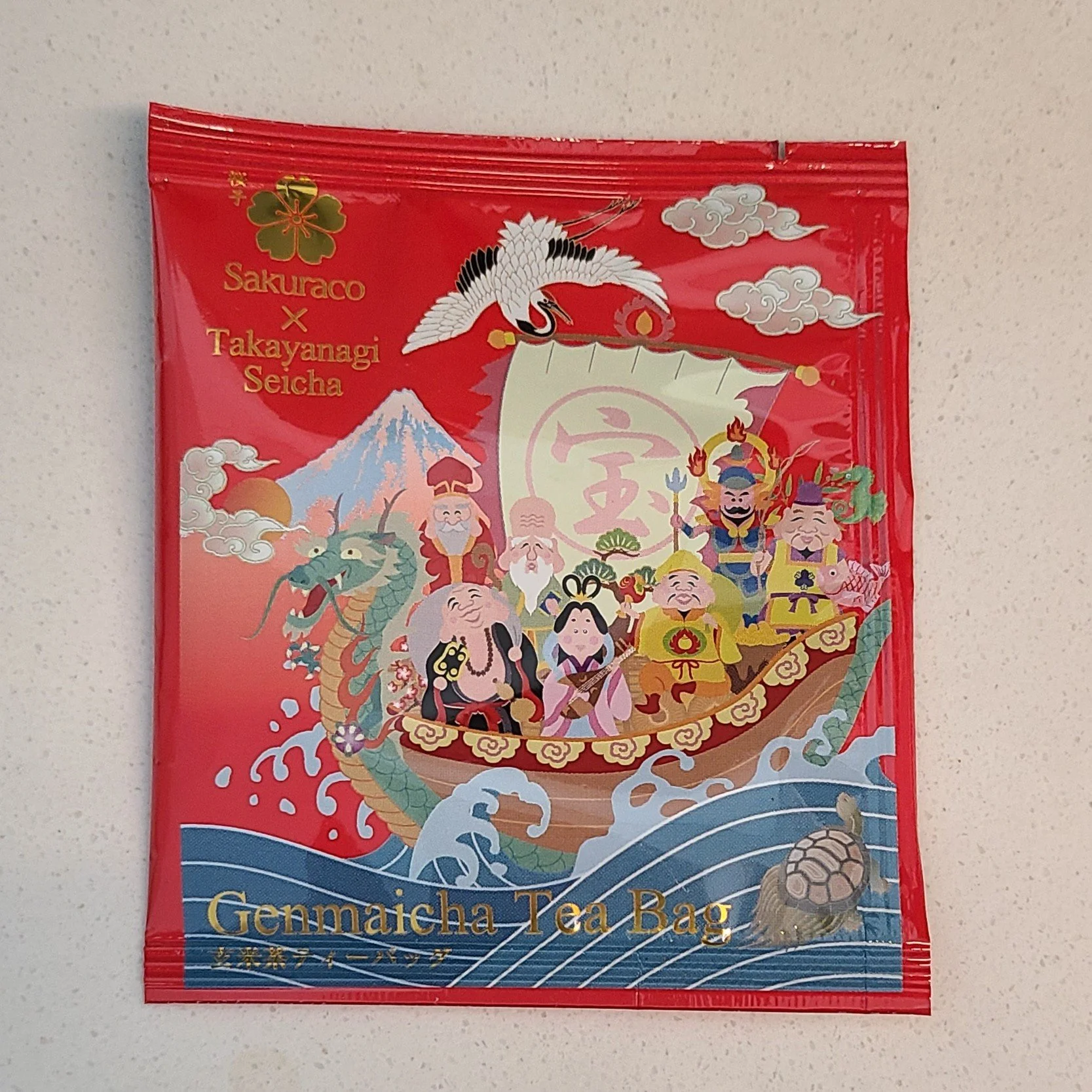
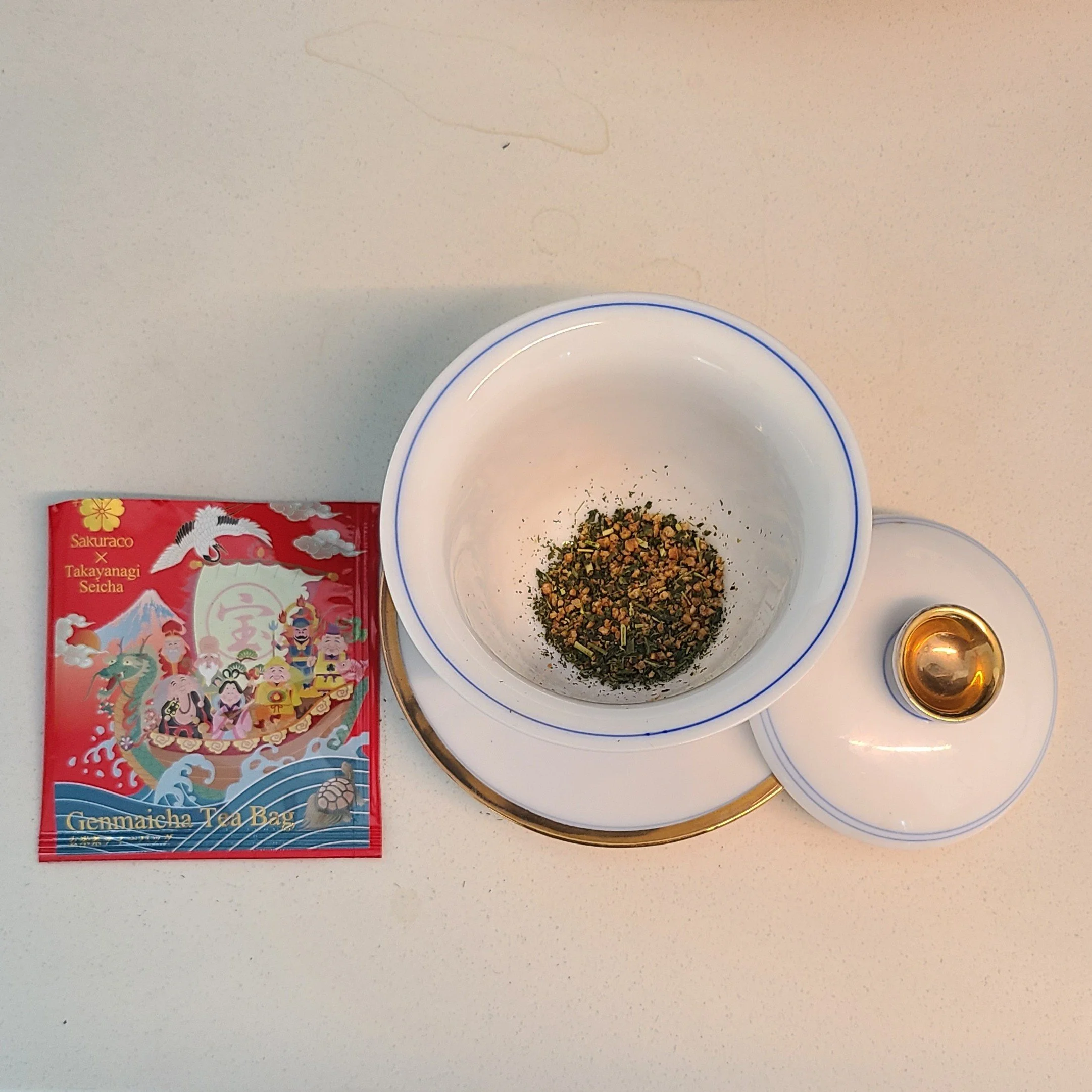
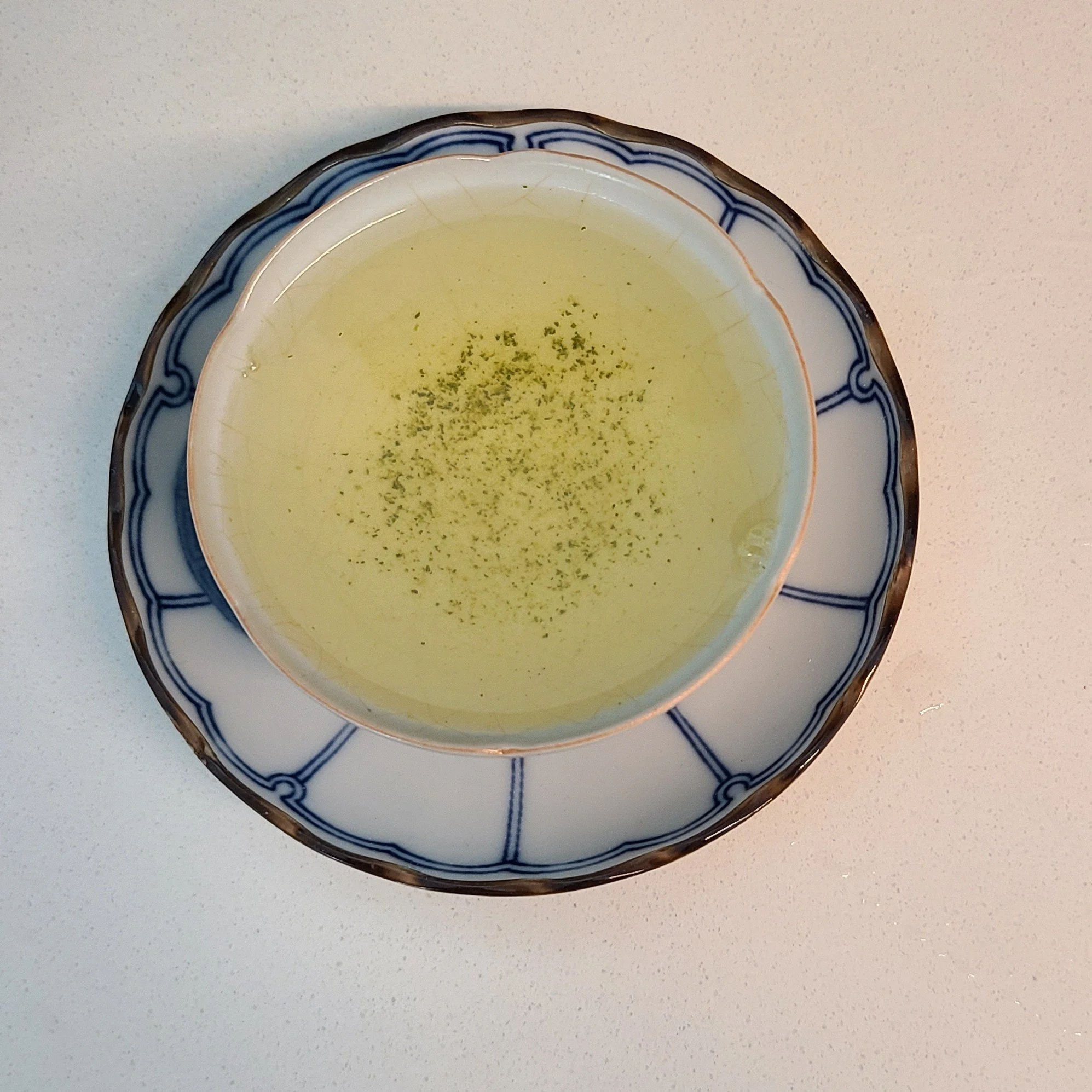
Shizuoka Genmaicha - Takayanagi Seicha - January’s Tea from Sakurako
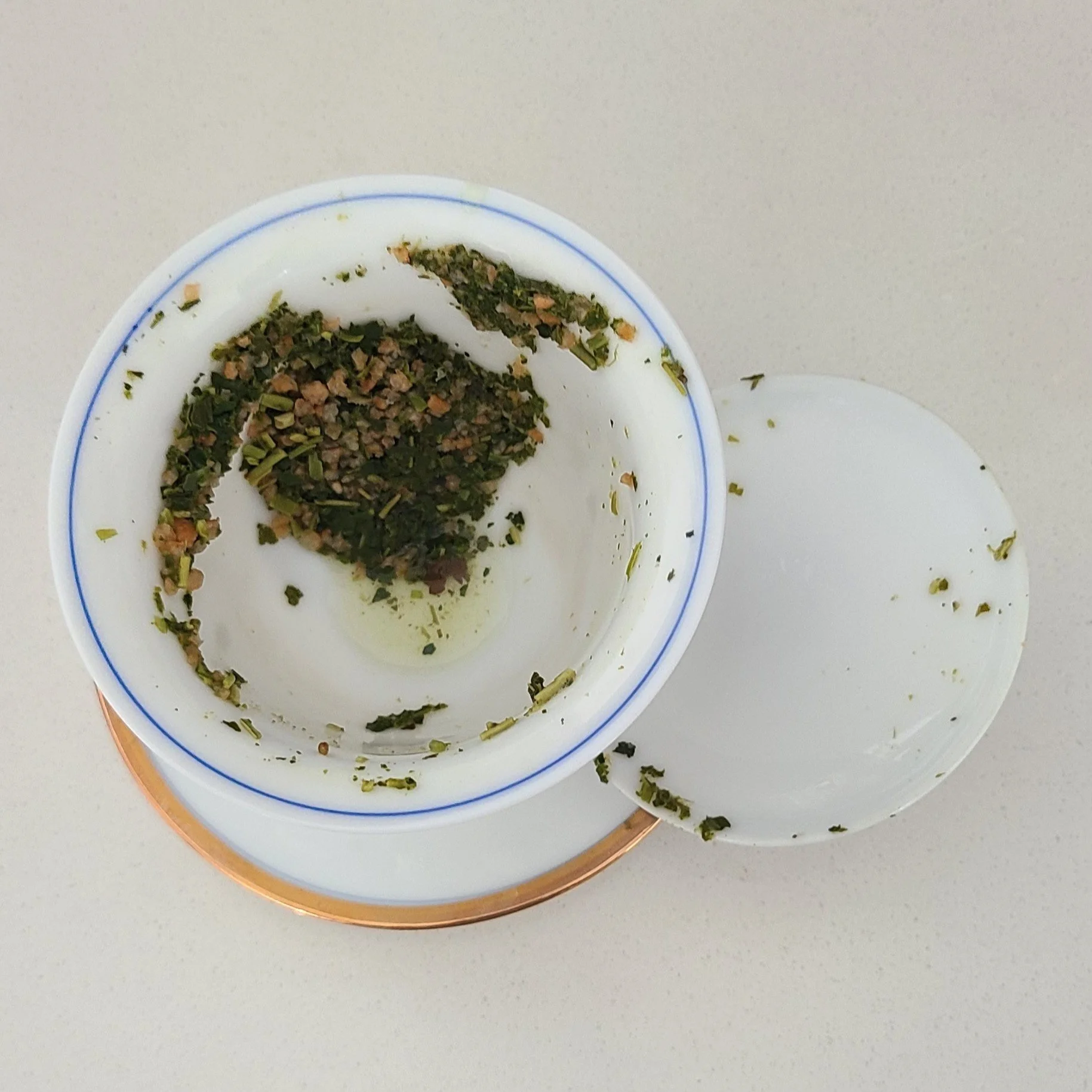
This is a nice light, toasty tea. While I appreciate the idea of Sakurako of sharing Japanese cullture with the world, I wonder if providing tea in plastic tea bags is the best message? Note, that I cut open the bag and empty the contents into my brewing vessel before brewing - to prevent micro-plastics in my beverage,[2] but also to see the actual leaves. I would say the quality is fair, but as this is tea for bags, it tends to be very small leaves. Even though I used a strainer, there was still lots of tea dust in the bottom of my cup.
I will leave you with this line of poetry by Lord Byron [3] - as I go to make myself another cup of lovely green elixir!
“Here I must leave him, for I grow pathetic,
Moved by the Chinese nymph of tears, green tea!”
I recommend trying a variety of green teas to find your favourite. I must admit that I really like Hojicha.
[1] When I searched this tea on their website, the description came up under the Dragon Well Lung Ching Green Tea - perhaps because it is late autumn and the West Lake Long Jing was already sold out, but they had a few packets left to provide as a sample.
[2] McGill University (2019) Some plastic with your tea? Posted online September 25, 2019.
[3] Lord Byron - Don Juan: Canto the Fourth - https://allpoetry.com/Don-Juan:-Canto-The-Fourth