Ottoman Corinth
Corinth, Gördüs or the Key of Morea was an important Ottoman center.
“In Ottoman times (1458-1687 A.D and 1715-1822A.D) the town was an important fortress (the “Key of the Morea”, at first the seat of the Ottoman Sandjak Bey of the Morea and centre of a large Kadılık (district under the supervision of a Kadı/Judge). Later, especially in the eighteenth century, it developed into a Muslim center of local importance, containing a number of monumental domed mosques, some colleges of higher Islamic learning (medrese) and a number of dervish convents (tekke).”
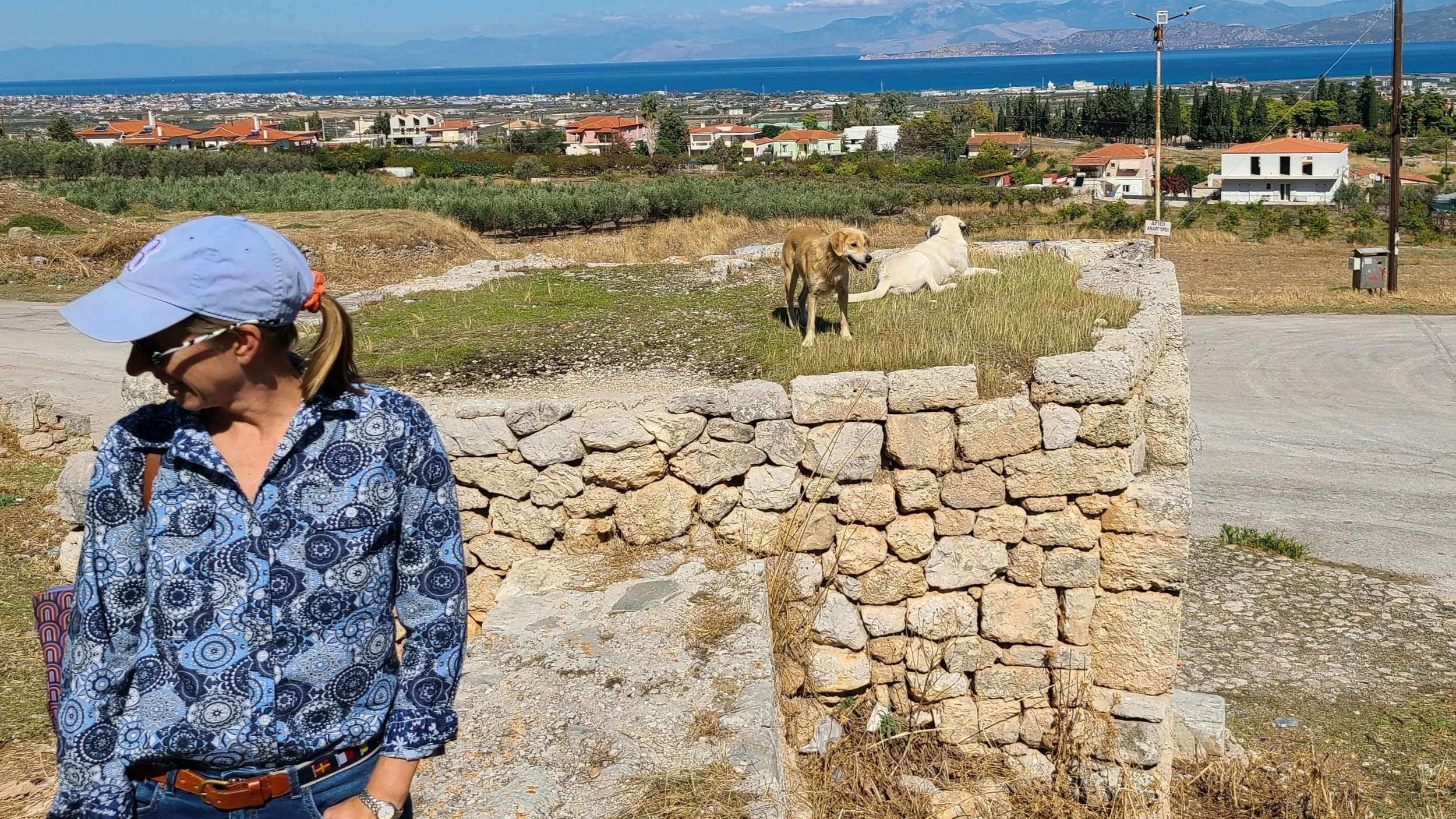
Politically, it is a hotbed to focus on Turkish reign in Greece, but they undeniably had a major impact and their archaeological features should be valued as a part of history. Reality means that the government of Greece appears to take less interest in and conservation of Ottoman remains. I wanted to highlight what I saw during this trip (in 2025) so that the photos could be used for later comparison.
“During the reign of Mehmed II the Conqueror (1451–1481), the mainland of Greece (Sterea), as well as most of the Peloponnese and the Northeast Aegean were dominated by the Ottomans, including the important centers of Athens in 1456–1458, Corinth in 1458, Mystras in 1460, Argos in 1463, Mytilini and Lesvos in 1462 and, Evoia in 1470.”
In 1668, a Turkish writer named Evliya Çelebi visited Corinth and wrote about Turkish Acrocorinth. His description has been included in the 1968 article by Pierre MacKay. It gives a good description of the site during the previous period of the 17th century. The other mosques mentioned are mostly rubble now.
“There are altogether four important places of prayer. One of these is the mosque of Mehmed the Conqueror, an abbreviated but serviceable place of worship of the old sort. There is also the Beyzade mosque, and the Ahmed Pasha mosque. The Fethiye mosque was originally a Christian church, but was later converted to a mosque. In addition to these there are 2 neighborhood mosques, a coffee house, and a small shop, but in all this great fortified settlement there are no other public buildings, because the castle is so high that everyone would be worn out with going up and down.”
Acrocorinth - Ahmed III Mosque [1]
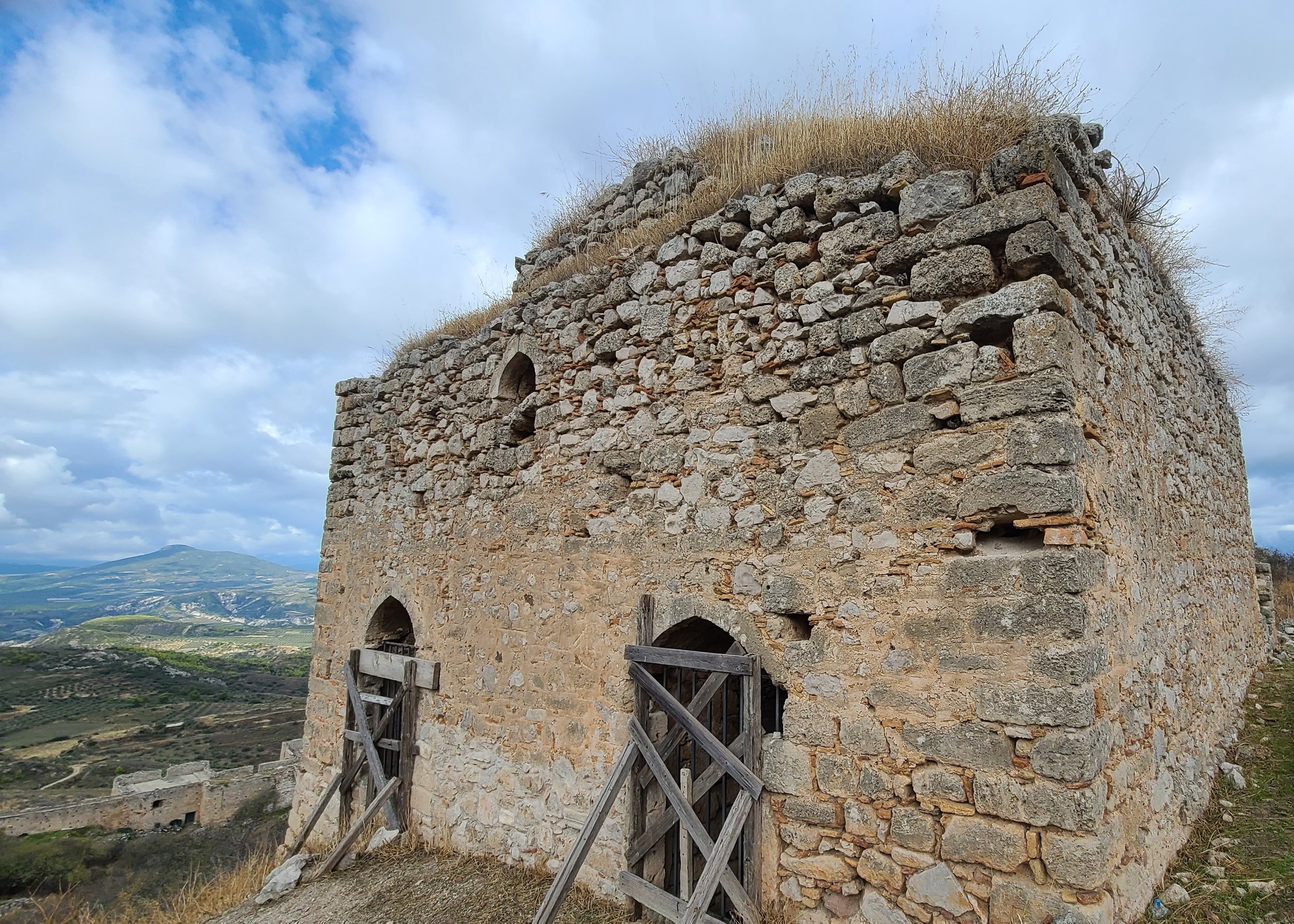
Exterior view of the mosque
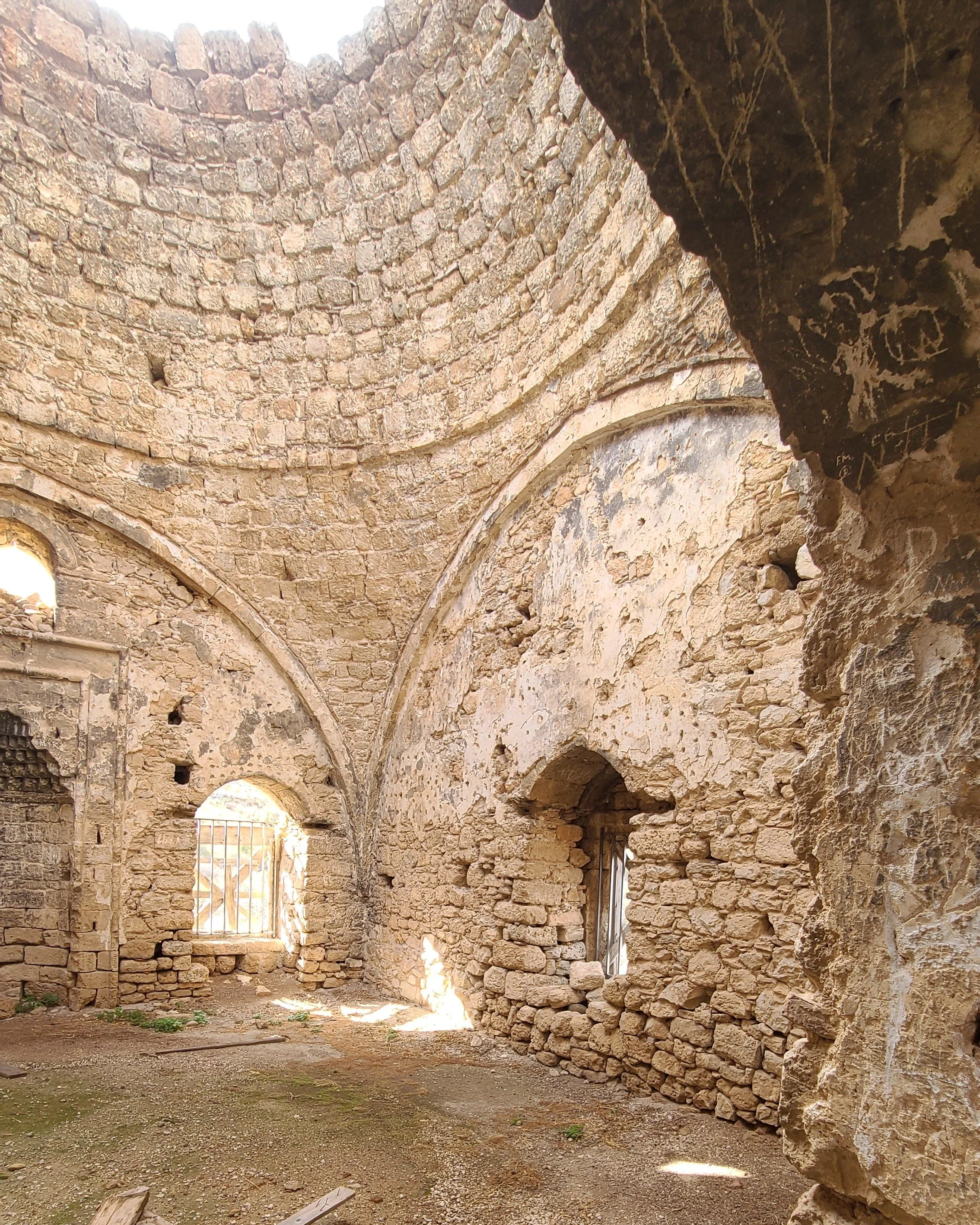
This mosque was constructed after the 1715 reconquest of Acrocorinth by the Ottomans,[2] and was built on the site of an earlier 16th century mosque. The mosque is still standing but is not in a very good condition. However, a view through the blocked-off entry certainly gives the impression of what would have been a particularly beautiful building.
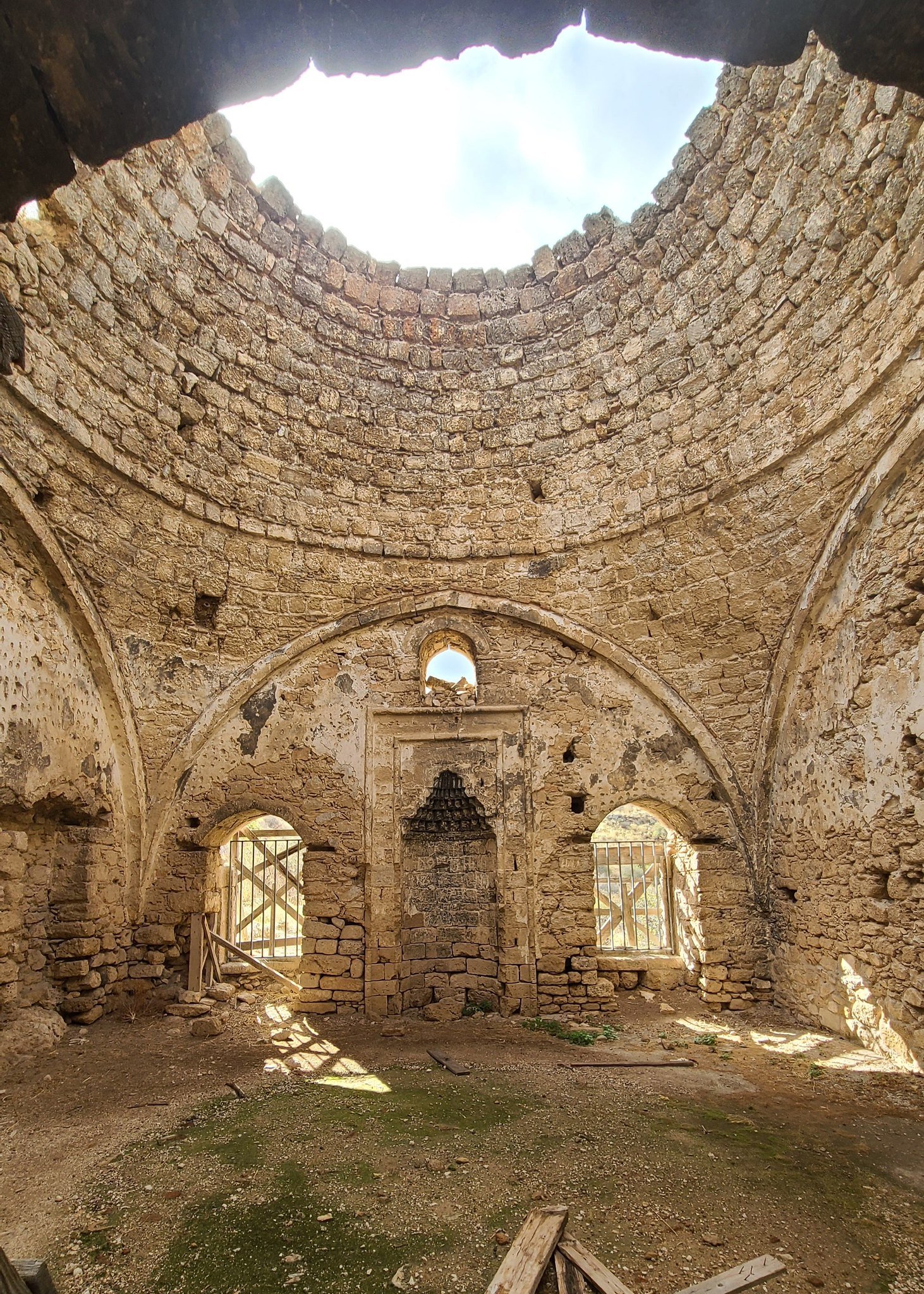
Interior view of the Ahmed III mosque (2025)
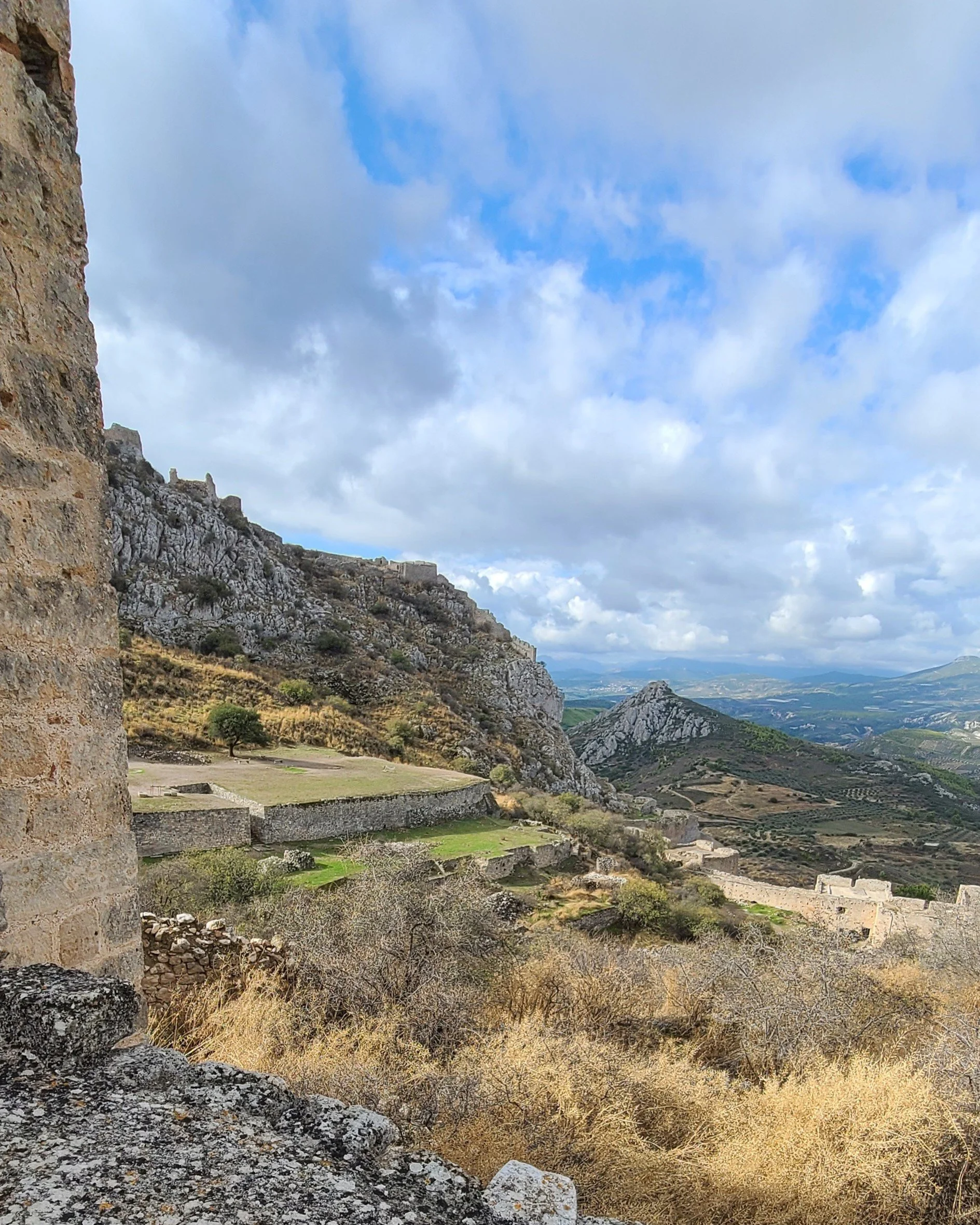
Hadji Mustafa Spring
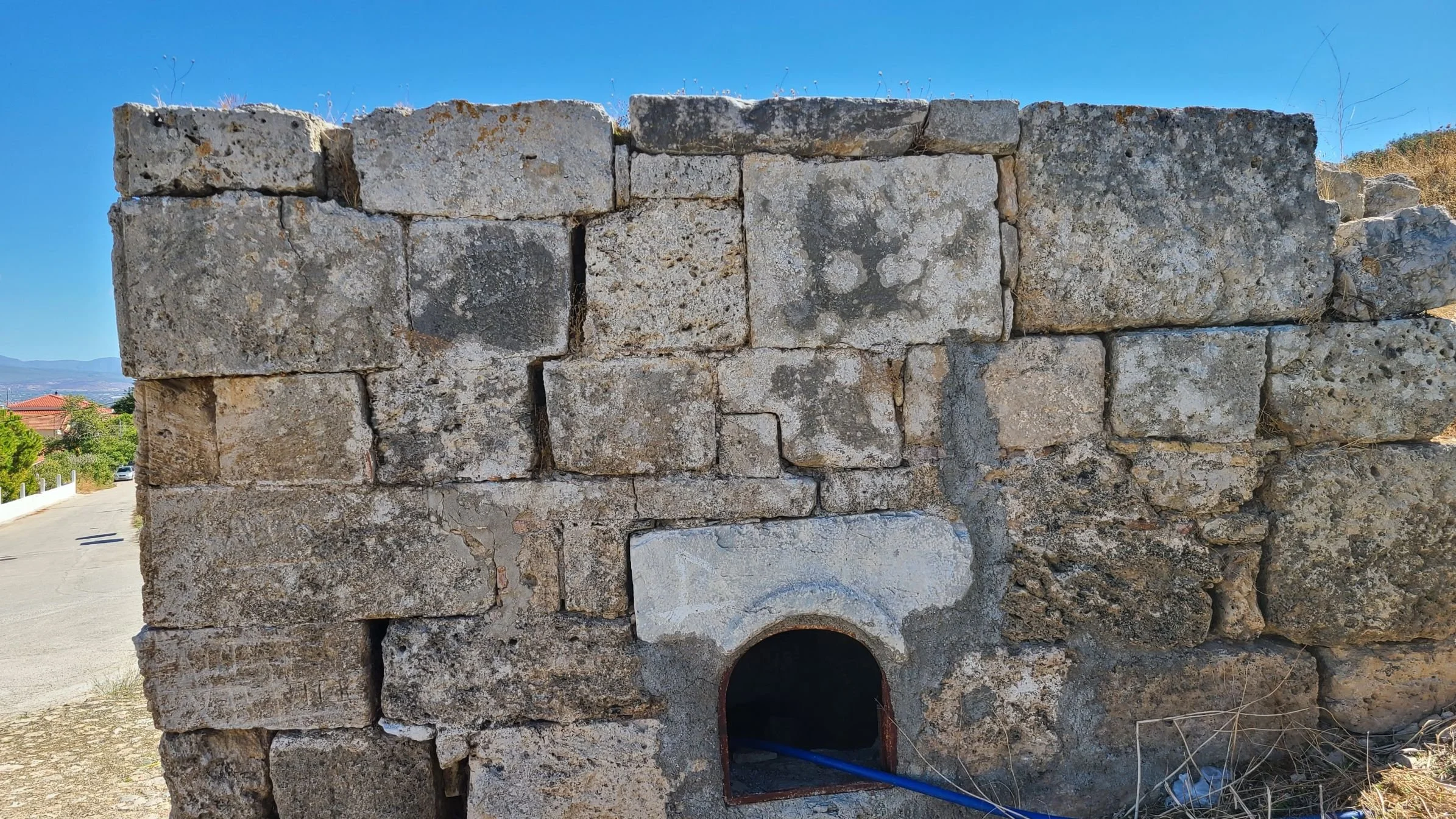
This fountain is located in the ancient village of Corinth, at the turn of the road that leads up to the acropolis. This beautiful spring still provides fresh water to the locals. Many stop for a drink, or to fill a bottle or two. The water is cool, and fresh. It was built in 1515.
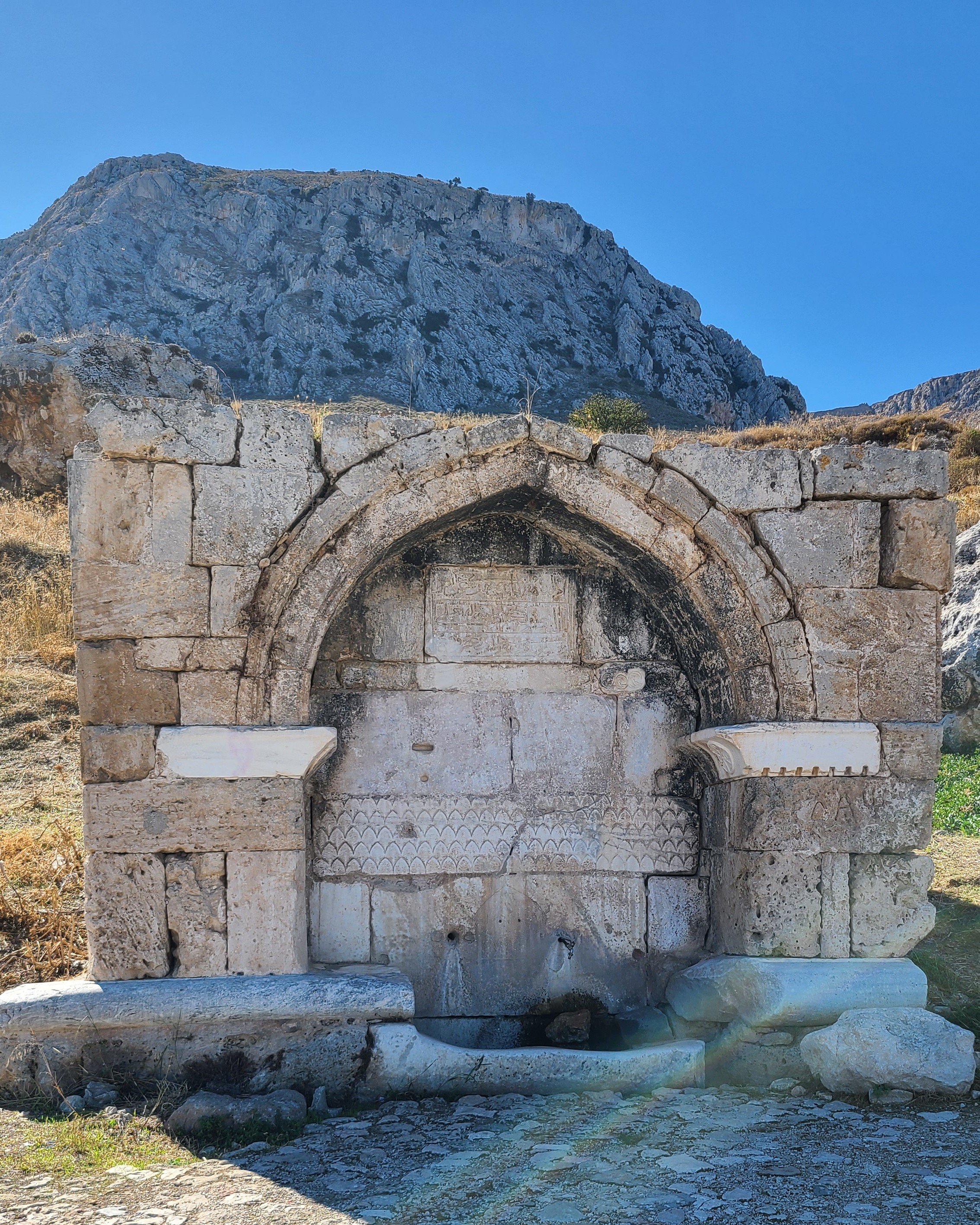
Haci Mustafa Fountain (October, 2025)
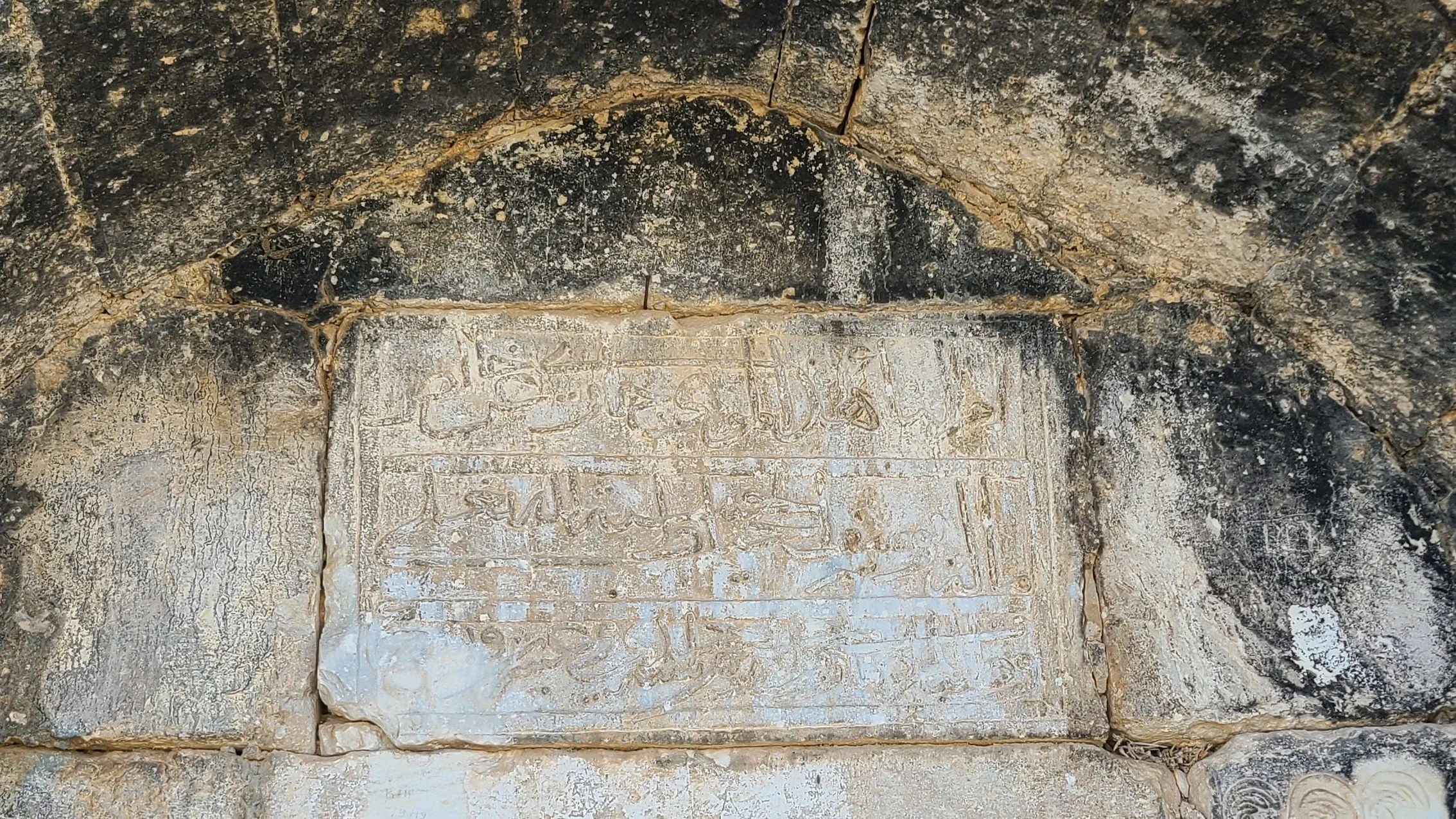
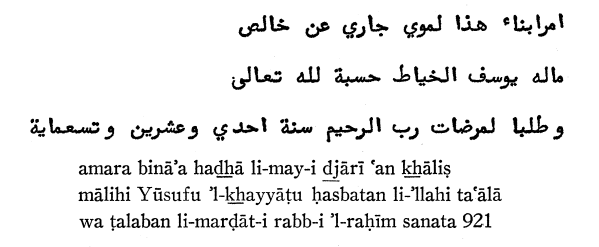
“Joseph the tailor ordered the construction of this [fountain] for flowing water entirely at his own expense, for the love of God, let Him be exalted, and desiring to please the Merciful Lord, in the nine hundred and twenty-first year [of the Hegira (1515 A.D.)].”
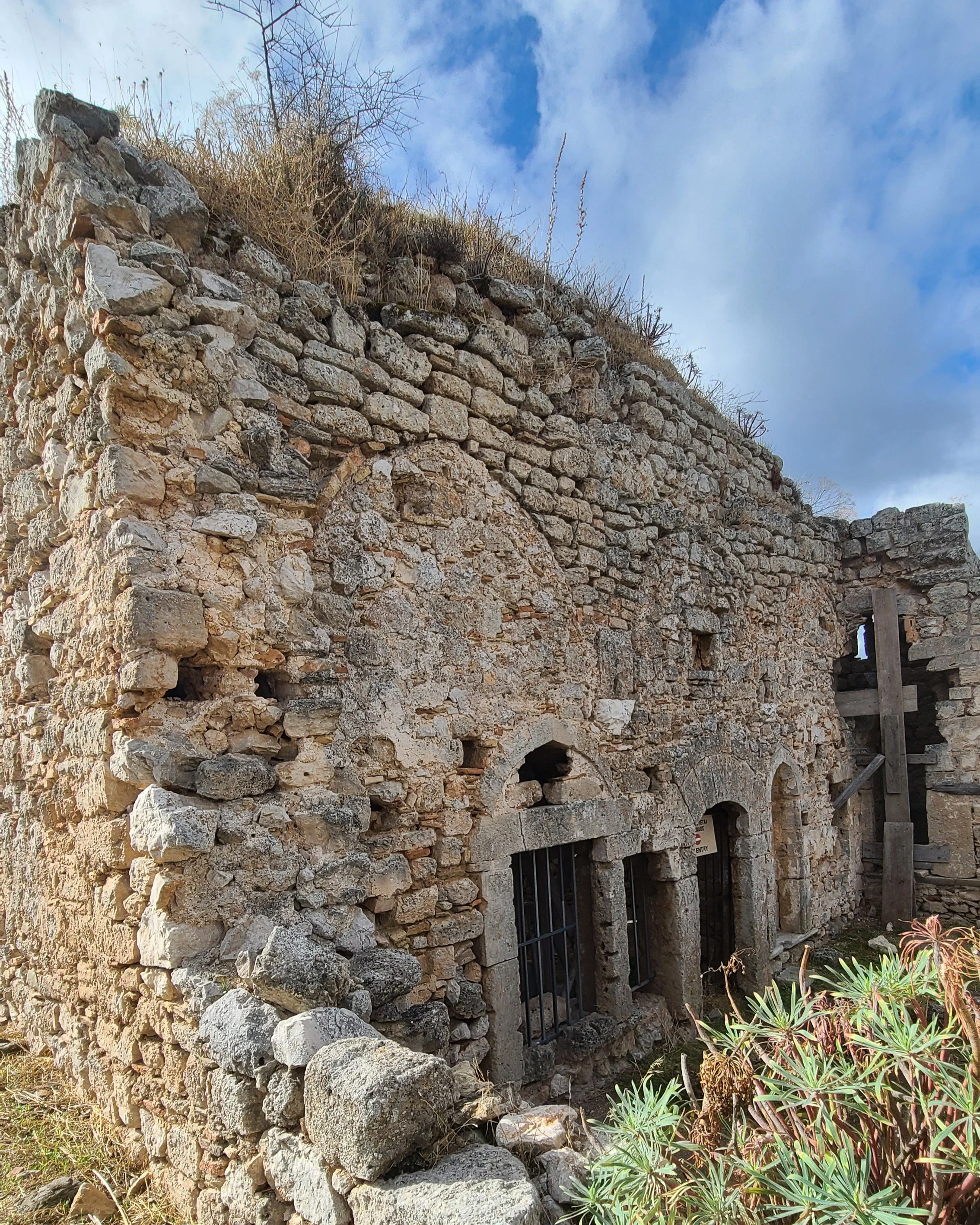
Ancient Corinth - Muslim Monastery
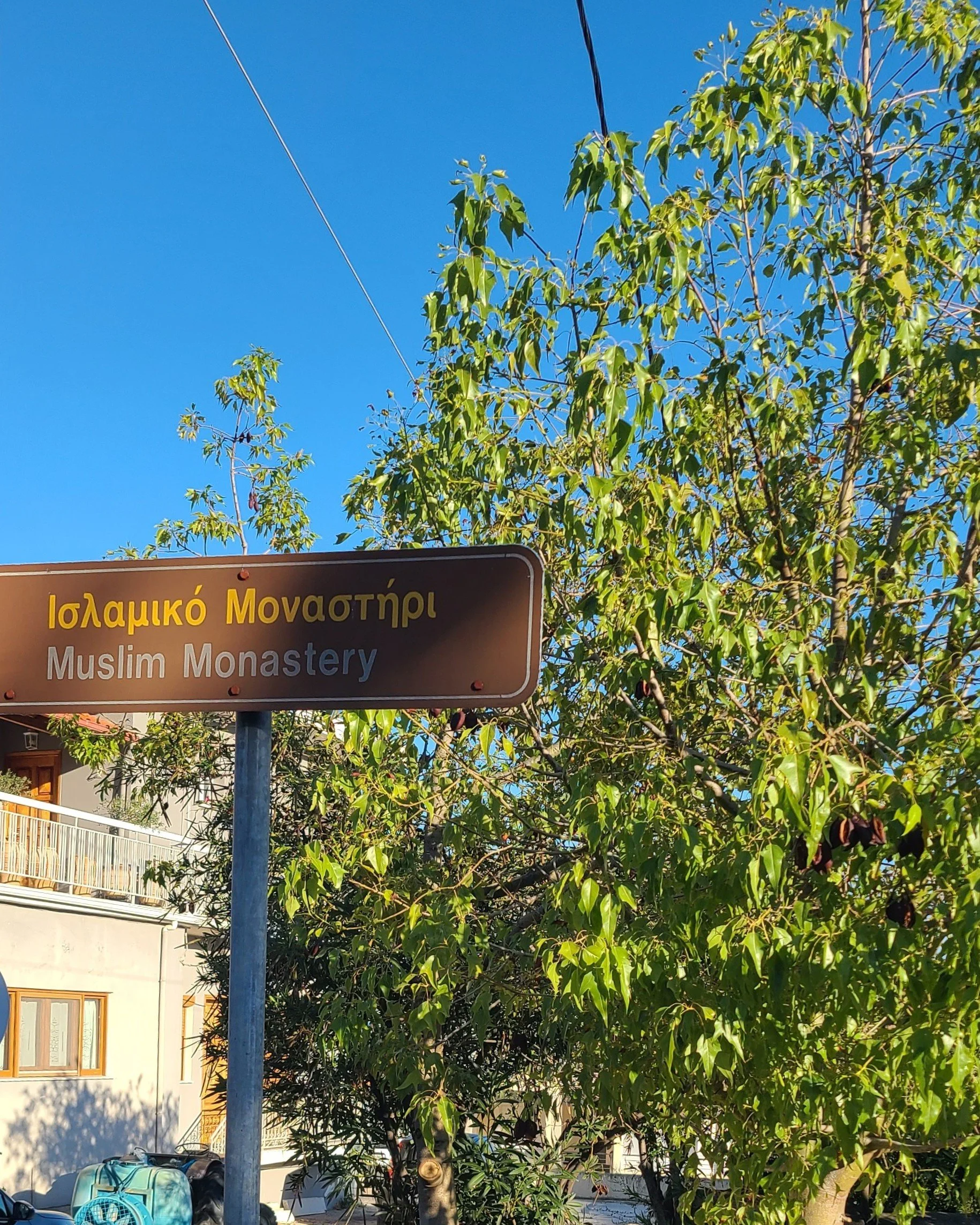
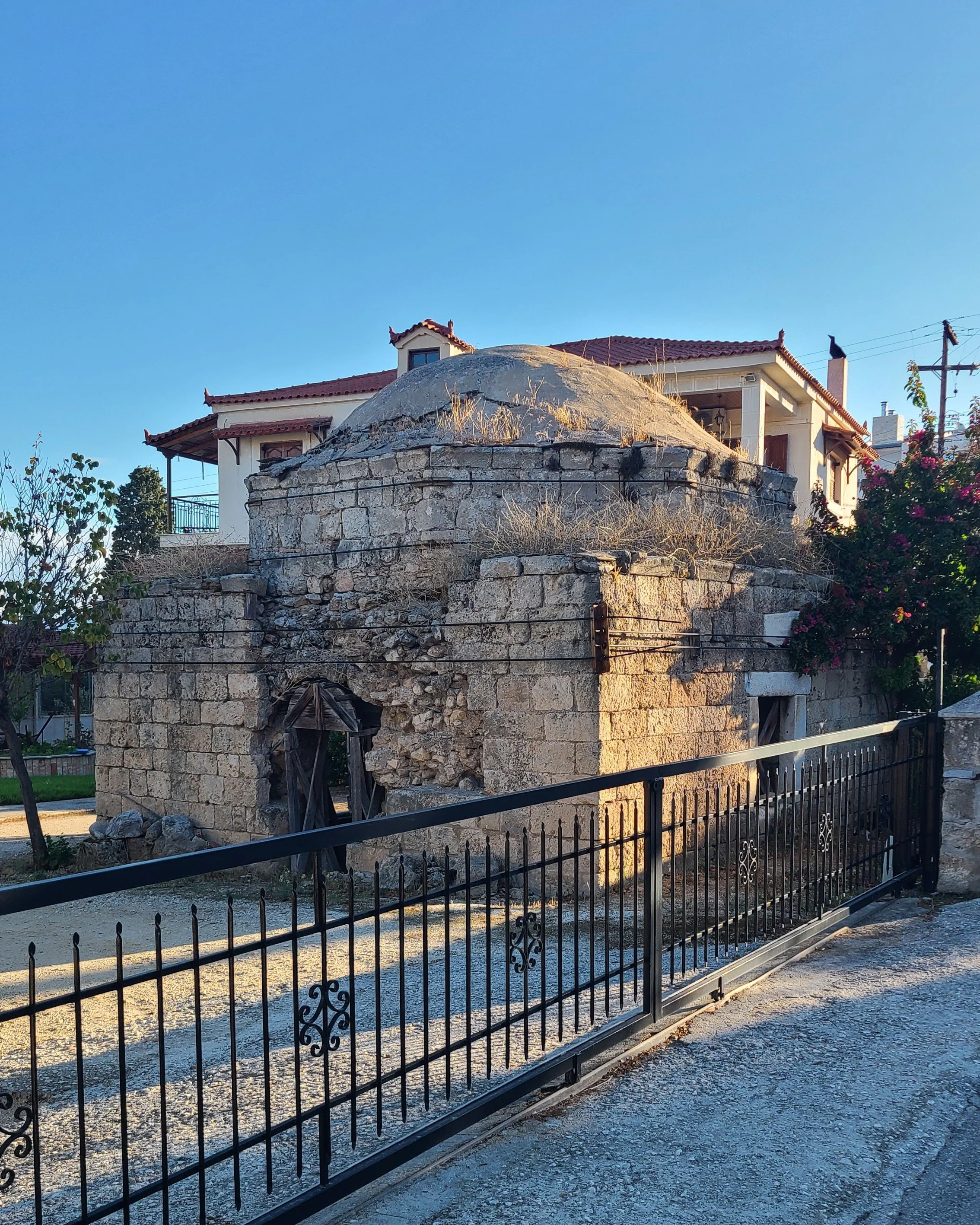
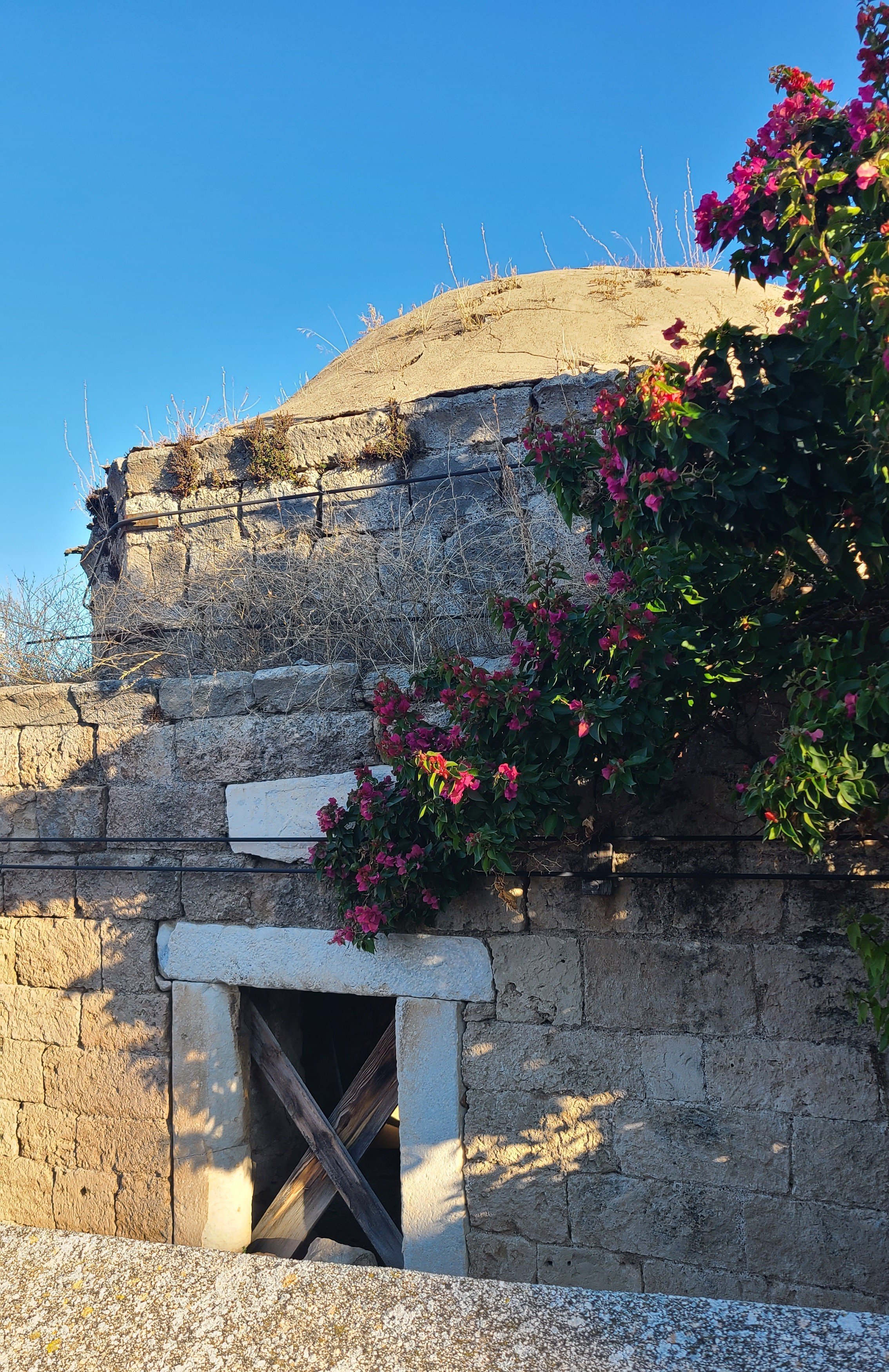
This monastery appears to be within the yard of someone’s house. It looks like it isn’t being maintained at all. I couldn’t find anything written about this building, so if anyone has information please let me know.
[1] Ahmed III Mosque - https://en.wikipedia.org/wiki/Ahmed_III_Mosque
[2] “The Ottomans returned in June 1715 and took the town (Corinth) after a fight of one week. The Venetian garrison, 400 men, was allowed to retreat to Corfou.” Kiel, 2016: 59
Bibliography:
Ameen, Ahmed (2017) Islamic architecture in Greece: Mosques. Alexandria: Center for Islamic Civilization studies, Bibliotheca Alexandrina. ISBN 9774524349.
Kanetaki, Dr. E.I. (2009) Corinthia in the Ottoman period through interdisciplinary studies (SH6 3996) – COPIS - from Acrocorinth: West walls defences and the settlement from the southwest (Athanasoulis Demetrios, To Κάστρο Ακροκορίνθου και η ανάδειξή του (2006-2009), 25η Εφορεία Βυζαντινών Αρχαιοτήτων, Hellenic Ministry of Culture Publication, Ancient Corinth 2009, p. 18-19).
Kiel, Machiel (2016) "Corinth in the Ottoman period (1458-1687 and 1715-1821) : the afterlife of a great ancient Greek and Roman metropolis". Shedet. 3 (5): 45–71. doi:10.21608/shedet.003.05. ISSN 2356-8704.
Koumousi, Anastasia (2008) "Mosque of Acrocorinth". In Ersi Brouskari (ed.). Ottoman architecture in Greece. Translated by Elizabeth Key Fowden. Athens: Ministry of Culture and Sports. p. 136. ISBN 978-960-214-792-4.
MacKay, P. (1968). Acrocorinth in 1668, a Turkish Account. Hesperia: The Journal of the American School of Classical Studies at Athens, 37(4), 386–397.
MacKay, Pierre A. (1967) The Fountain at Hadji Mustapha. Hesperia XXXVI, vol. 36, issue 2, 1967, pp. 193-195.
Madain Project - Acrocorinth Mosque (Τζαμιού του Ακροκόρινθου)
Scranton, R.L. (1957) Corinth: Results of Excavations Conducted by The American School of Classical Studies at Athens. Vol XVI Mediaeval Architecture in the Central Area of Corinth. Chapter VI. The Turkish Period 1458-1958. ASCSA pp. 88-96.