Persian Tea
An afternoon tea of delicious Ceylon tea, and thinking about what I can do to highlight the blight of war in the Middle East.
The first mention of tea in Persia was made by the 11th century Persian scholar, Abu Rayhan al-Biruni, who wrote about the tea plant and its use in China and Tibet. He wrote a pharmacopoeia, the Kitab al-saydala fi al-tibb (Book on the Pharmacopoeia of Medicine), which lists synonyms for drug names in Syriac, Persian, Greek, Baluchi, Afghan, Kurdish, and some Indian languages.[1]
For more about the culture of Persian tea, I recommend this short article: Persian Tea: A Story of Timeless Tradition and Change.
“There is no formal tea ceremony, but Persian people enjoy tea all day from morning to night, after meals, during business meetings, or upon visiting a friend or family’s home. Tea is always a central part of large group gatherings with family. ”
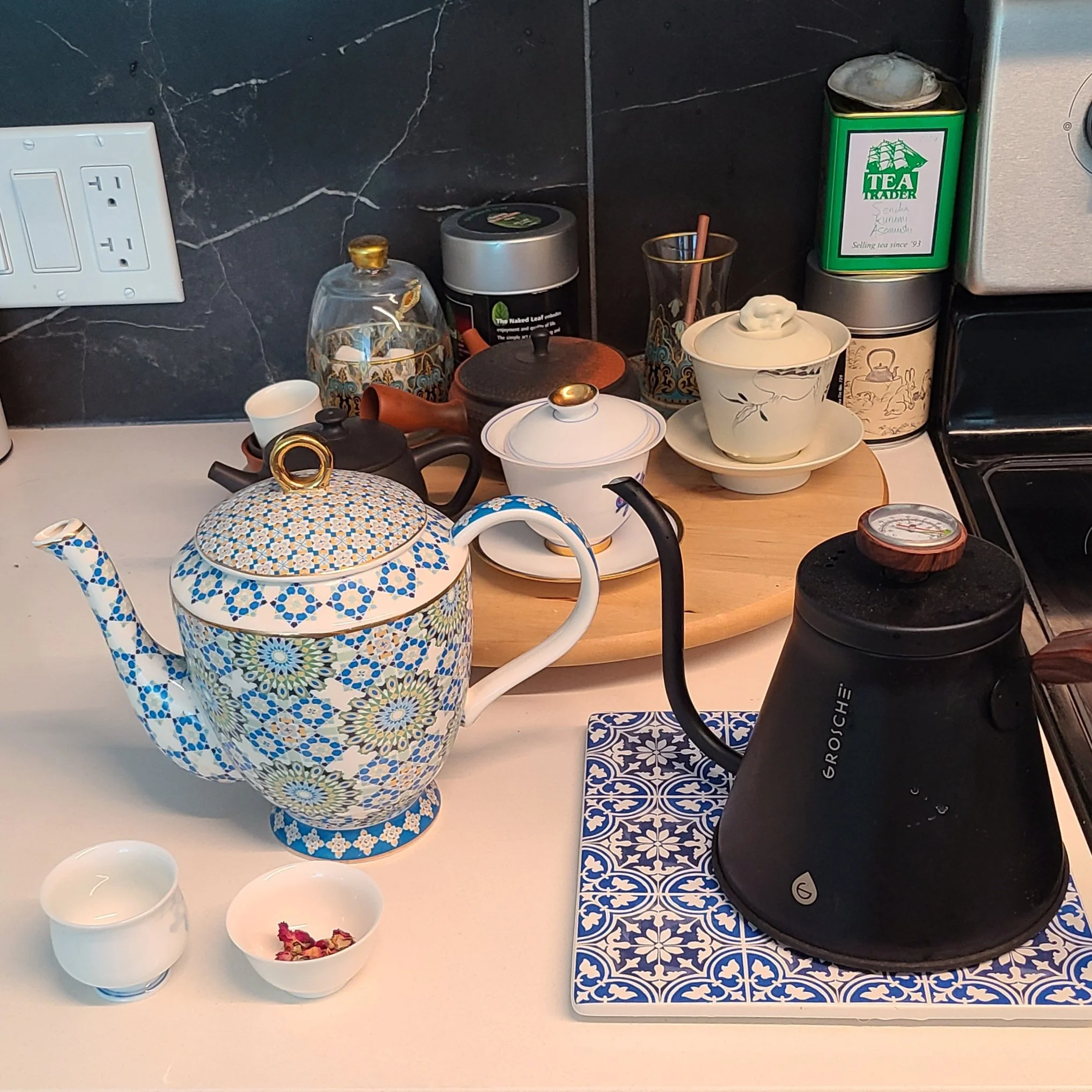
Preparing Persian Tea
You can use any teapot - but traditionally made and served from a samovar. Here I have a separate tea pot and kettle.
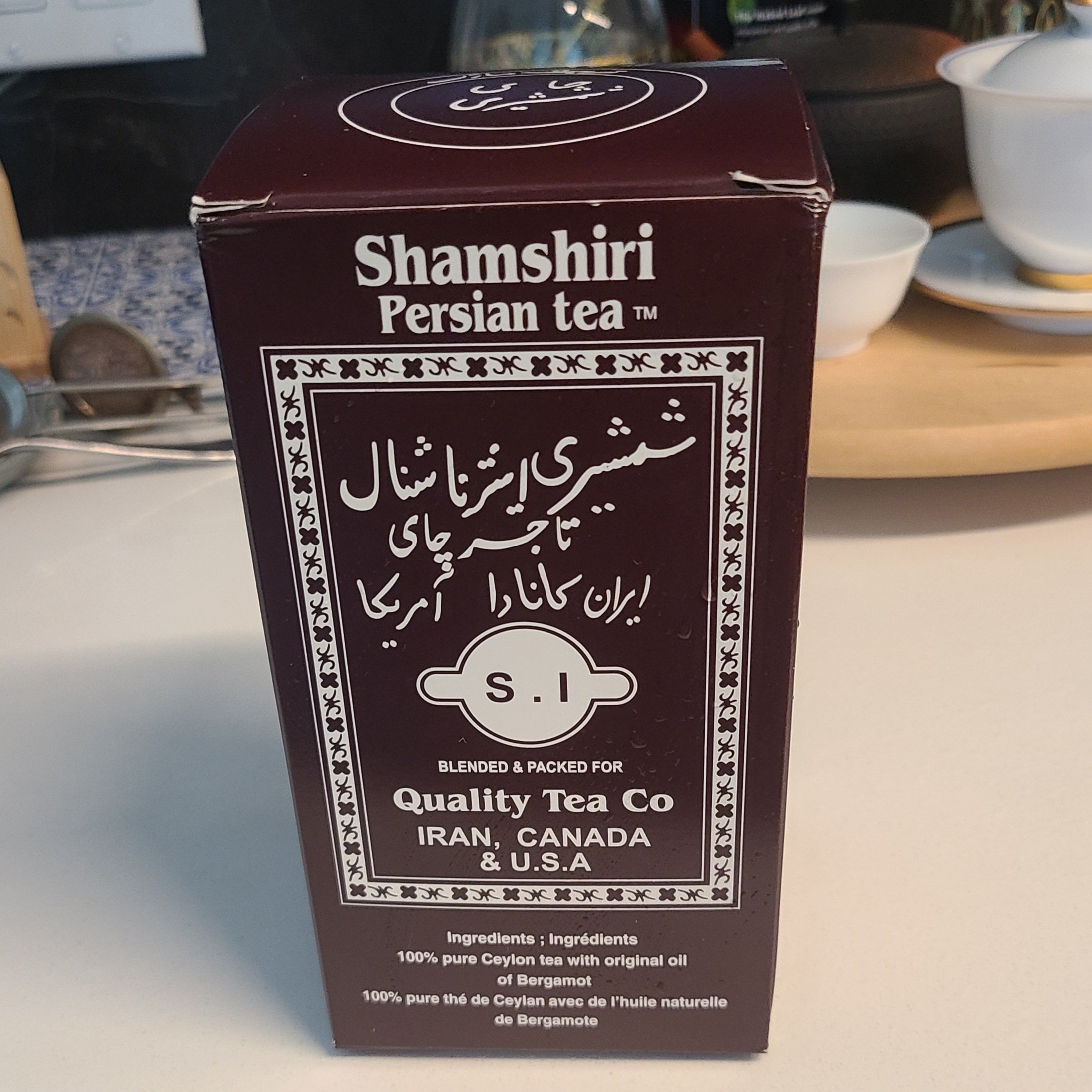
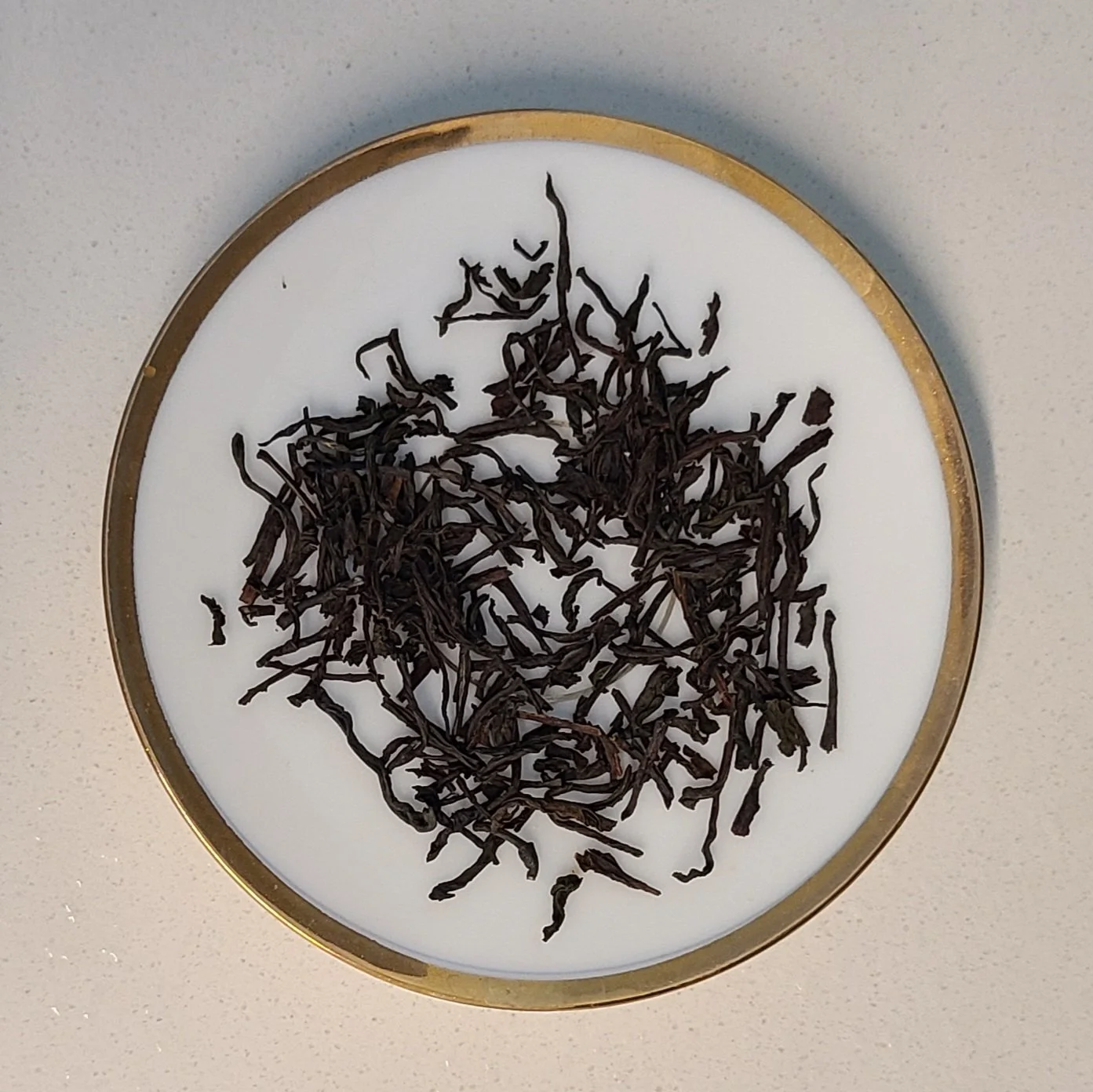
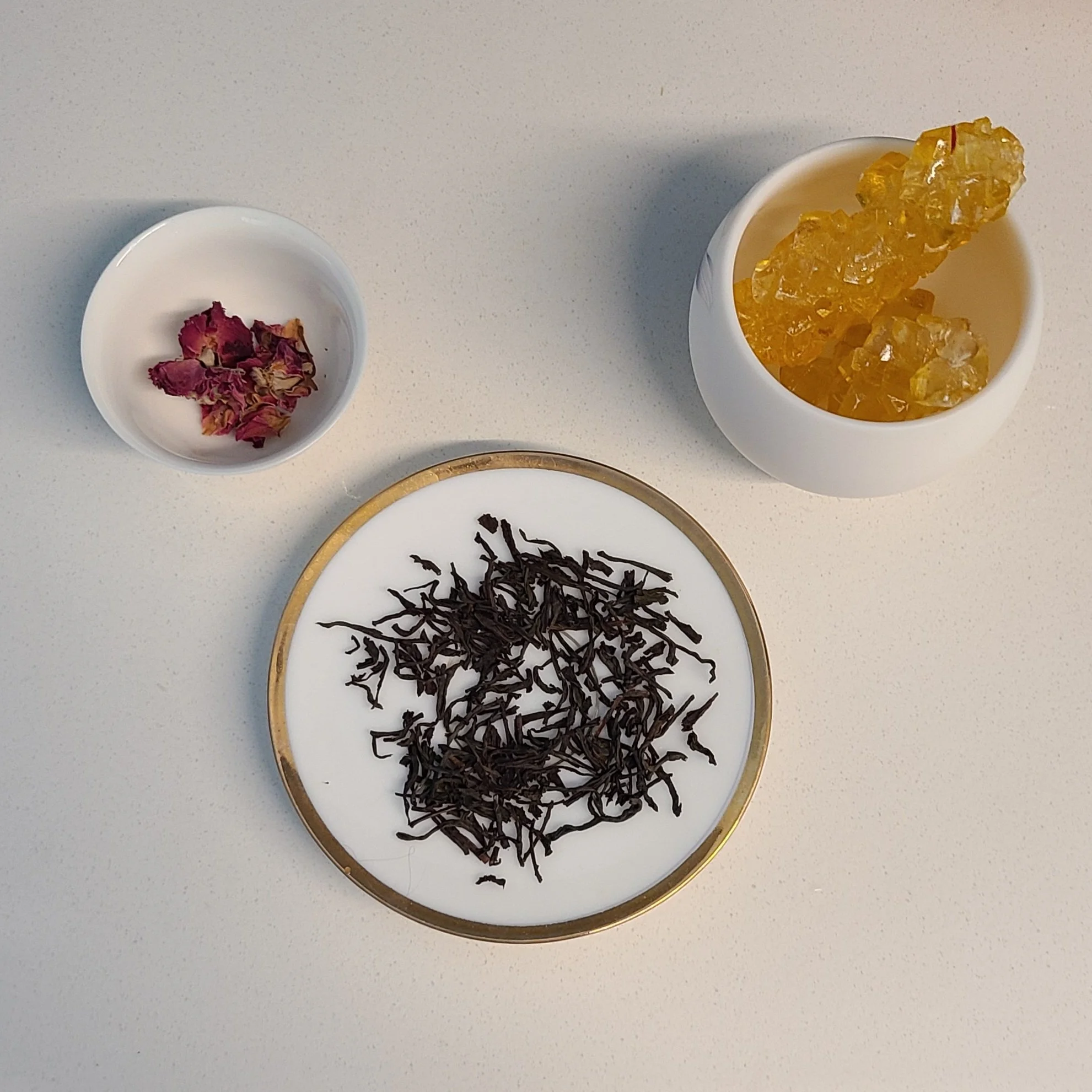
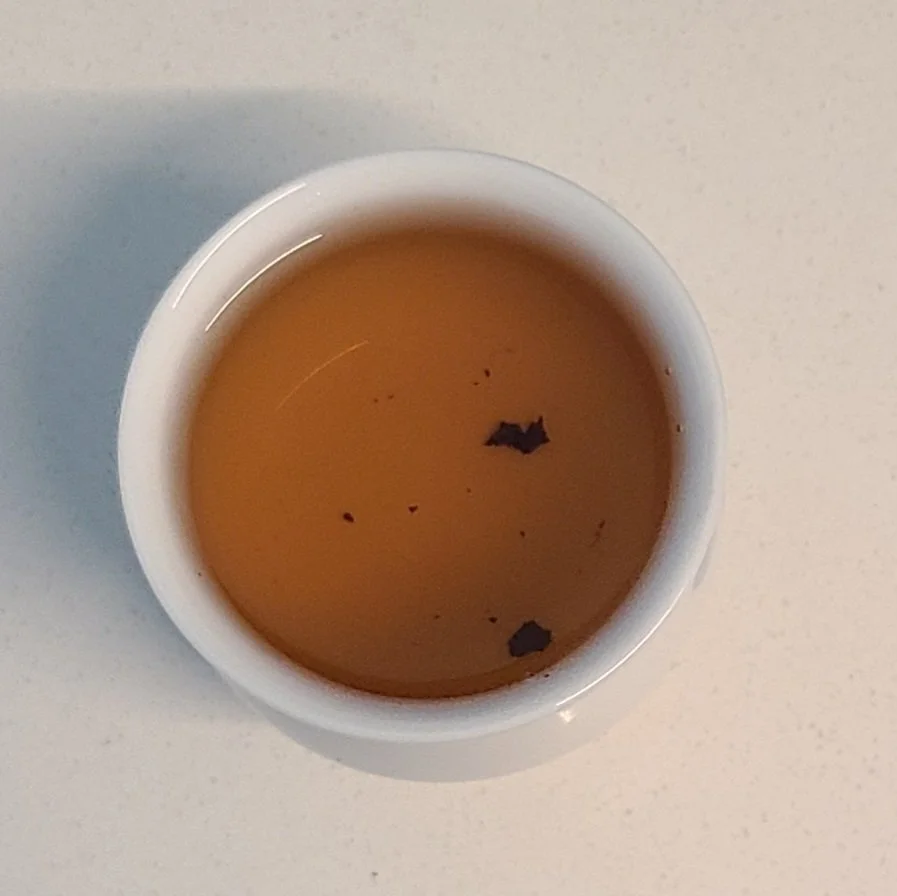
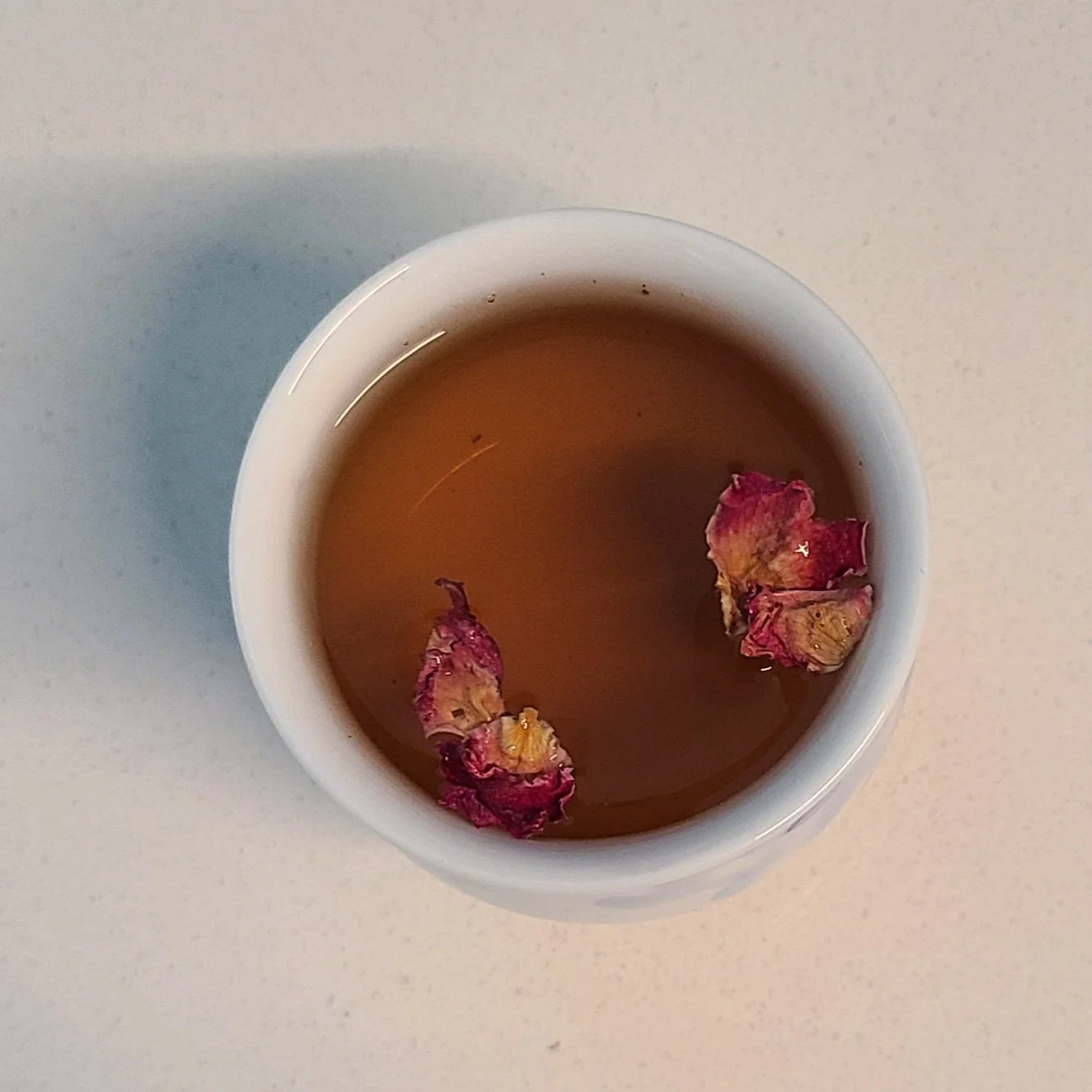
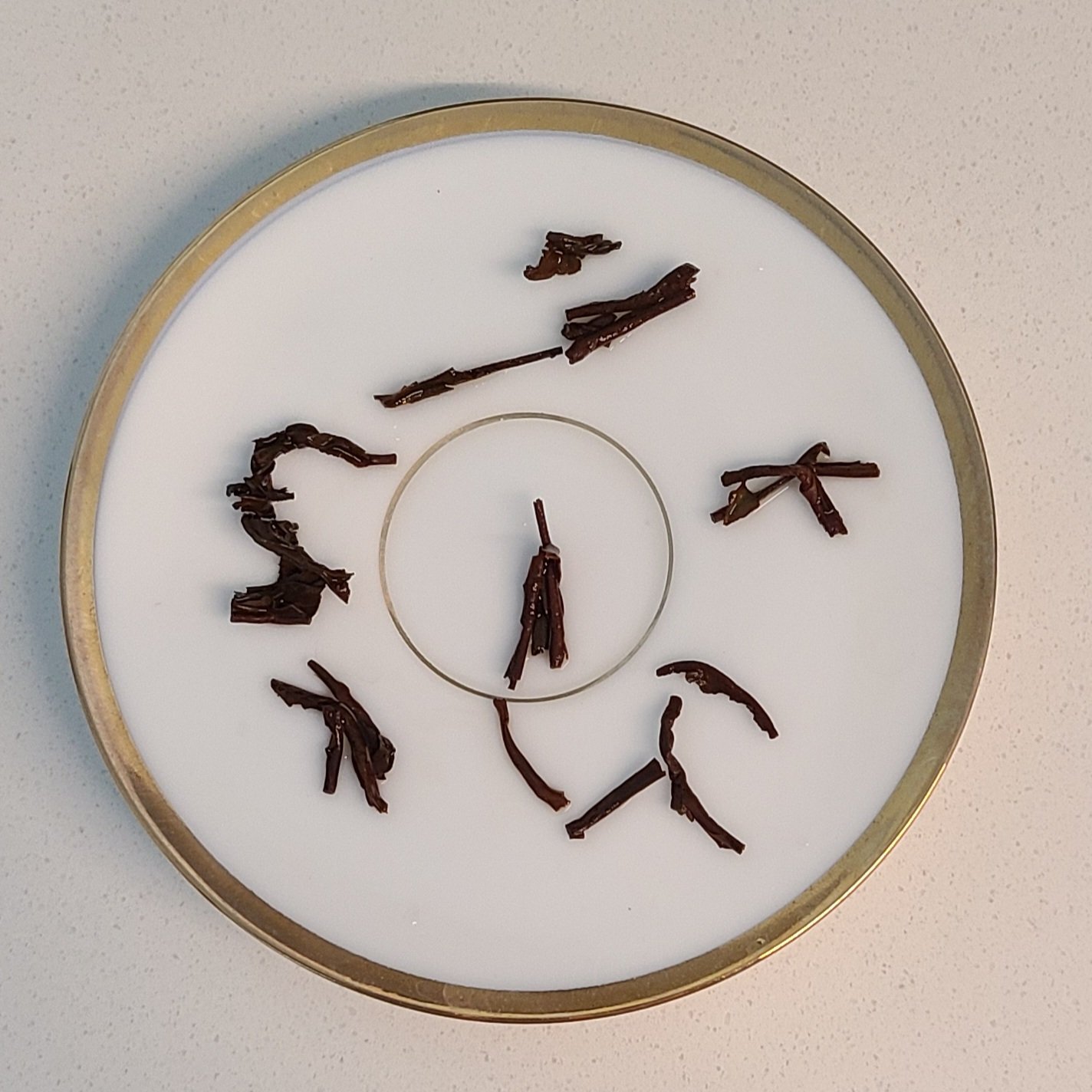
Persian tea is generally made with black Ceylon tea, with or without added Bergamot (like this particular tea). It is steeped strongly, and when served the addition of extra hot water can lighten the tea to the taste of the consumer. It is sometimes prepared with the addition of saffron, whole cardamom pods or rose petals, and rock sugar on the side. I found this lovely saffron infused rock sugar which I have on hand for friends who come to tea.
Dry leaf: dark brown to black 1 to 2 leaves, semi-broken
Aroma: sweet, hint of bergamot
Liquor: golden reddish brown, clear (some small leaf bits - but this tea pot has quite large holes in its strainer), sweet, smooth, citrus flavour of the bergamot isn’t overwhelming but enhances the black tea.
I really enjoy Persian tea. It is a solid cup of black tea (which is adjustable to one’s taste) and can be changed with the addition of a few ingredients. I usually have the plain black tea and add rose or saffron, and usually drink the tea with bergamot without added ingredients.
Tea is a very social thing in Iran, and I’m happy that there is a local store in Calgary, Dizin, that sells the loose leaf tea.
I stand with Iran, Lebanon and Palestine under this latest illegal onslaught by the USA and Israel!
[1] Al-Biruni - https://en.wikipedia.org/wiki/Al-Biruni