Pilgrimage to Siwa
Every person over the age of 40 should take a tuk-tuk on the rough roads of Siwa. It is like being ten and going on the best fair rides. You get shaken (not stirred) and it made me laugh until my sides hurt. Yes, you can rent air-conditioned cars that go at 5 km/hour and creep over every little bump - but it takes you forever to get anywhere (and they charge by the hour). Or a teenager can pick you up in a tuk-tuk with an open cart (good for hauling all sorts of things), sometimes fitted with seats and even with shading. They drive at speed, and on whichever side of the road has less pits, but it is a much more interesting way to travel about. This was the unexpected fun for Siwa!
I have been trying to get to Siwa for over 25 years, since my very first visit to Egypt. It always seemed to be too far from where I was, or had all kinds of restrictions and/or bans for tourists (i.e. non-Egyptians). As a Hellenist and an Egyptologist, it is an historically important site, and I wished to make the (modern) pilgrimage to the place where Alexander the Great sought confirmation of his right to rule Egypt.
Gazrashek Siwa Hot Springs [1]
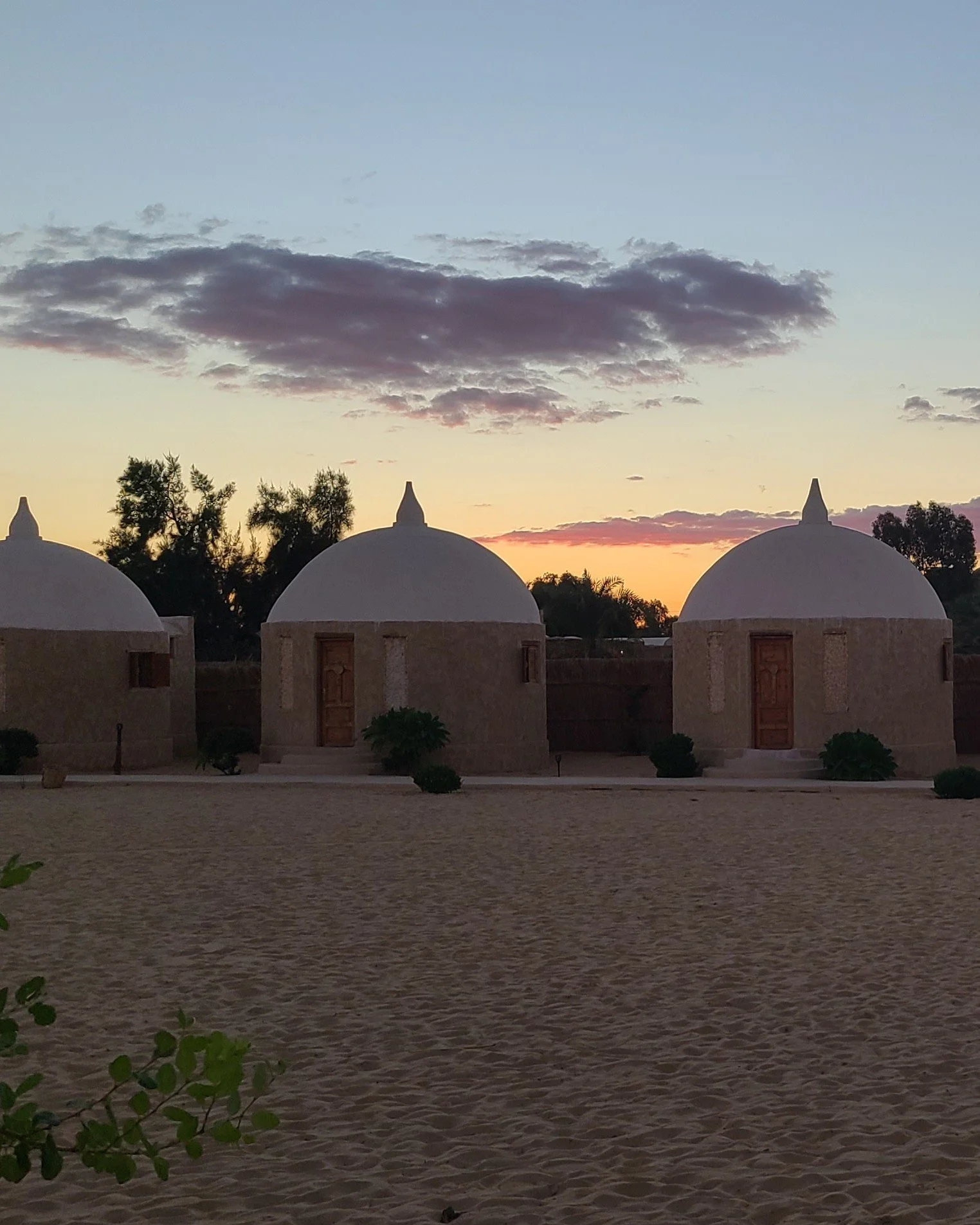
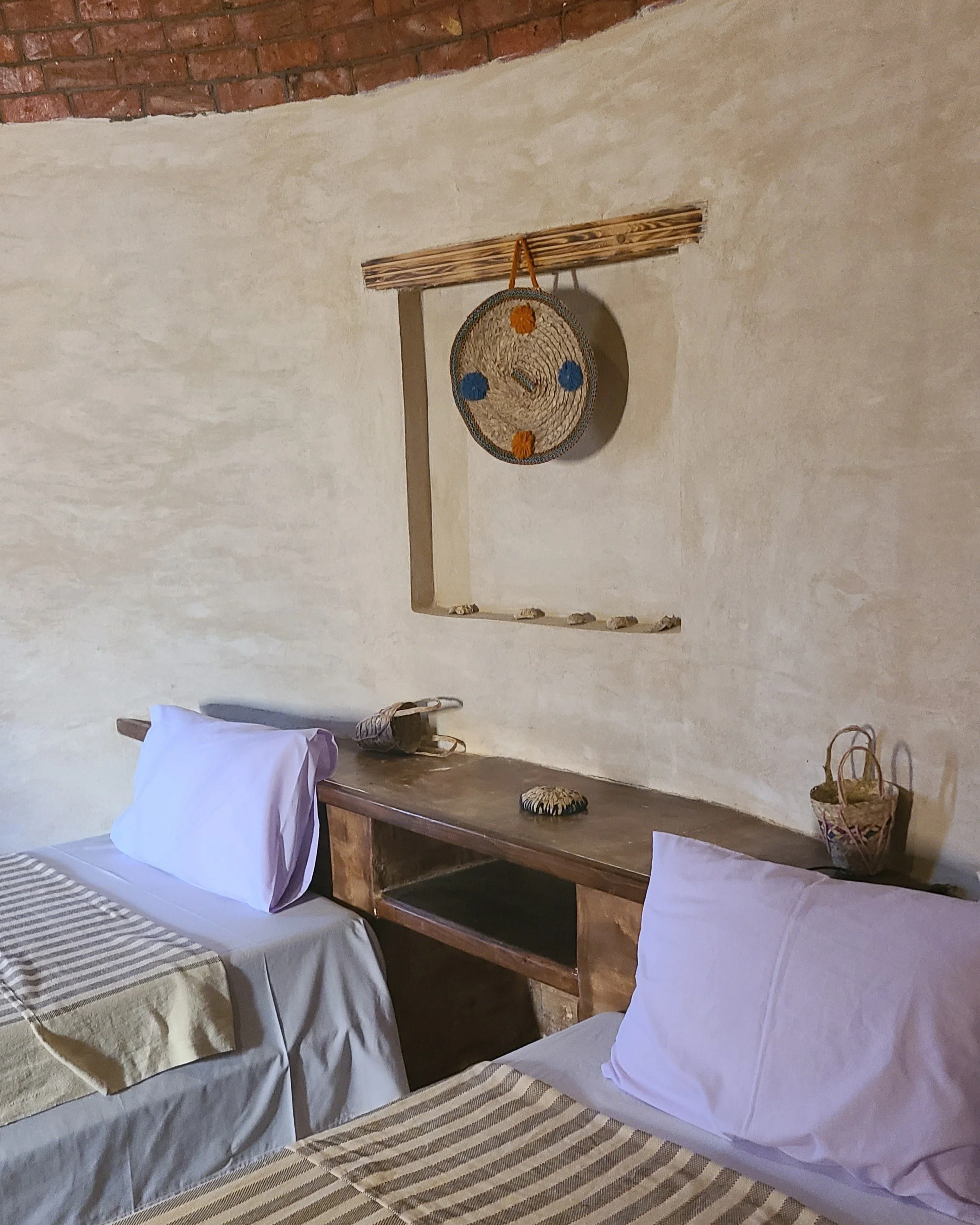
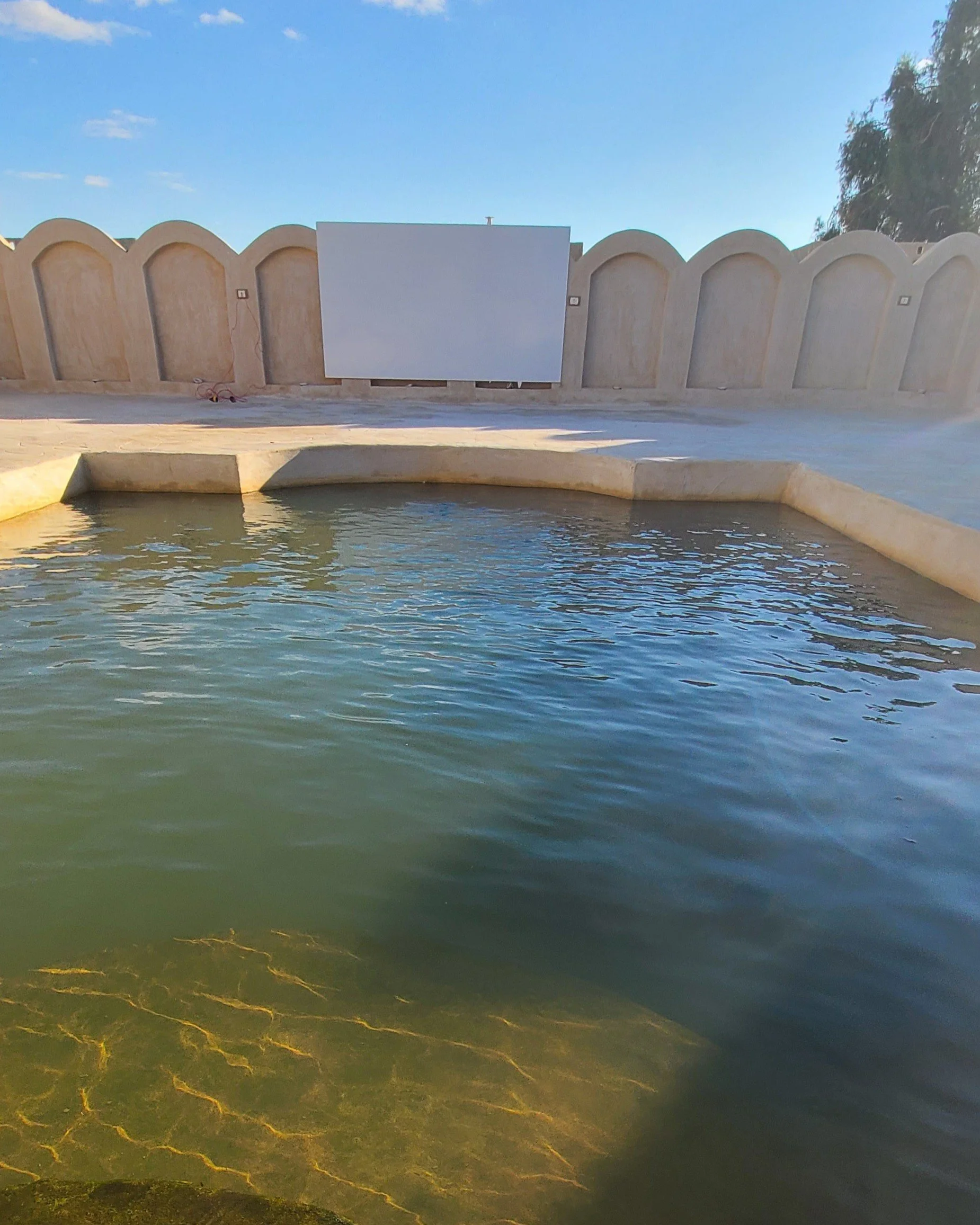
My husband and I hired a car in Alexandria to drive us the approximately 7 hours to Siwa. When I booked the hotel there it looked like it wasn’t far from the centre of town, but the roads outside the main strip are quite challenging and our driver spent a long time driving in very slow circles to find our hotel. We finally made it, and were taken to our cabin. The room was lovely and clean, and it had its own bathroom. Despite being a bit far from town, it was definitely quiet, and it has its own hot spring on the site, which we both took advantage of.
Our host, Nura, also spoke English very well, and made me some fresh lemongrass tea from her garden when I said I had an upset stomach. She was a very attentive host. I highly recommend this hotel.
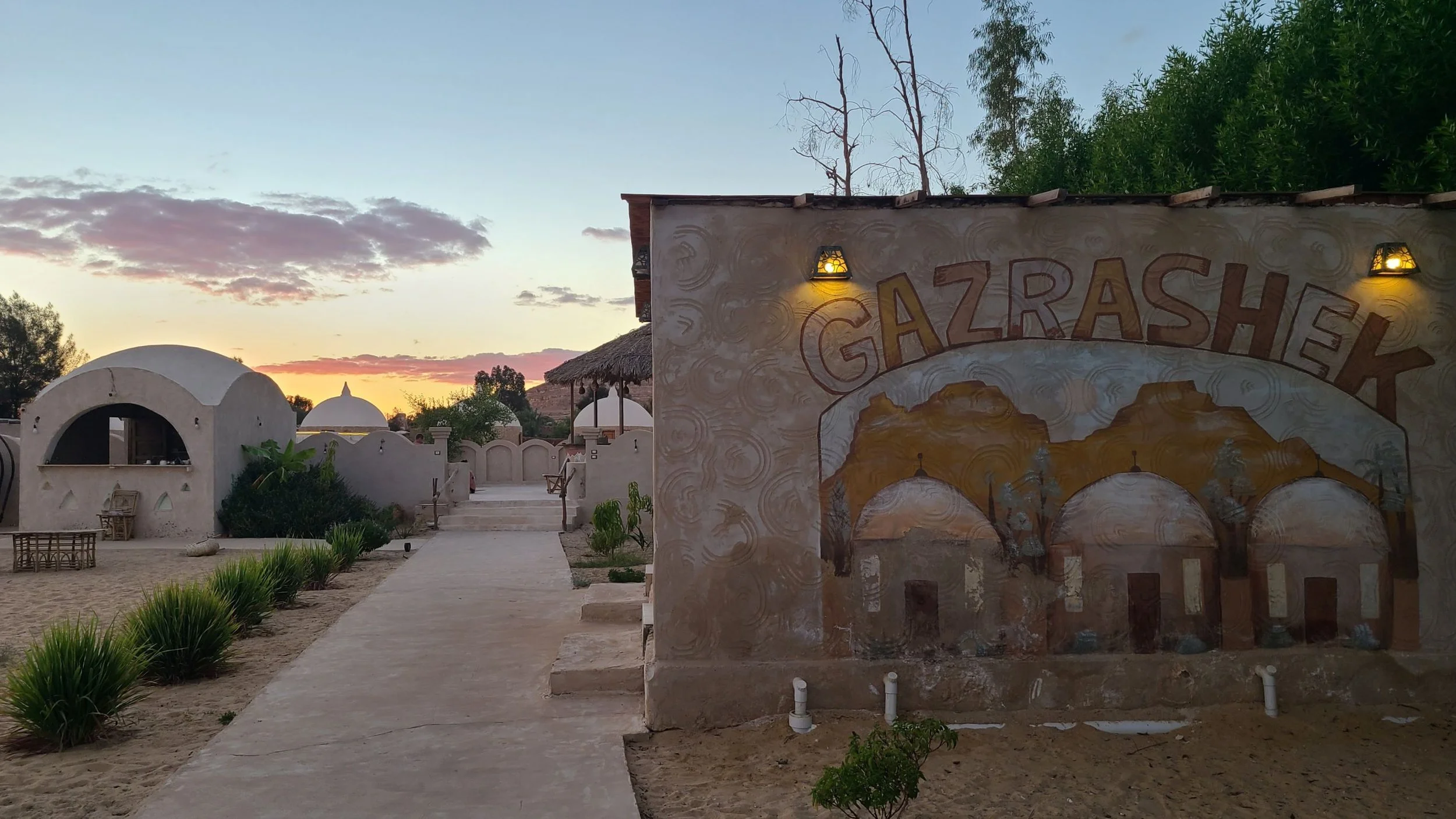
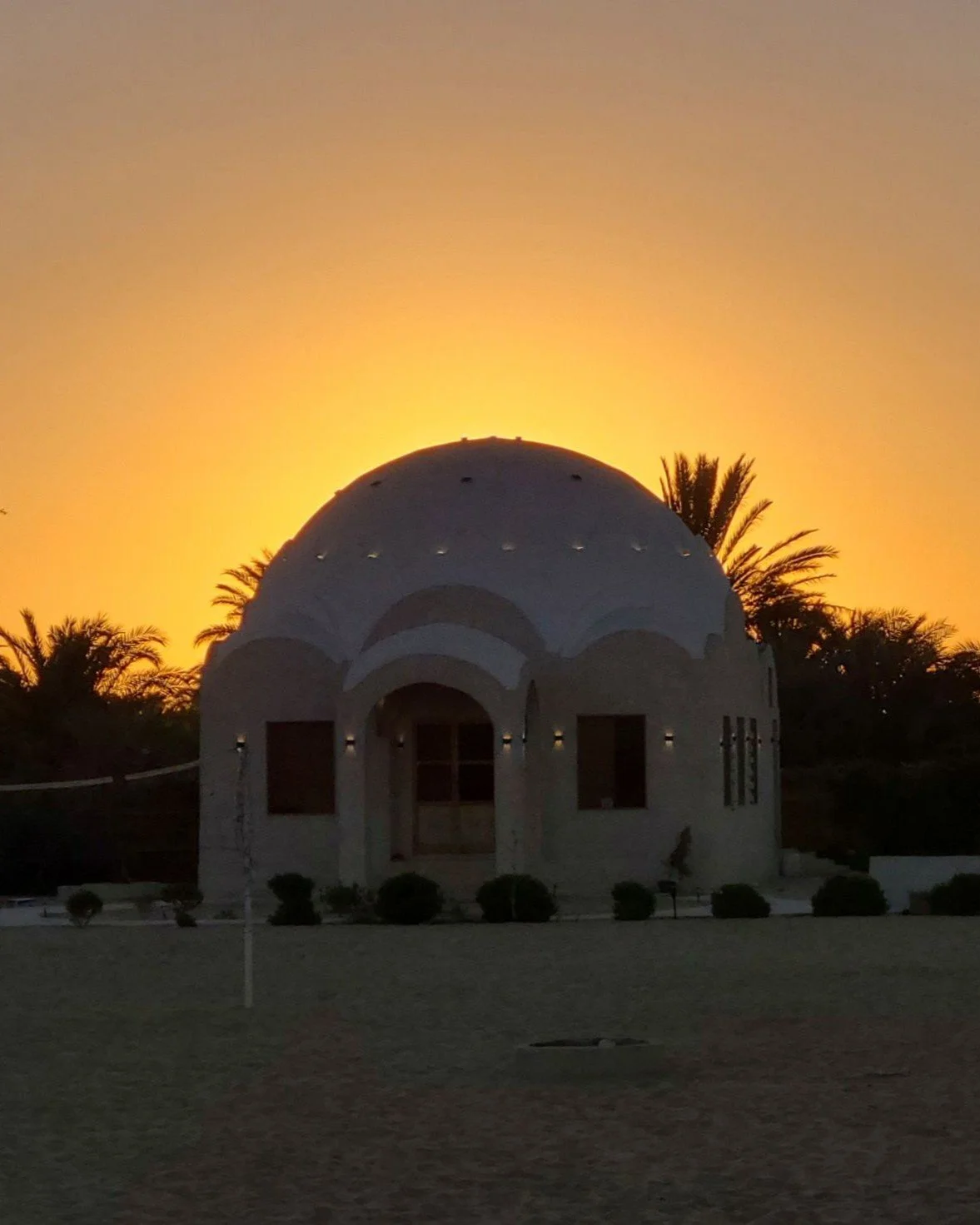
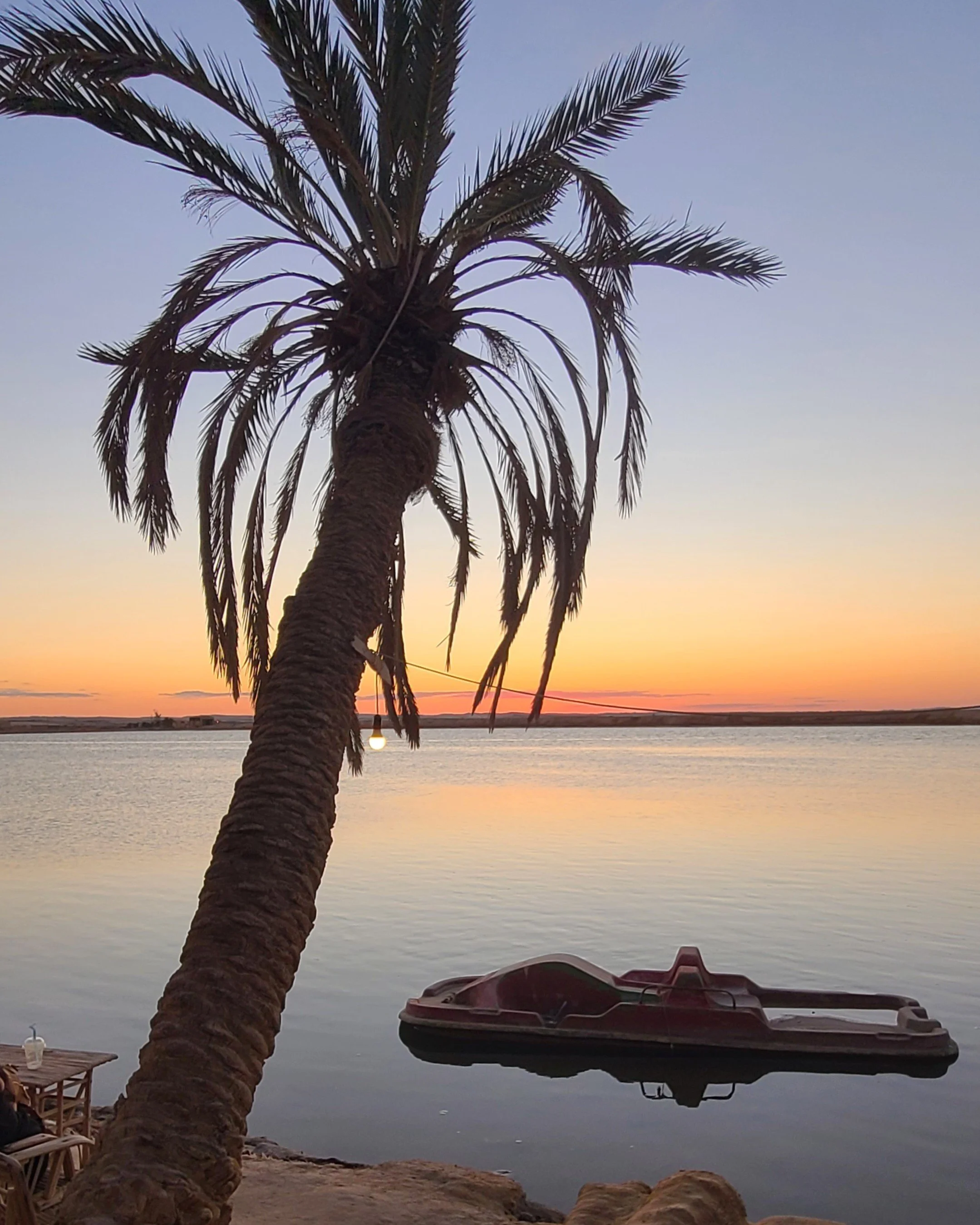
Sunset
at the entrance to Gazrashek
Temple of the Oracle (Amun Temple)
“The Oracle of Amun in Siwa was already famous all over the Mediterranean countries by the 26th Dynasty, but in seeking to trace its origin we can only guess that it must have originated some time during or before the 21st Dynasty when the power of the priests of Amun and the Oracles of that god played a prominent part in the religious and administration of the government in Egypt. It is probable that a Temple to Amenre’ was already built in Siwa in those days, to become, at a later date, the seat of an Oracle which was considered reliable. In the 26th Dynasty, this Oracle of Amun in the Libyan desert was widely known.”
Regarding the very complex and complicated ancient historical debate on when and who built the Temple, why Alexander went there, what he asked and the responses he received, I will happily direct you to a recent (2025) article written by Geoffrey C. Benson [3] who thoroughly delves into the subject. I stumbled upon this article while doing my own research and highly recommend you read it if you are interested in those particular topics.
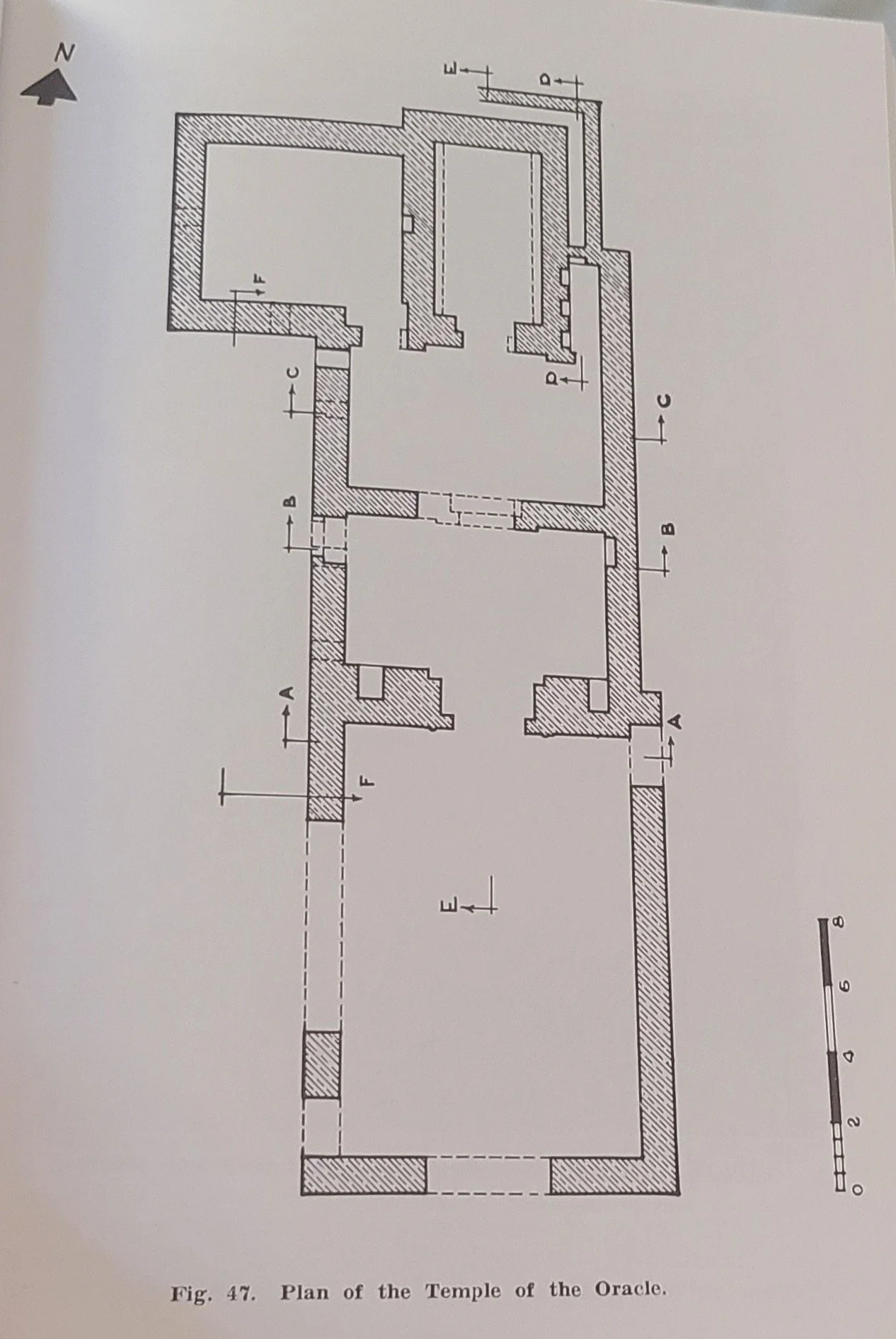
Plan of the Temple of the Oracle
Ahmed Fakhry, 1973 Fig. 47
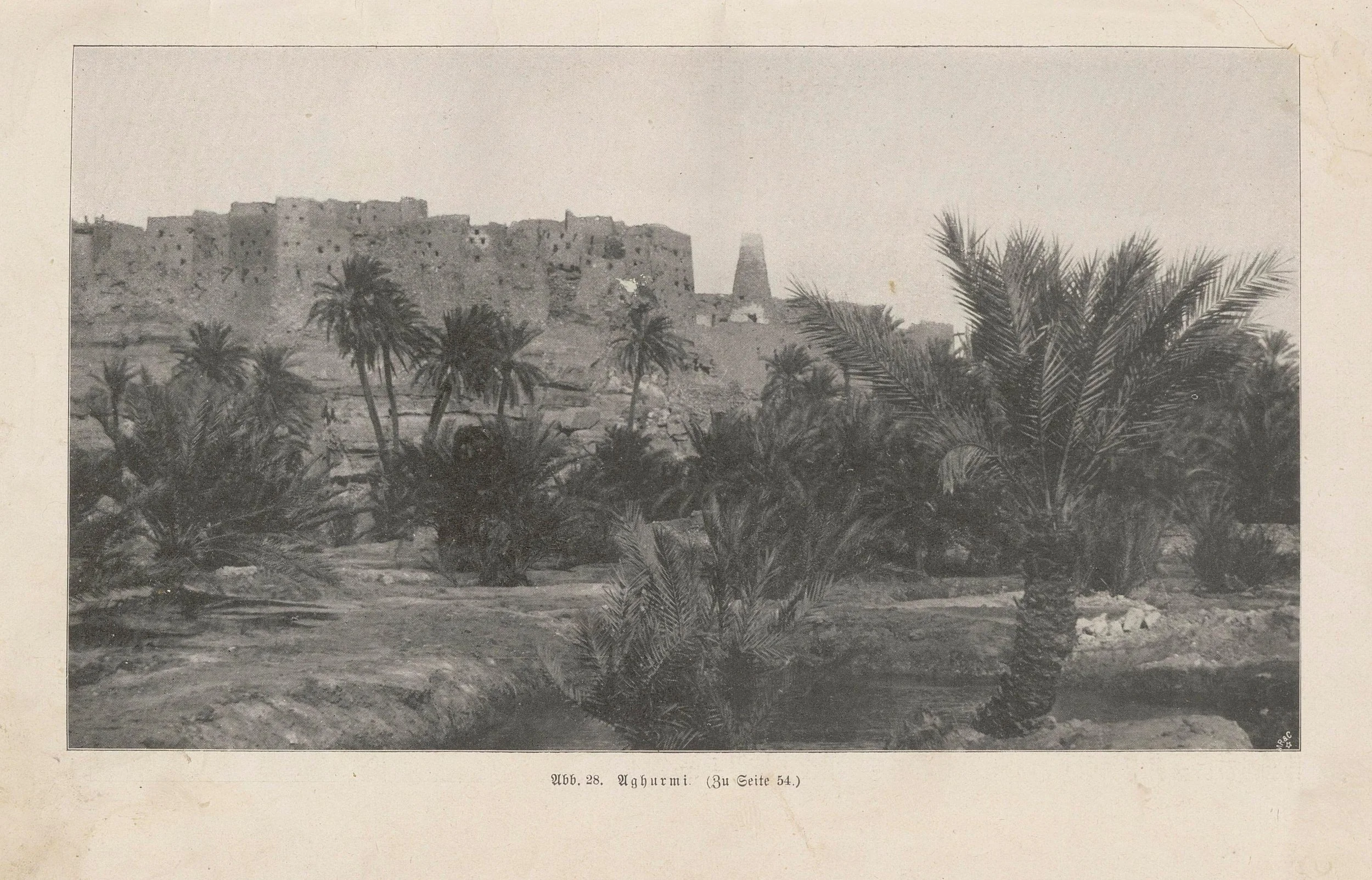
The hill at Aghurmi in 1900, published by German Egyptologist Georg Steindorff. [4]
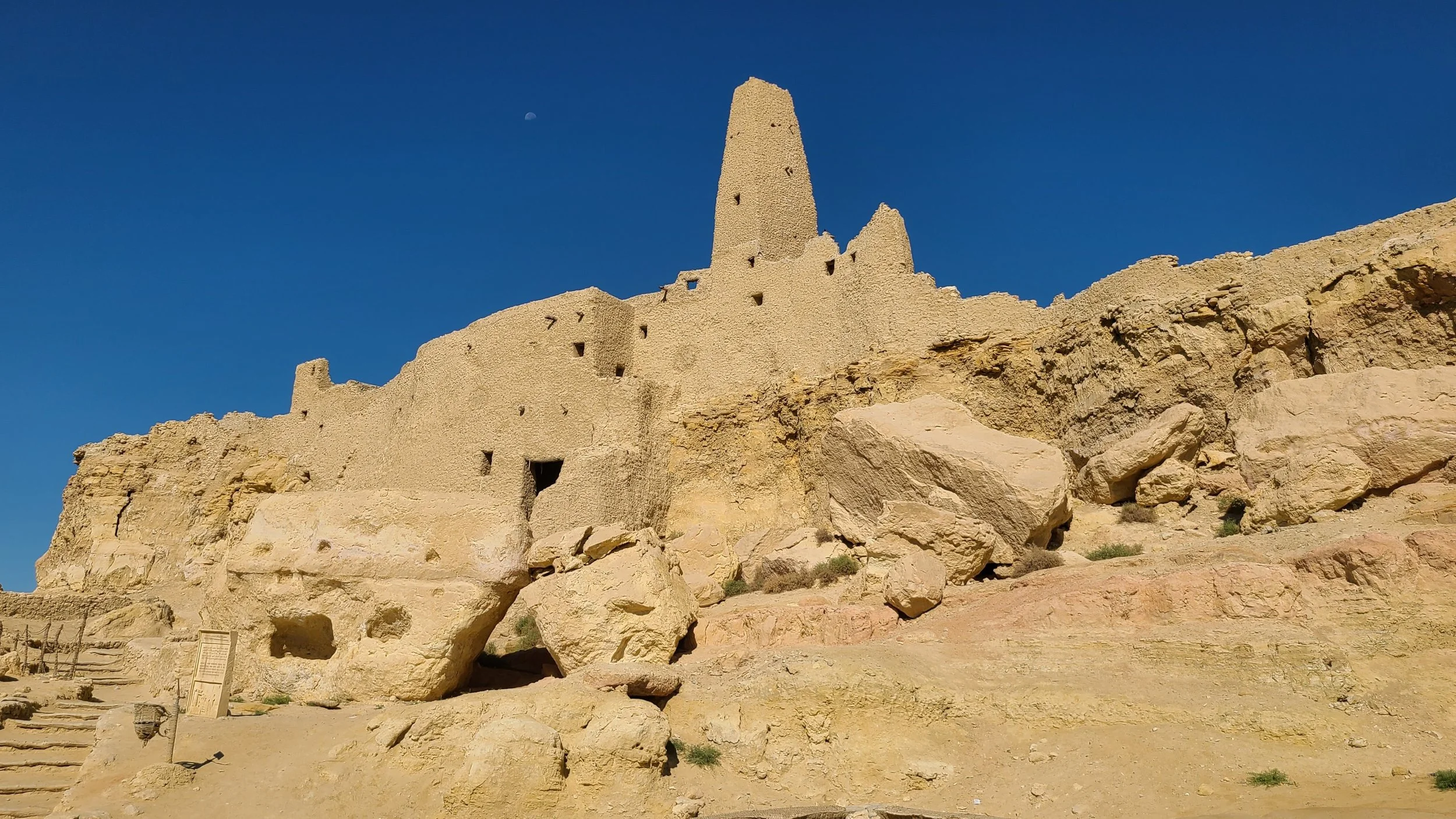
Entrance to the Temple at Aghurmi (2025)
Temple of Umm Ubayda
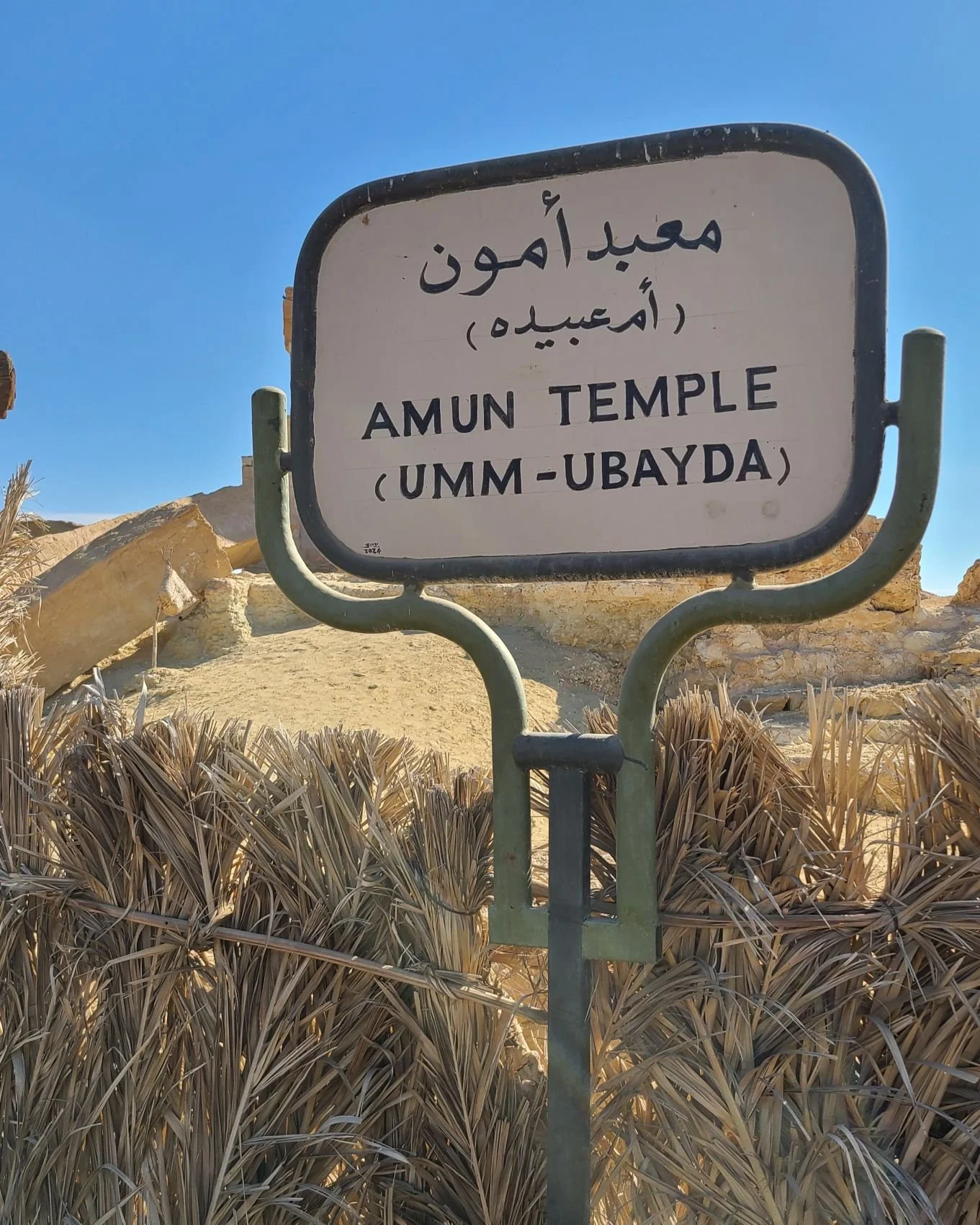
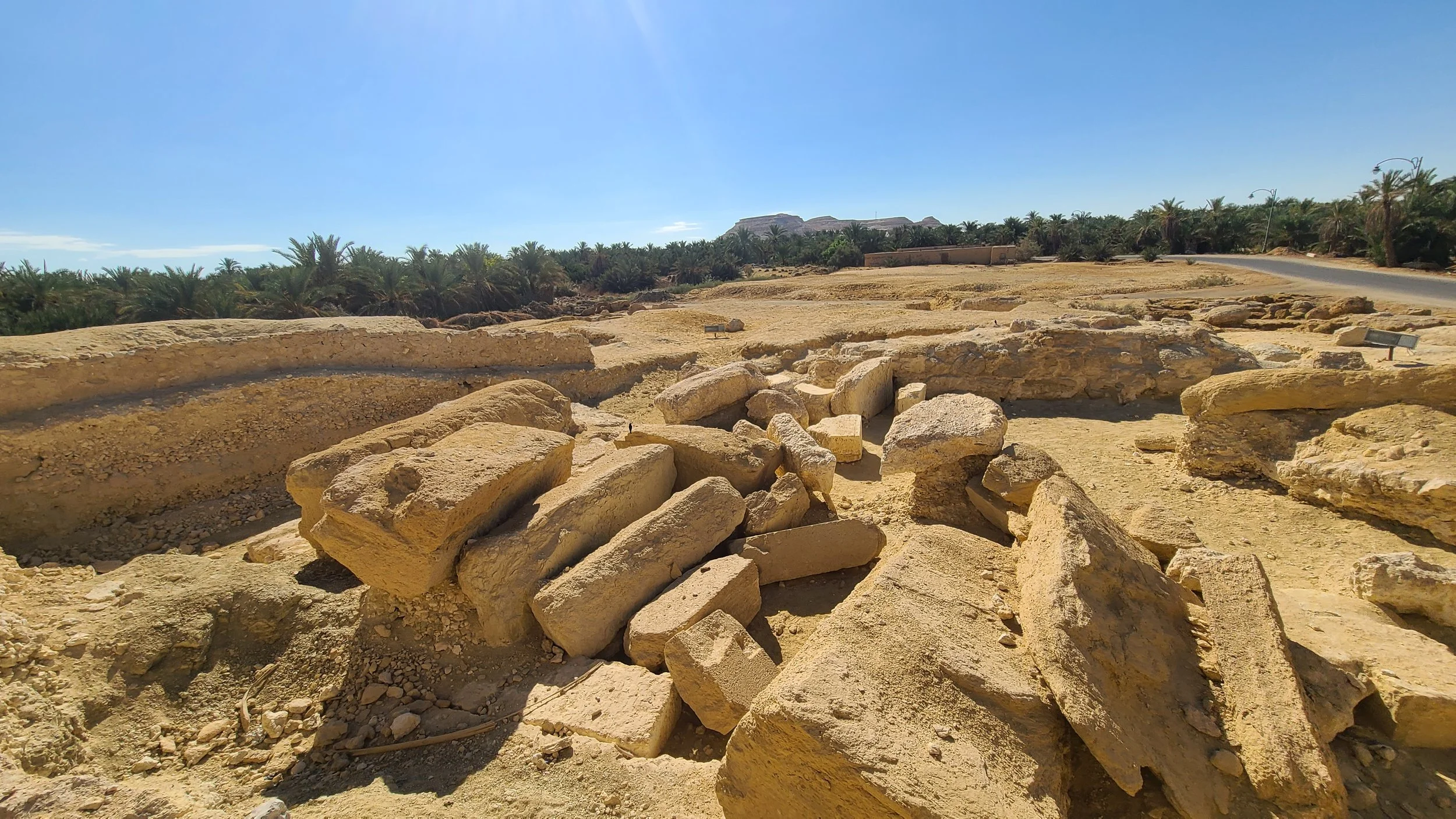
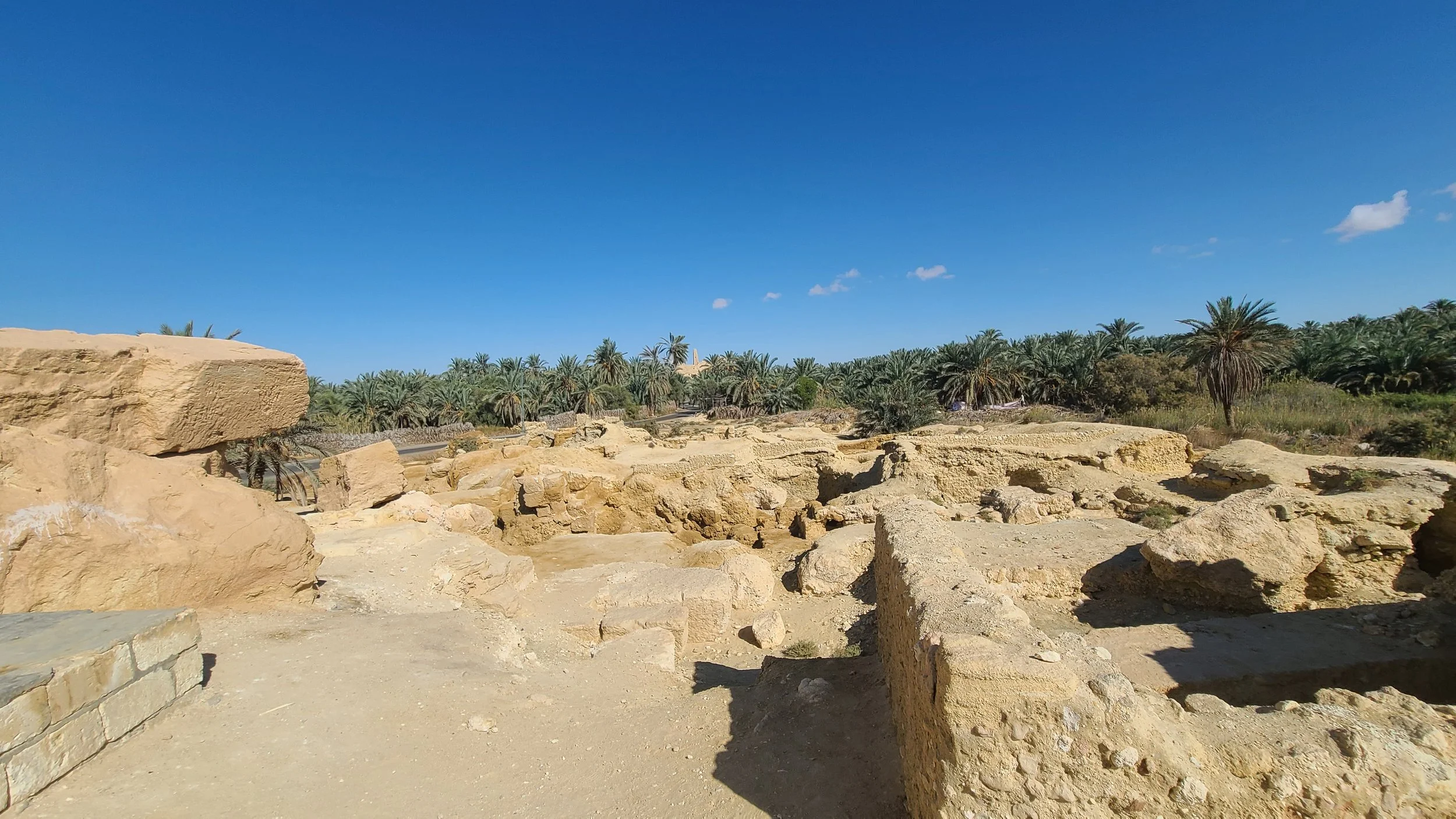
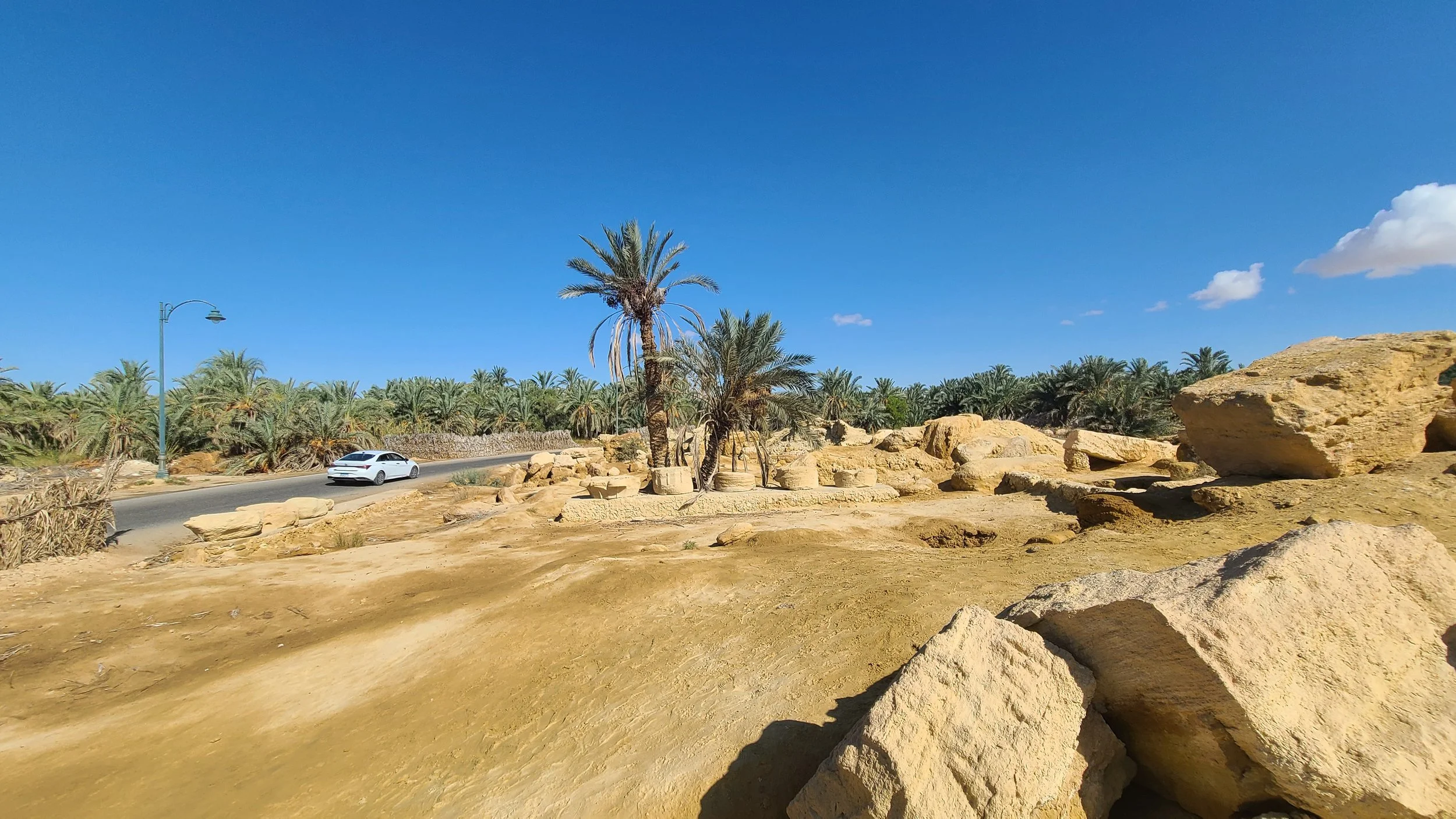
Another temple dedicated to Amun lies about 200 m from the Hill of Aghurmi, the area of the Temple of the Oracle.
“The history of the temple is poorly known, although hieroglyphic inscriptions associate it with a Siwan kinglet called Wenamen and the 30th Dynasty king Nectanebo II.”[5]
“It is totally ruined as in 1811 a strong earthquake hit this magnificent site and it was blown up in 1896 by a Siwan governor to make way for a police station and a mosque. Some remains of the temple remain preserved offering the chance to witness some incredible images of Amun across the walls in a human form.” [6]
However, from what I witnessed, there is no security for the site, or any maintenance. Under the layers of dust, you could barely make out some of the blue paint on the wall that shows a procession of gods, and Wenamun kneeling before the ram-headed Amun (top right of register).
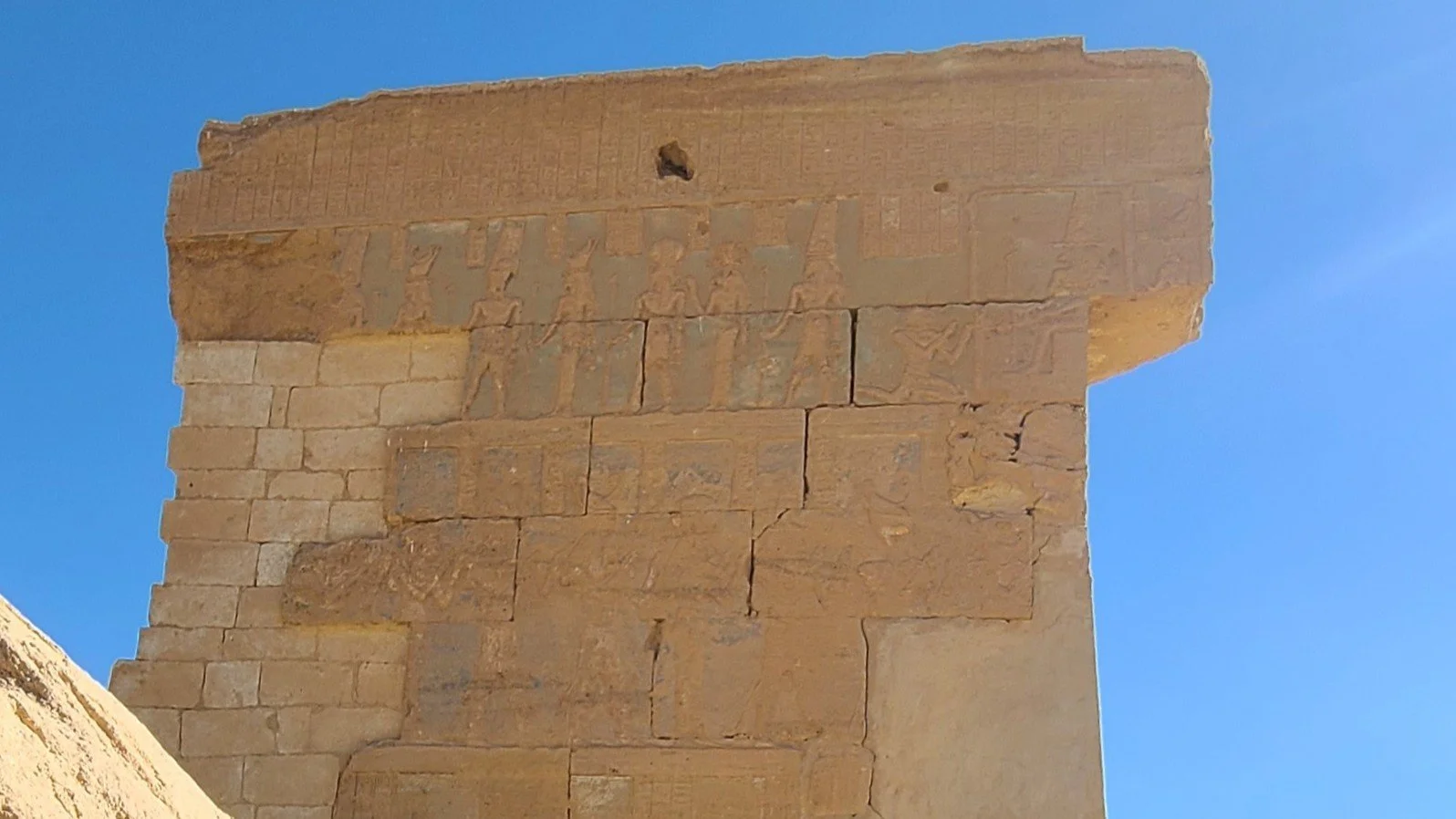
Close up of the top of the wall (October 12, 2025) - while my photo (above) clearly shows some blue pigment, the photo (below) definitely shows more detail
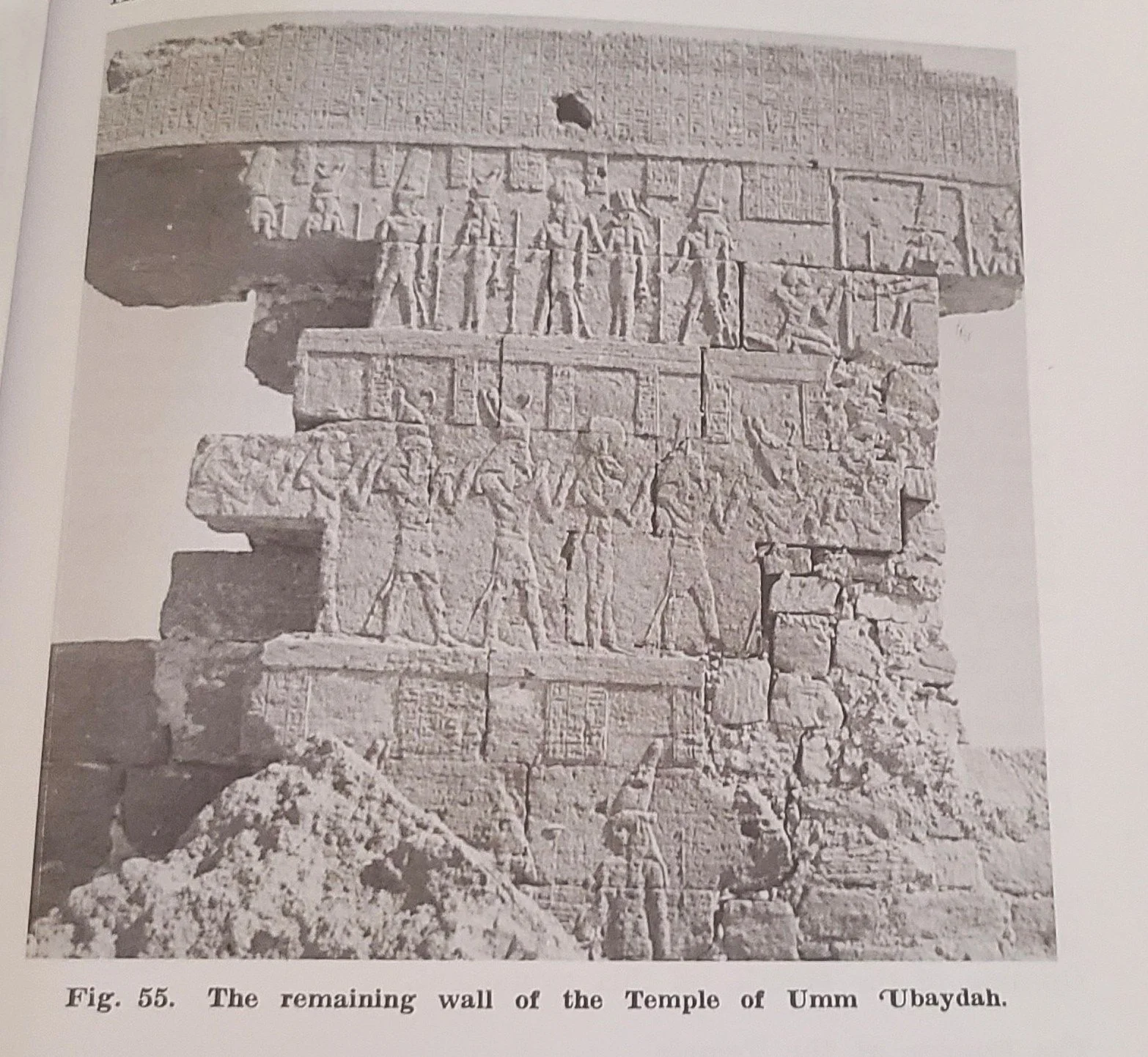
Fig. 55 Ahmed Fakhry, 1973: 167
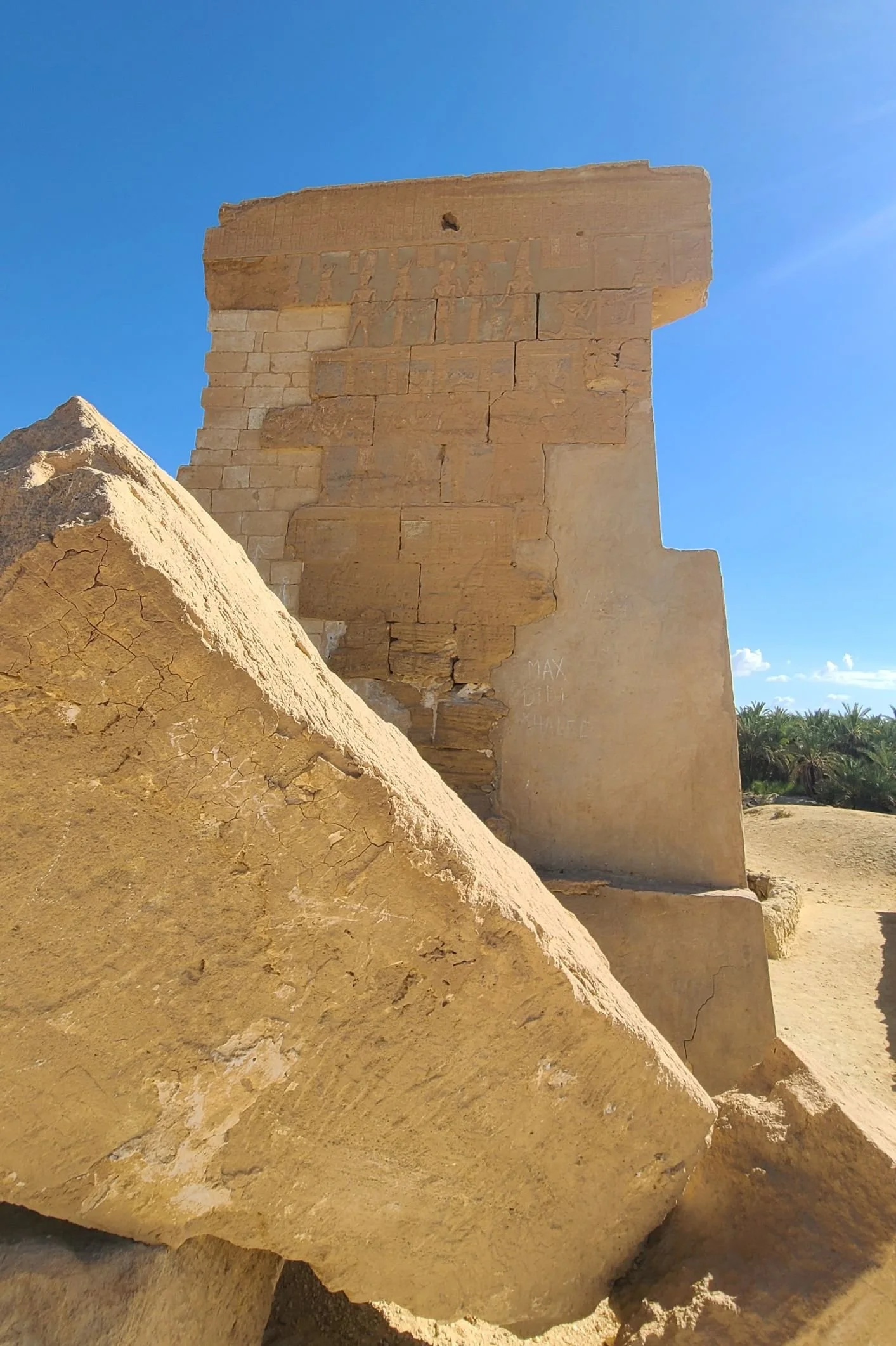
The temple wall fragment
From the size of the wall, and the surrounding blocks, this must once have been an impressive temple.
Mountain of the Dead (Gabal al-Mawta)
I was particularly interested in the Tomb of Si-Amun, which I had read was the best preserved of the decorated tombs. I had trouble communicating the difference between a tomb of Si-Amun and the Temple of Amun - everyone kept trying to tell me where the Temple was. I had to explain tombs, and finally got proper directions for our (non-local) driver to go to the Mountain of the Dead. There are actually four tombs open to visit, but indeed, it is the tomb of Si-Amun that is in the best condition. [7] This was despite the pillaging of images that took place during the early part of World War II, just after it was discovered.
“In December 1940, Colonel Bather, one of the British officers in the Frontier Administration...(reported) that new painted tombs had been found... I (Fakhry) was horrified to find that many of the soldiers used to come to visit that tomb (of Si-Amun); on payment of a few piasters to the family living in it, they were allowed to cut away any part of a painted scene to take home as a souvenir!”
Siwa House and the Green Library
I found it a bit sad that none of the archaeological finds from excavations in Siwa are housed in a museum in Siwa. There are numerous local museums throughout Egypt, but it is lacking here, and this may be partly do to politics and perhaps security.
Fatnas Island
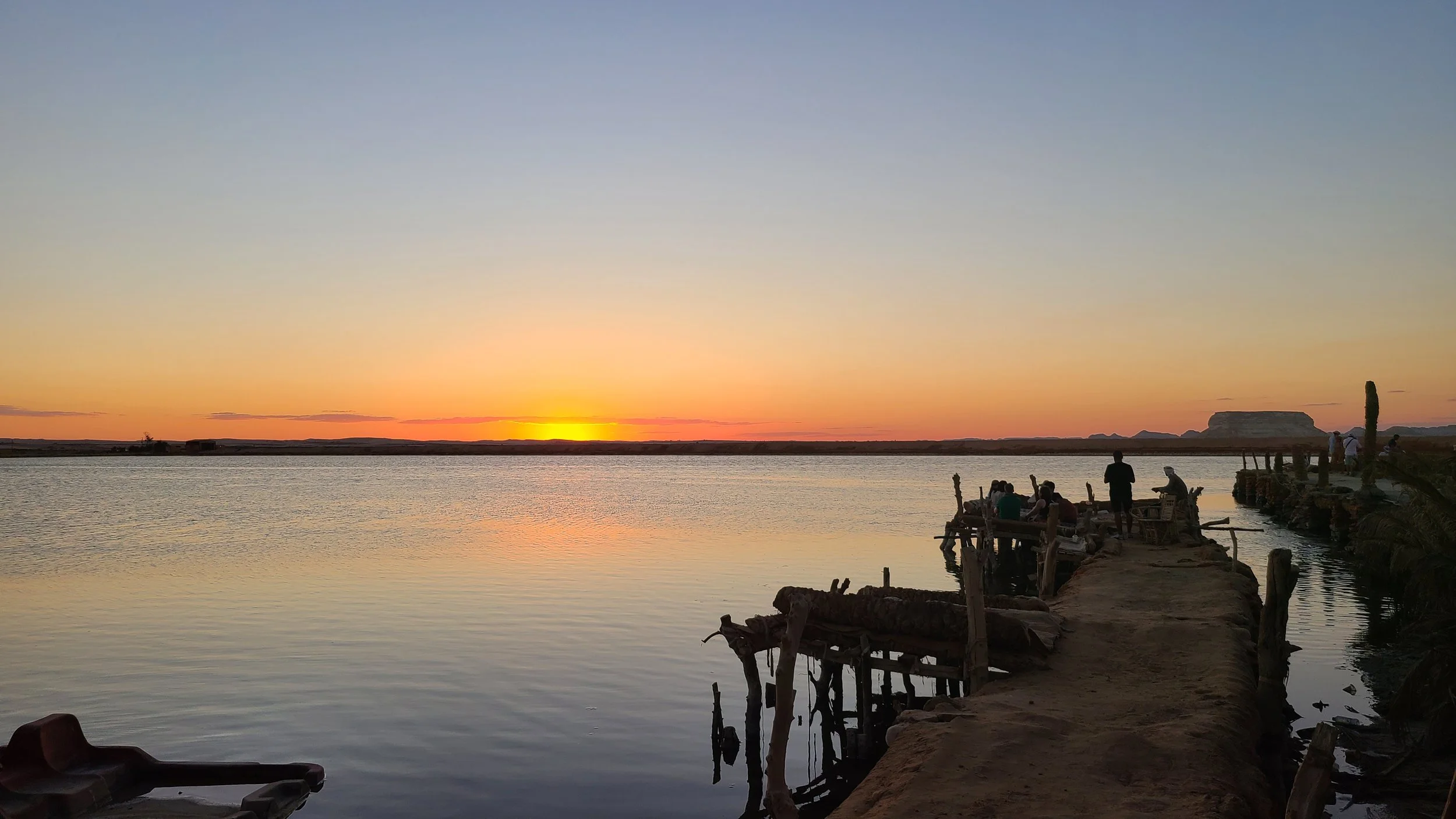
Sunset views from Fatnas Island are gorgeous. We grabbed a tuk-tuk (driven by 14 year old Mohamed) and raced across town to make it there just in time to shoot some photos.
Salt Lakes
Sadly, the pools are spectacular and fairly easy to get into, but there are no steps in and out, and you will have to pull yourself up onto a crystal overhang. I didn’t feel my back would participate fully so I opted to only put my feet in, and take photos of my husband enjoying the pool. You can see a short video of the pool here.
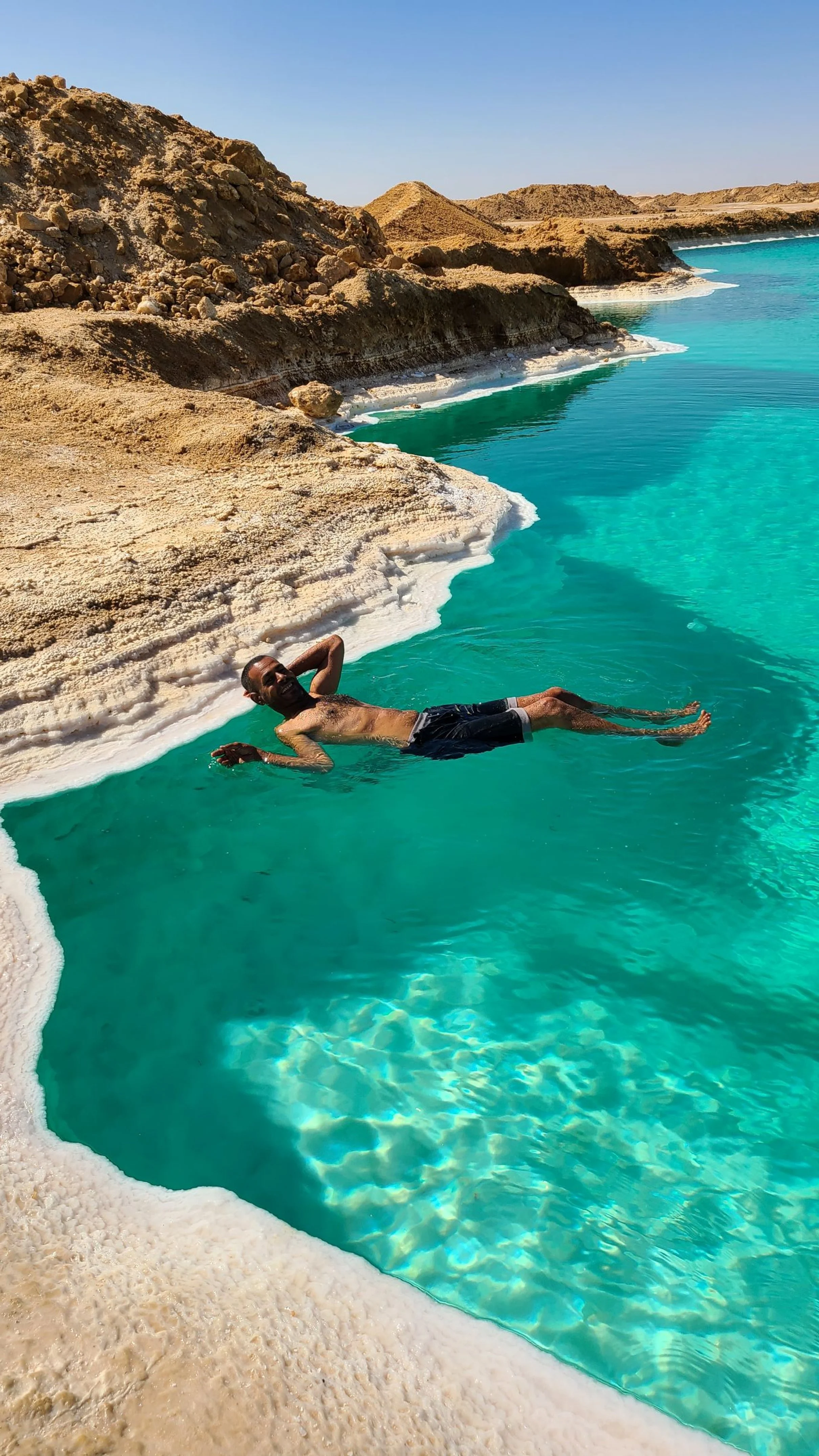
Beautiful turquoise salt lake, Siwa Oasis
Mostafa enjoying the water!
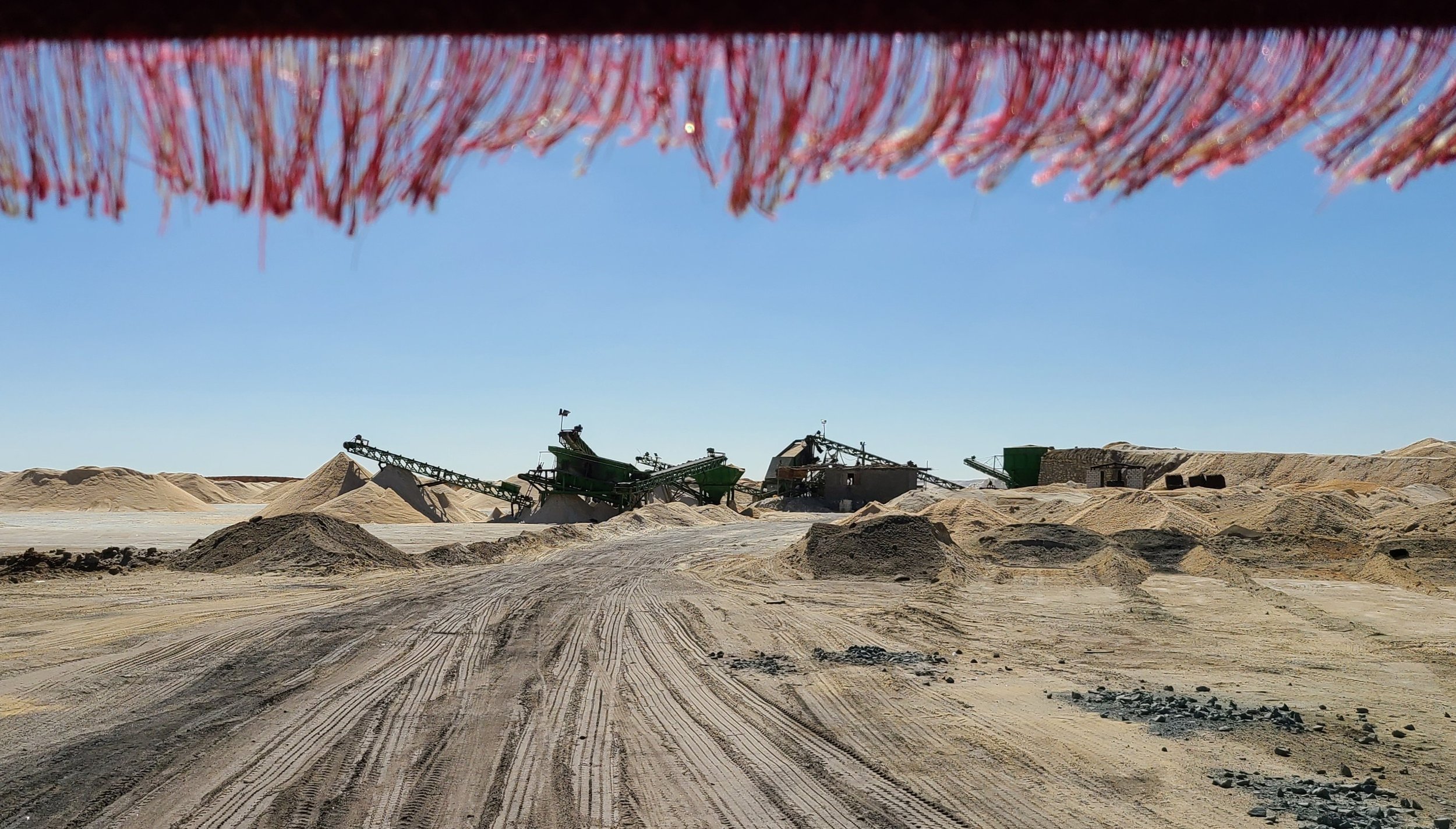
Mining the salt
Photo taken from the back of our tuk-tuk
Dates🌴
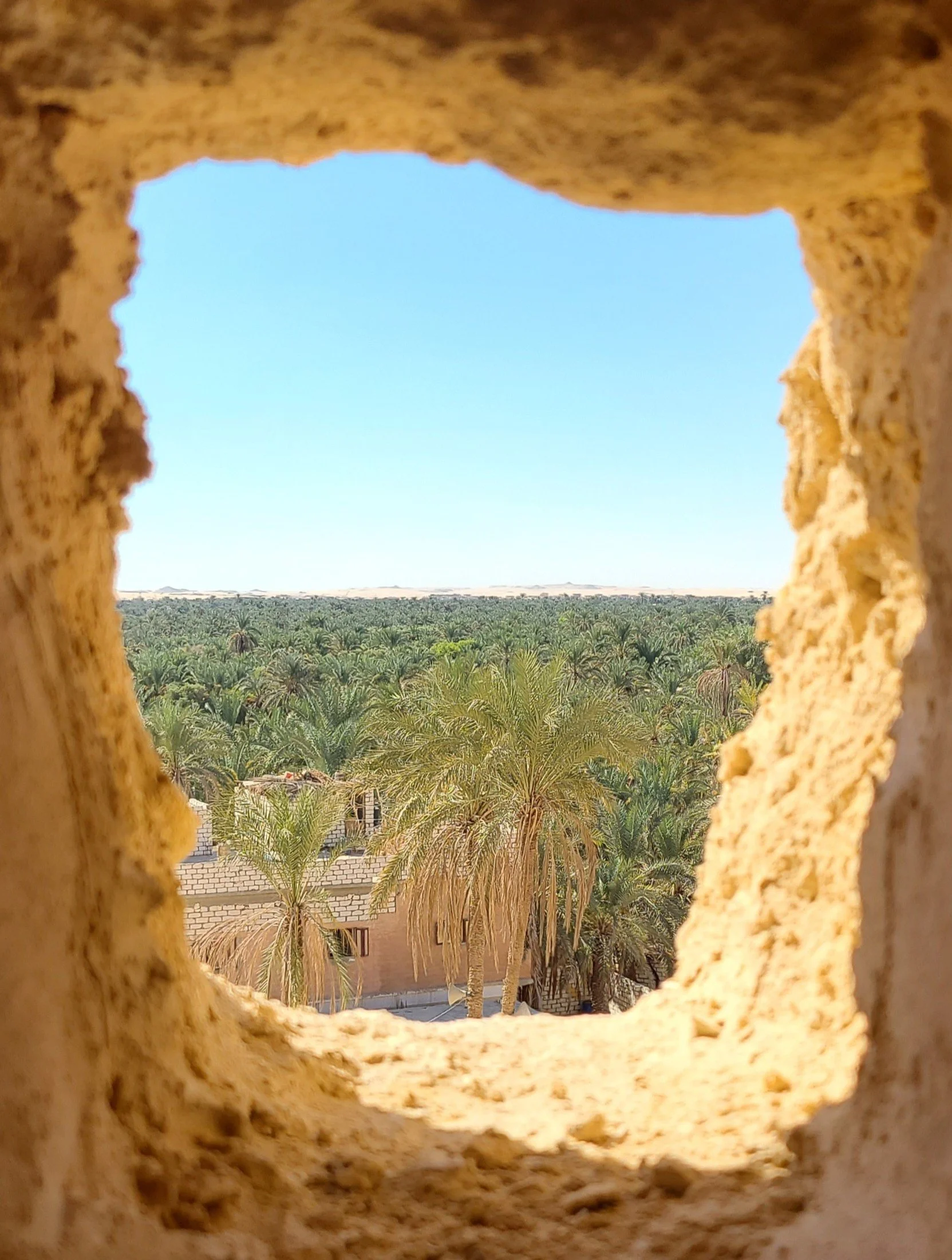
You drop over the mountains into Siwa and are greeted with green. It is what is so incredibly magnificent about an oasis. One can’t help but mention the date palms. They are so prolific it is hard to explain. It is like a jungle. You can walk past a grove and not see more than a few feet in because it is just masses and masses of palms. You can (at least in October), hear locals within harvesting away.
Of course I had to buy some dates! You don’t travel to a worldwide top location for dates without getting some. Although we were served sweet dates at the hotel with our breakfast, it isn’t the same as going and trying a few varieties from the market.
I found it amusing (disturbing) that as a foreigner I was immediately directed to the lovely packaged dates. However, on closer inspection, and a query to the seller I was informed that they were dates from Saudi Arabia. Now, I didn’t travel all this way to buy Saudi dates! I would, of course, in Canada purchase imported dates - as we don’t grow them. They could be from Iran or Saudi Arabia or California. So, I asked about the dates that were laid out in big, bulk boxes in front of the store. They were Siwa dates - several different sizes and colours of dates. Some were delicious, and others not so much. I suggest trying some before you make your choice. We purchased a big bag of dates that were sweet (but not overly) and with a hint of floral notes. I sadly did not catch the name of the particular variety, one of six types of dates still grown in the oasis.
“Up until the 19th century, local Berbers cultivated dozens of unique date varieties, which their camels carried to Cairo by the ton. Today, however, only several major cultivars remain and some have become quite rare.”
[1] Gazrashek Siwa - https://www.facebook.com/profile.php?id=61551961497941 ; booking.com
[2] Fakhry, Ahmed (1973) Siwa Oasis. The American University in Cairo Press. Cairo; New York. See my post Review: Siwa Oasis, for more information on this incredible place.
[3] Benson, G.C. (2025) My Road Trip to Meet Zeus: The Siwa Oasis and the Oracle of Ammon. Posted on Antigone Journal. https://antigonejournal.com/2025/07/siwa-oasis-oracle-of-ammon-zeus/ . I thoroughly enjoyed reading this account of his visit in 2023. He also includes a fairly extensive bibliography.
[4] Steindorff, Georg (1900) Durch die Libysche Wüste zur Amonsoase. Bielefeld : Velhangen und Klasing. Available online - https://polona.pl/item-view/c40f1526-4dc0-4789-b412-fe0ef92b9de9?page=6 (English translation of title: Through the Libyan Desert to the Amon Oasis) Fig. 28, p. 37
[5] Egitalloyd Travel - Temple of Umm Ubayda - https://egitalloyd.com/Destination/Siwa-Oasis/Attraction/Temple-of-Umm-Ubayda
[6] Trips in Egypt Team (2023) Siwa Oasis. Trips in Egypt. Published online January 21, 2023; Fakhry, A, 1973: 112.
[7] I plan to write a separate post on the Tomb of the Crocodile.
[8] Gattuso, Reina. Siwa Oasis Dates. Gastro Obscura. https://www.atlasobscura.com/foods/siwa-oasis-dates accessed online October 27, 2025.
Bibliography
Abdelaziz Farouk Mohamed (2020) Comparative study of traditional and modern building techniques in Siwa Oasis, Egypt: Case study: Affordable residential building using appropriate building technique, Case Studies in Construction Materials, Volume 12, 2020, ISSN 2214-5095, https://doi.org/10.1016/j.cscm.2019.e00311
Bakr, Mahmoud (2024) Siwa salt treasure. Ahram Online. posted May 10, 2024. https://english.ahram.org.eg/NewsContentP/50/523246/AlAhram-Weekly/Siwa-salt-treasure.aspx
Bosworth, A.B. (1977) Alexander and Ammon. Greece and the Eastern Mediterranean in Ancient History and Prehistory. Studies Presented to Fritz Schachermeyer on the Occasion of his Eightieth Birthday, edited by K. H. Kinzl, (Walter de Gruyter; Berlin, New York, 1977), pp. 51 - 75.
Chrysopoulos, P. (2025) Alexander the Great’s Perilous Pilgrimage to the Siwa Oracle. Greek Reporter. Posted online March 22, 2025.
Fakhry, Ahmed (1973) Siwa Oasis. American University in Cairo Press: Cairo, New York. https://www.indigo.ca/en-ca/siwa-oasis/9789774241239.html
Fakhry, Ahmed (1944) Siwa Oasis: Its History and Antiquities. Government Press. Cairo. Described by Fakhry (1973) as the more fulsome archaeological report, “where scenes and inscriptions in this oasis are published.” p. 123 footnote (1). Note that this book is considered rare and is available for € 1,200.00 from Meretseger books, which also has a few scanned plates and pages visible.
Ferschin, Peter, Kulitz, Iman, Hollweger, Florian, and Kuhlmann, Klaus (2009) Documenting the Reconstruction Process with Google Earth: Reconstructing the Oracle Temple in Siwa, Egypt. Vienna University of Technology, Institute of Architectural Sciences, Digital Architecture and Planning; German Archaeological Institute, Department Cairo. 13th International Congress, Cultural Heritage and New Technologies, Vienna, 2008.
Rovero, L. & Tonietti, U. & Fratini, F. & Rescic, S. (2009) The salt architecture in Siwa oasis – Egypt (XII–XX centuries). Construction and Building Materials - 23(7):2492-2503 DOI:10.1016/j.conbuildmat.2009.02.003
Soliman, Sohail, Mohallal, Eman (2014) A Survey of the Mammalian Fauna of Siwa Oasis, Egypt. Egyptian Journal of Zoology, (61):171-186. https://www.researchgate.net/publication/289839285_A_Survey_of_the_Mammalian_Fauna_of_Siwa_Oasis_Egypt
Stanley, C. V. B. (1912) The Siwan Language and Vocabulary, Proper Names, Siwan Money, Weights and Measures (Continued from the Journal of April, 1912.) Journal of the Royal African Society, Vol. 11, No. 44 (Jul., 1912), pp. 438-457 (20 pages). Published By: Oxford University Press
Steindorff, Georg (1926) Ein ägyptisches Grab in Siwa. Zeitschrift für Ägyptische Sprache und Altertumskunde, vol. 61, no. 1, 1926, pp. 94-98. https://doi.org/10.1524/zaes.1926.61.1.94
Steindorff, Georg (1900) Durch die Libysche Wüste zur Amonsoase. Bielefeld : Velhangen und Klasing. Available online - https://polona.pl/item-view/c40f1526-4dc0-4789-b412-fe0ef92b9de9?page=6 (English translation of title: Through the Libyan Desert to the Amon Oasis)
Walker, W.S. (1921) The Siwi Language. London: Kegan Paul, Tench, Trubner & Co., Ltd. A 2010 reprint is available https://www.amazon.com/Siwi-Language-W-Seymour-Walker/dp/3895862487