Testing Clay Bodies for Tea
I usually brew in a gaiwan. I did however purchase an unglazed tea pot in Vietnam in 2024, and received a Chinese teapot as part of a package when I purchased some tea. After watching Mei Leaf’s video [1] on testing clay bodies against specific teas, I thought to do this experiment, before I go to China and potentially purchase my first Yixing tea pot.[2]
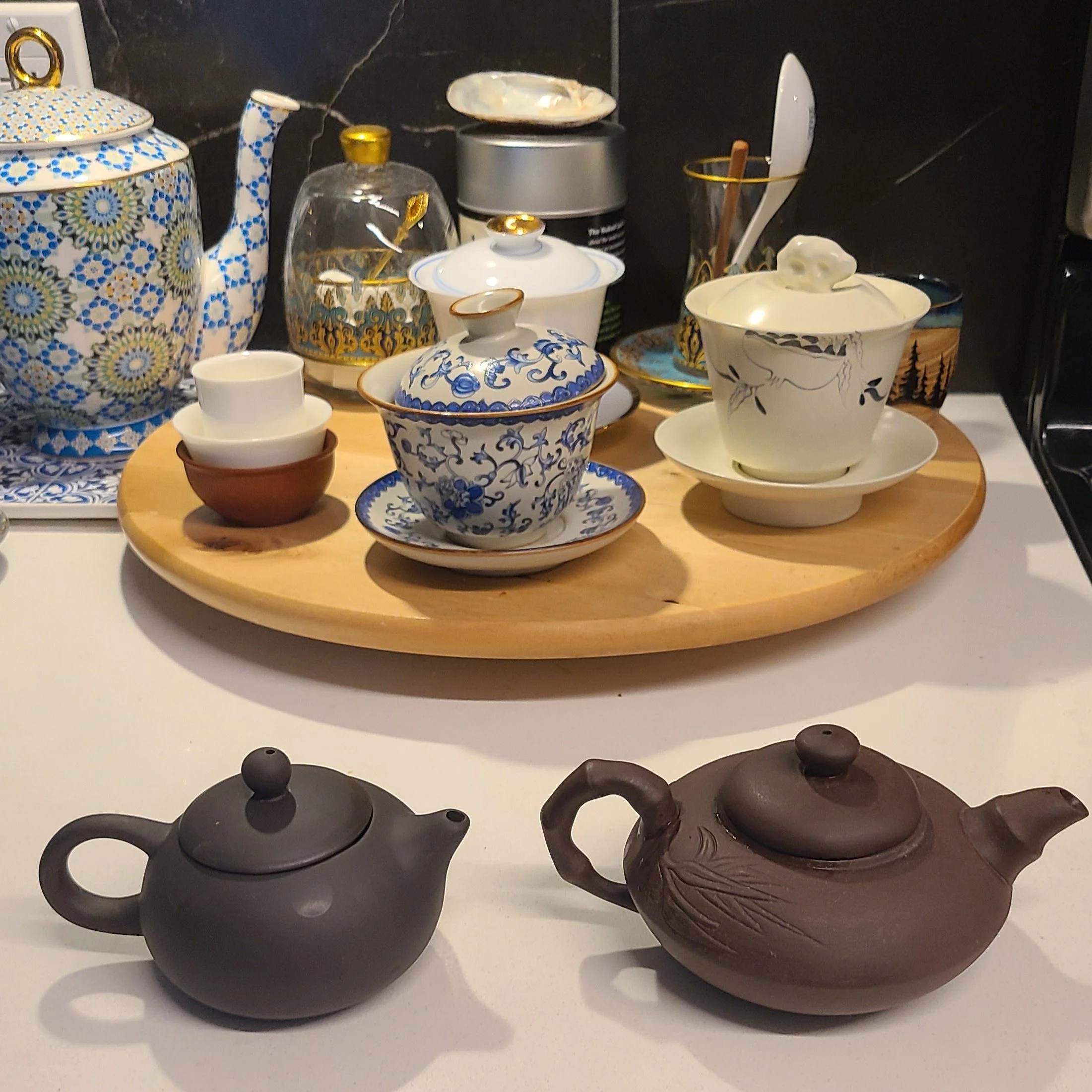
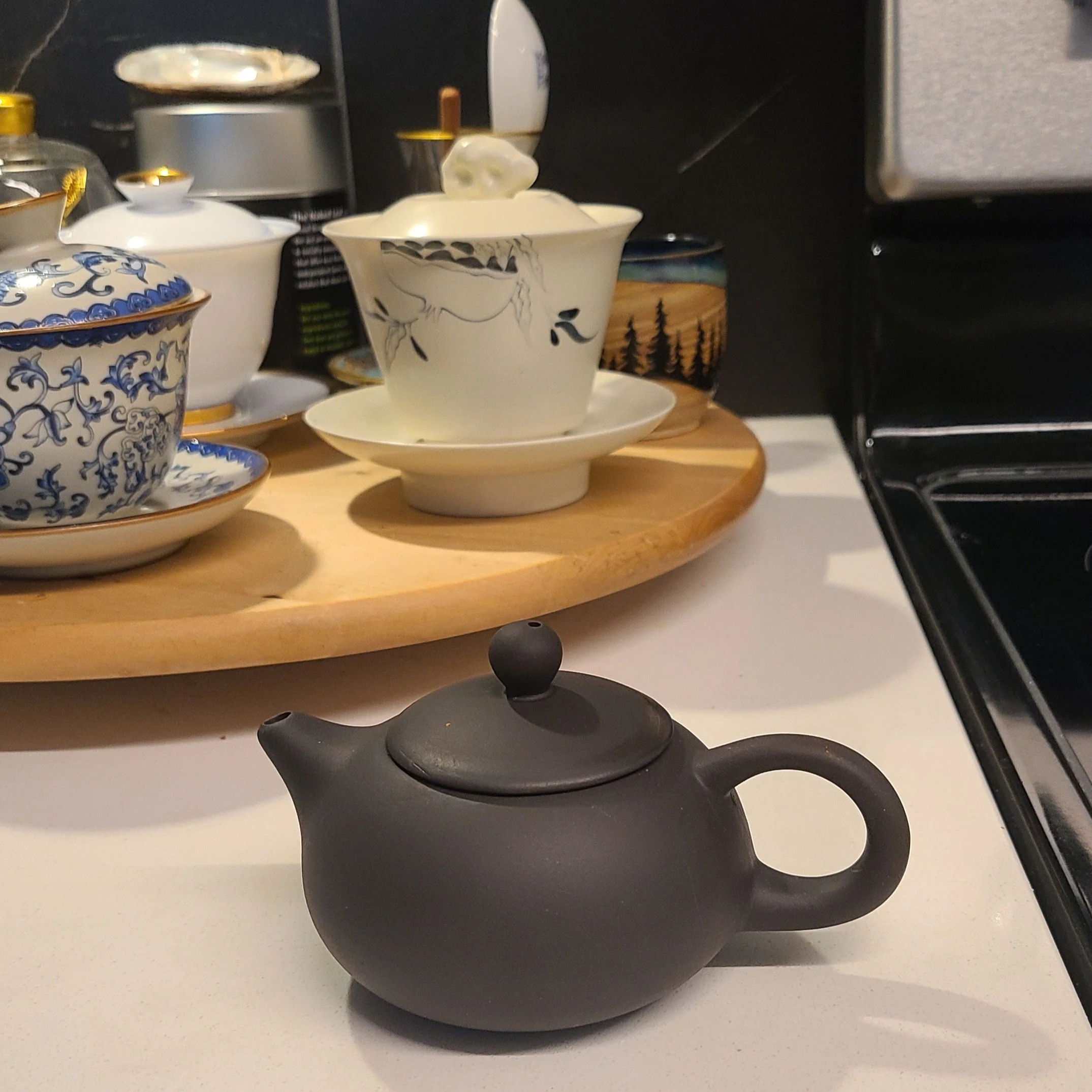
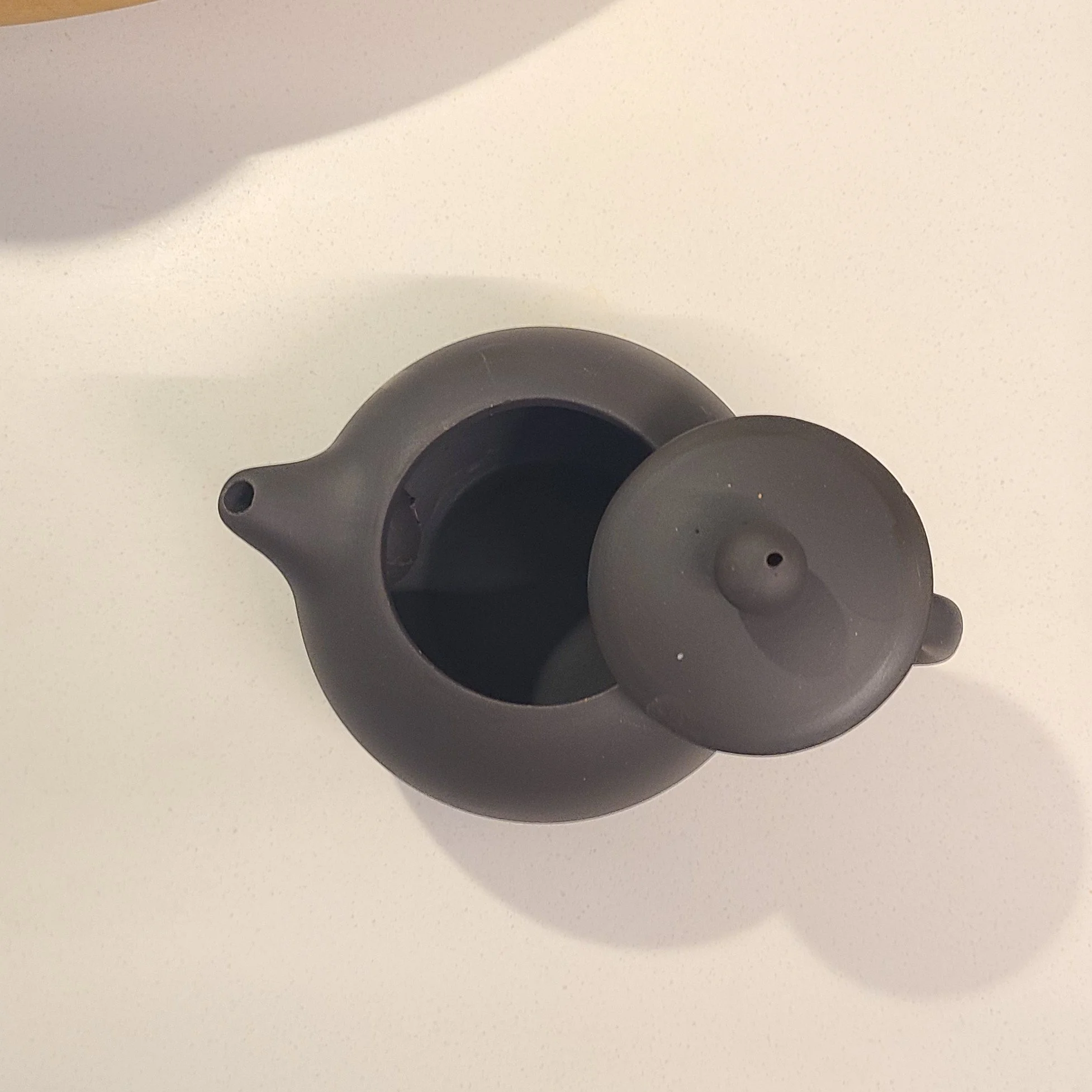
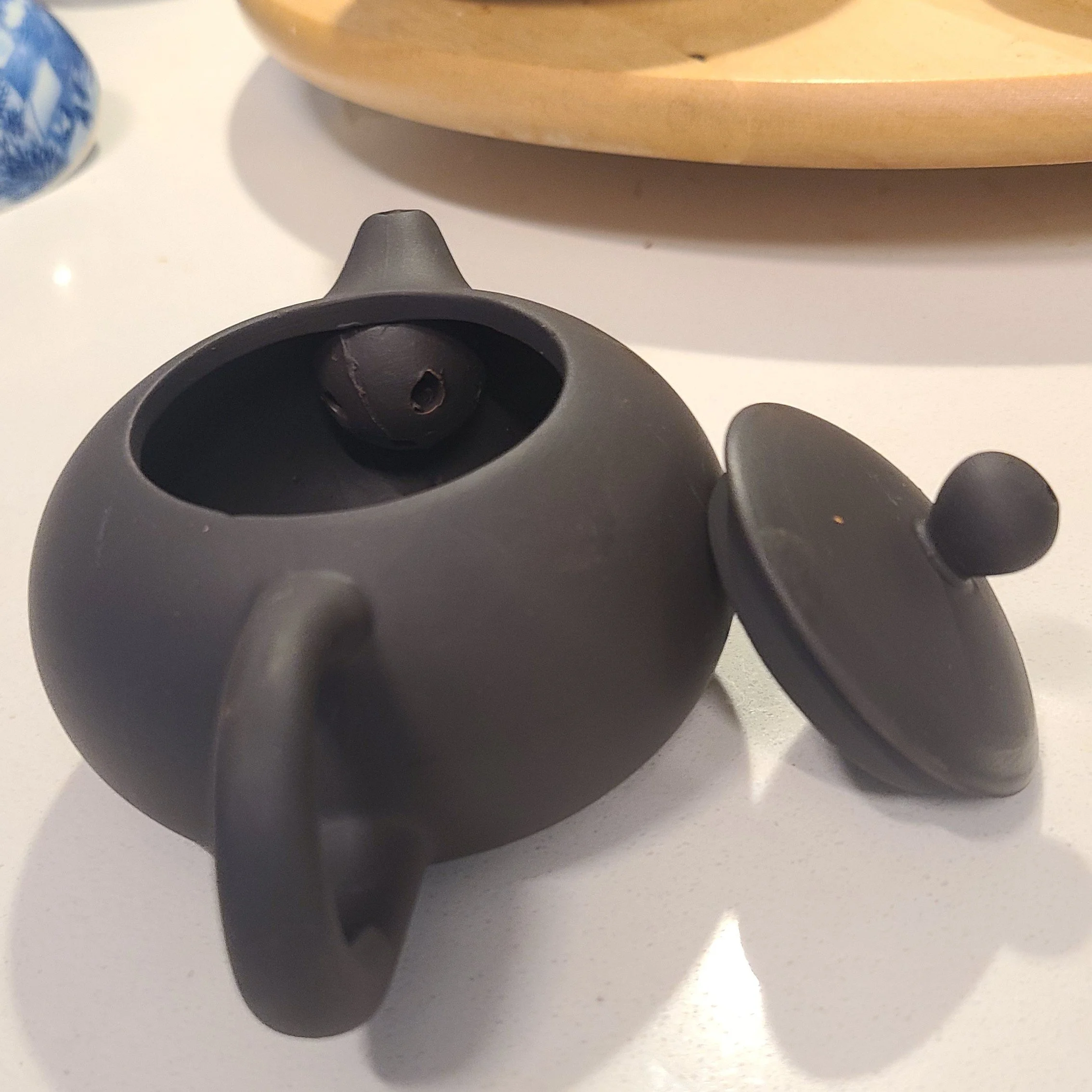
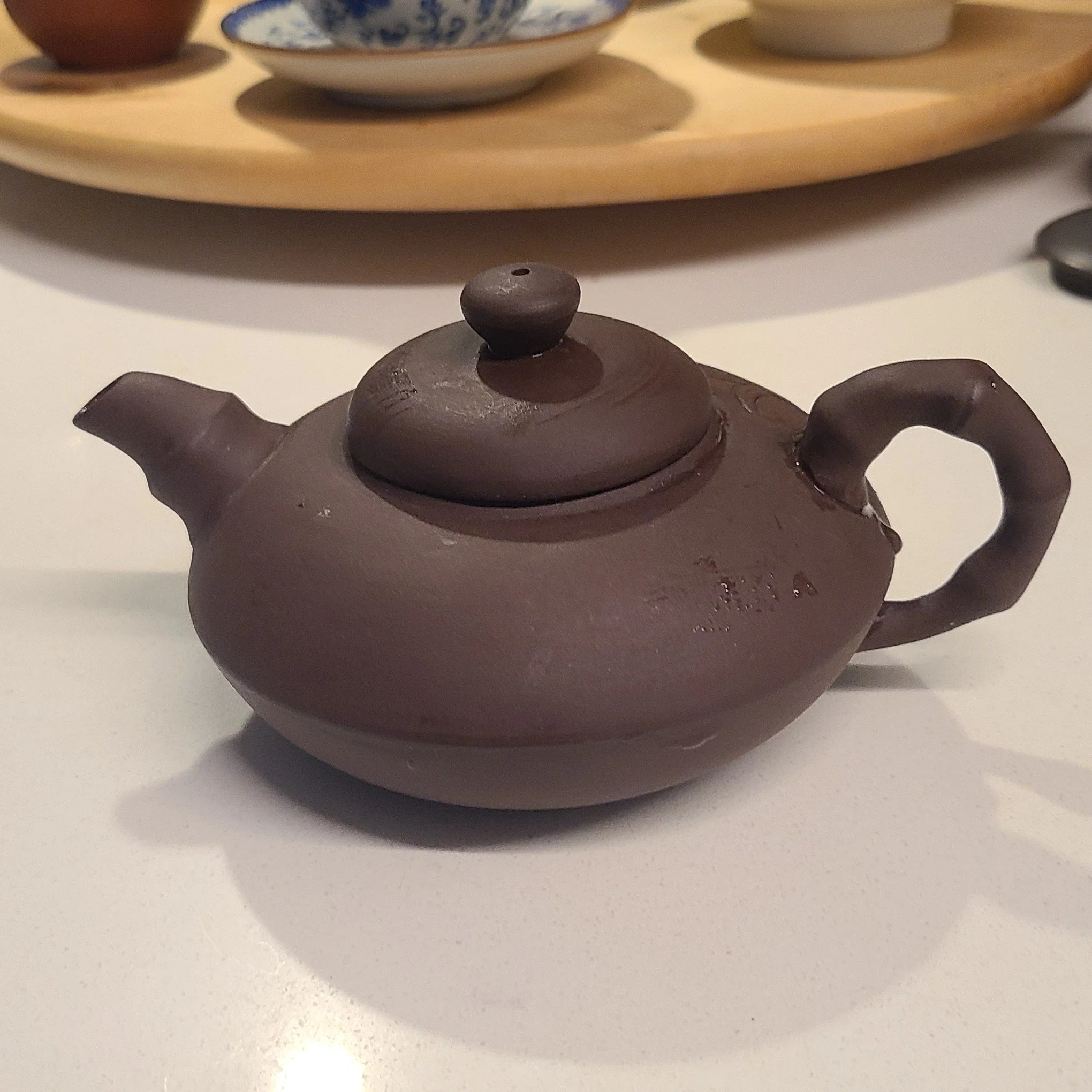
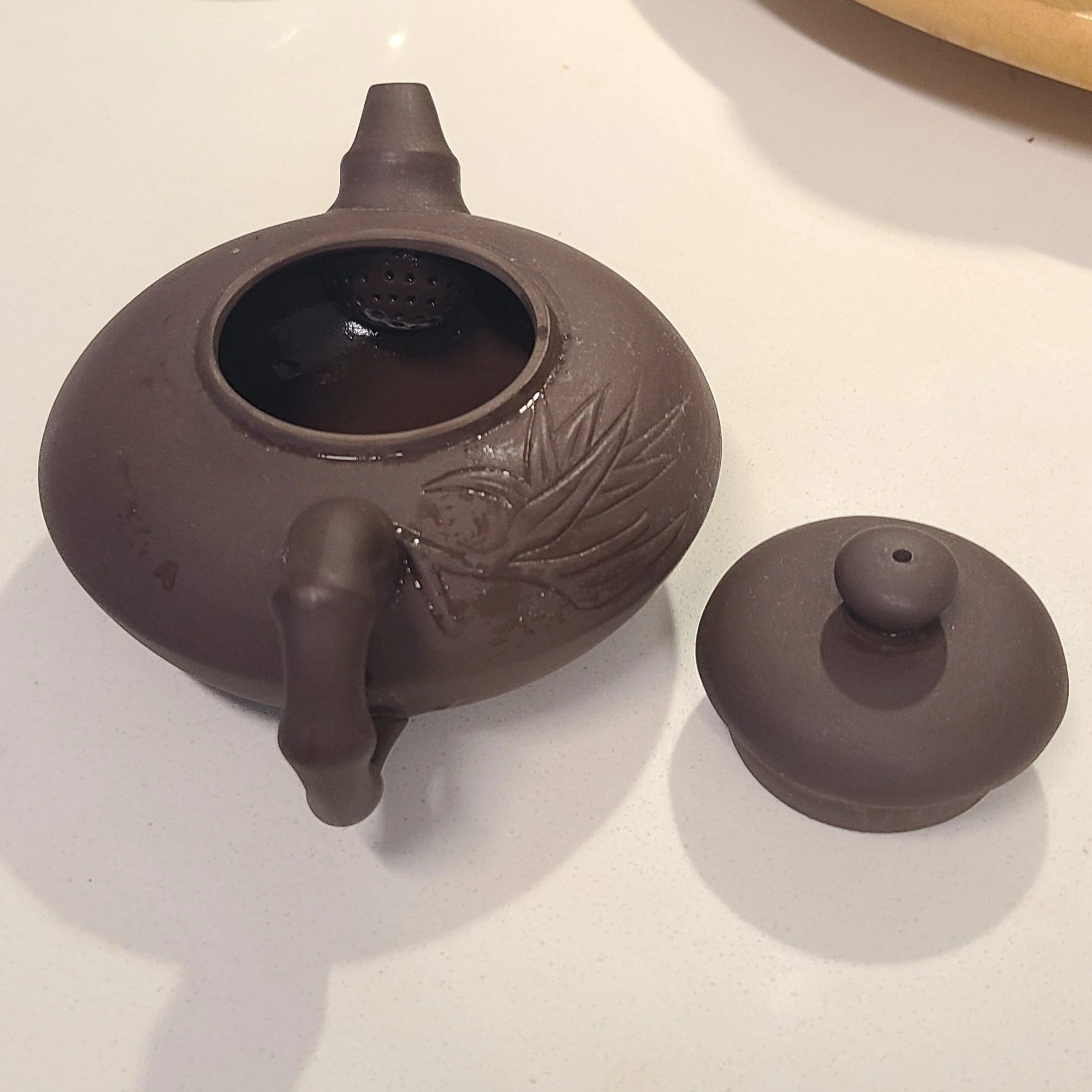
Note that I had rinsed both teapots before photographing so there is some moisture still visible.
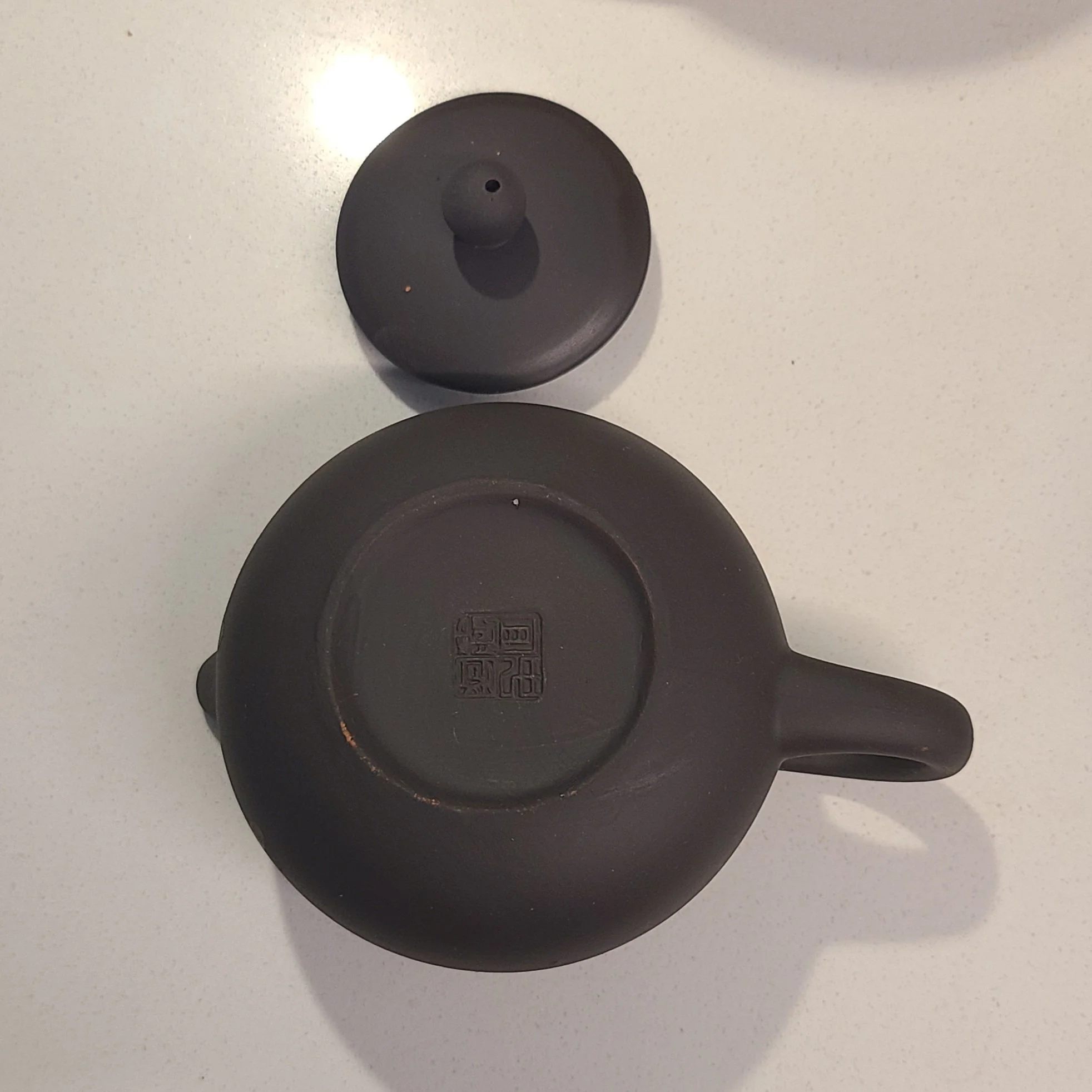
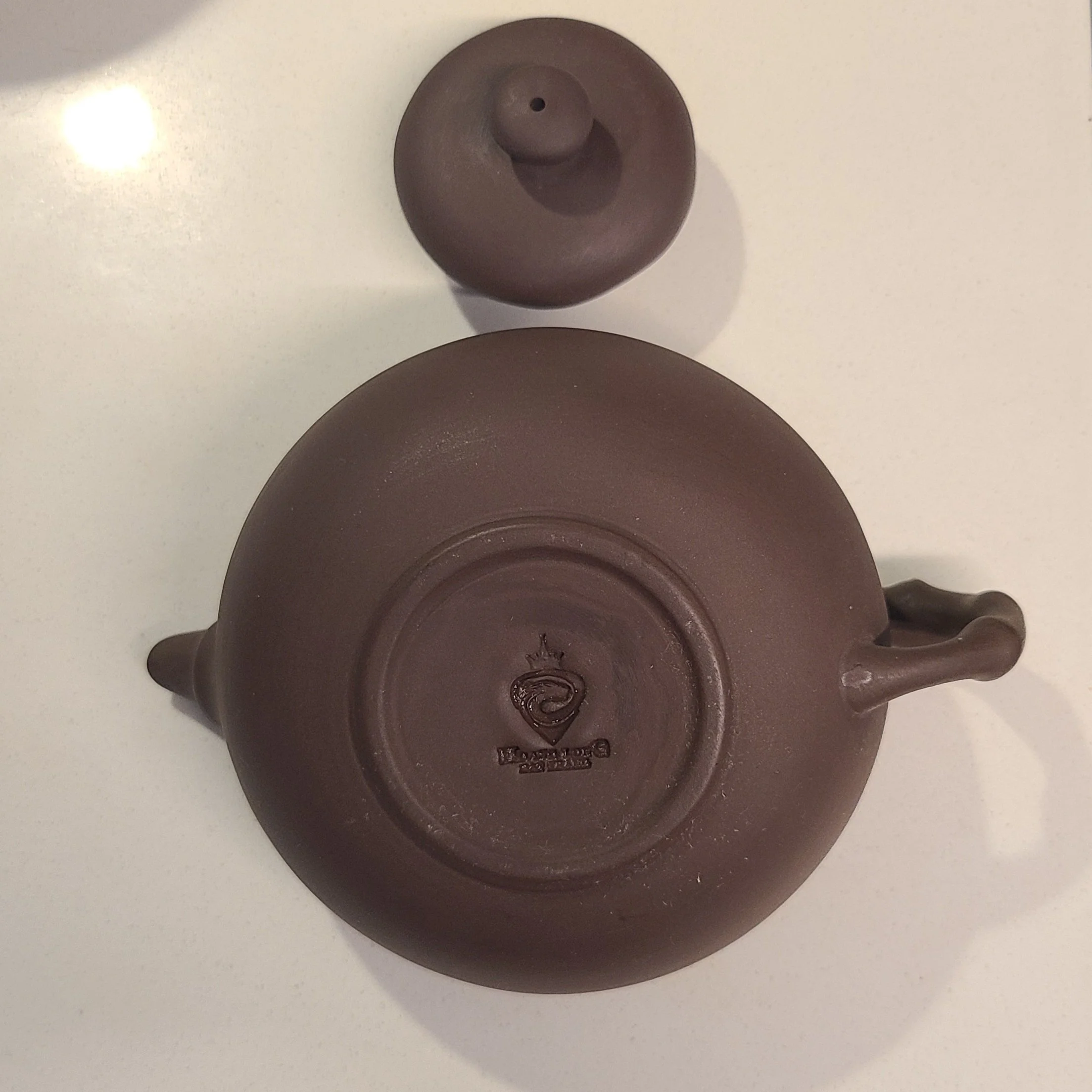
The Chinese teapot is very light, and has a rough texture. You can see some of the impurities in the clay. It came as part of a tea set and included 4 small cups of the same clay. Obviously it is of lower quality. It does have a lovely shape though.
The Vietnamese teapot I selected myself from amongst hundreds at Bat Trang village. I loved the shape, and the bamboo motif. The lid does sit on the rim and the handle when you open the pot to prevent steam continuing to affect the tea between infusions, but it is not very flat and I usually set it down on a tea towel. The pot has a very smooth texture, and is quite a bit heavier (also larger) than the Chinese pot. It is an unglazed pot but I do not think it was trying to mimic the Yixing pottery style.
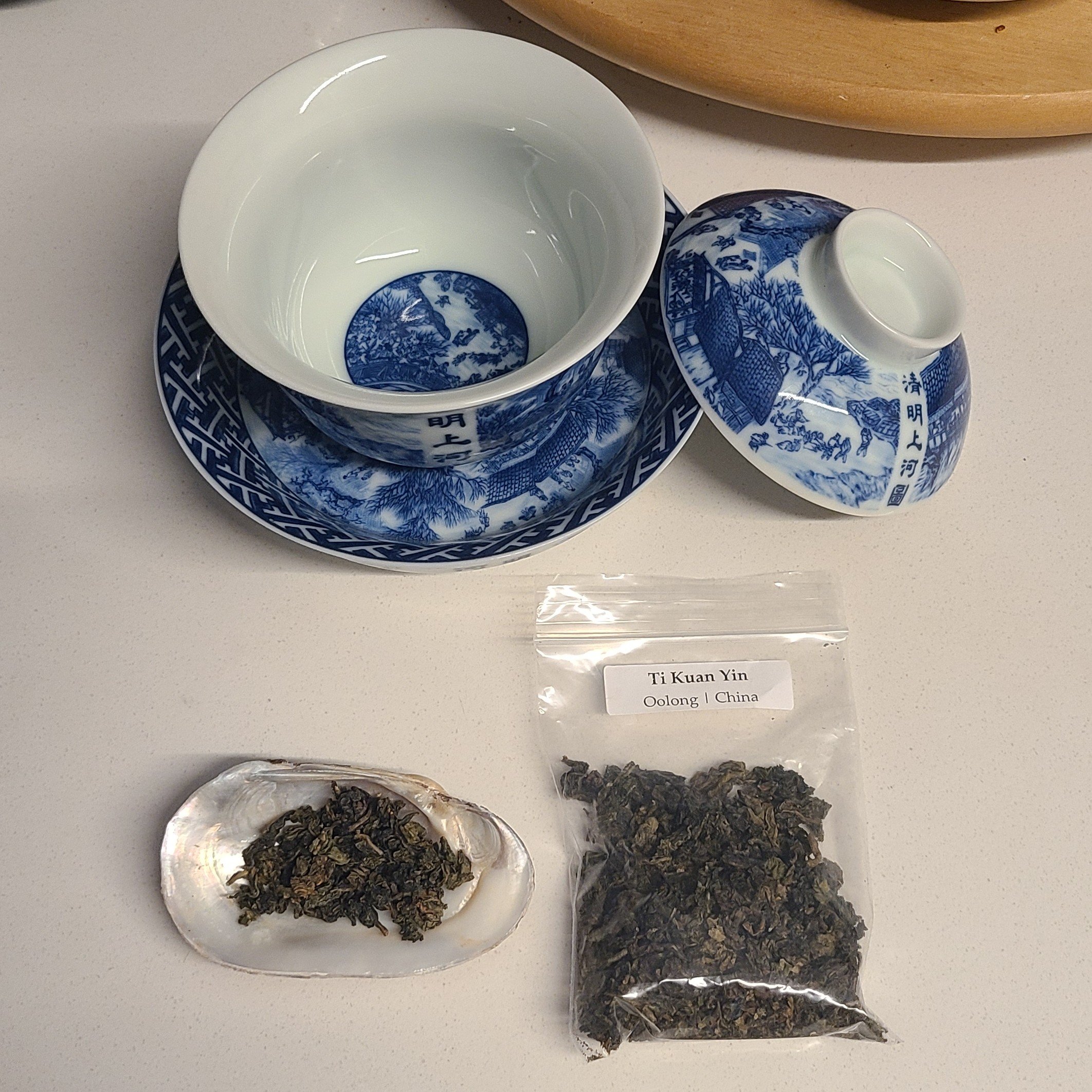
I selected an oolong for this first test, Ti Kwan Yin. I brewed it for 3 minutes in a gaiwan, and then poured out a bit into a porcelain tasting cup (for comparison) and then poured the rest equally into the two teapots. I let the tea sit for about 1 minute and then poured the tea from each pot into separate teacups. I then tasted the tea from each.
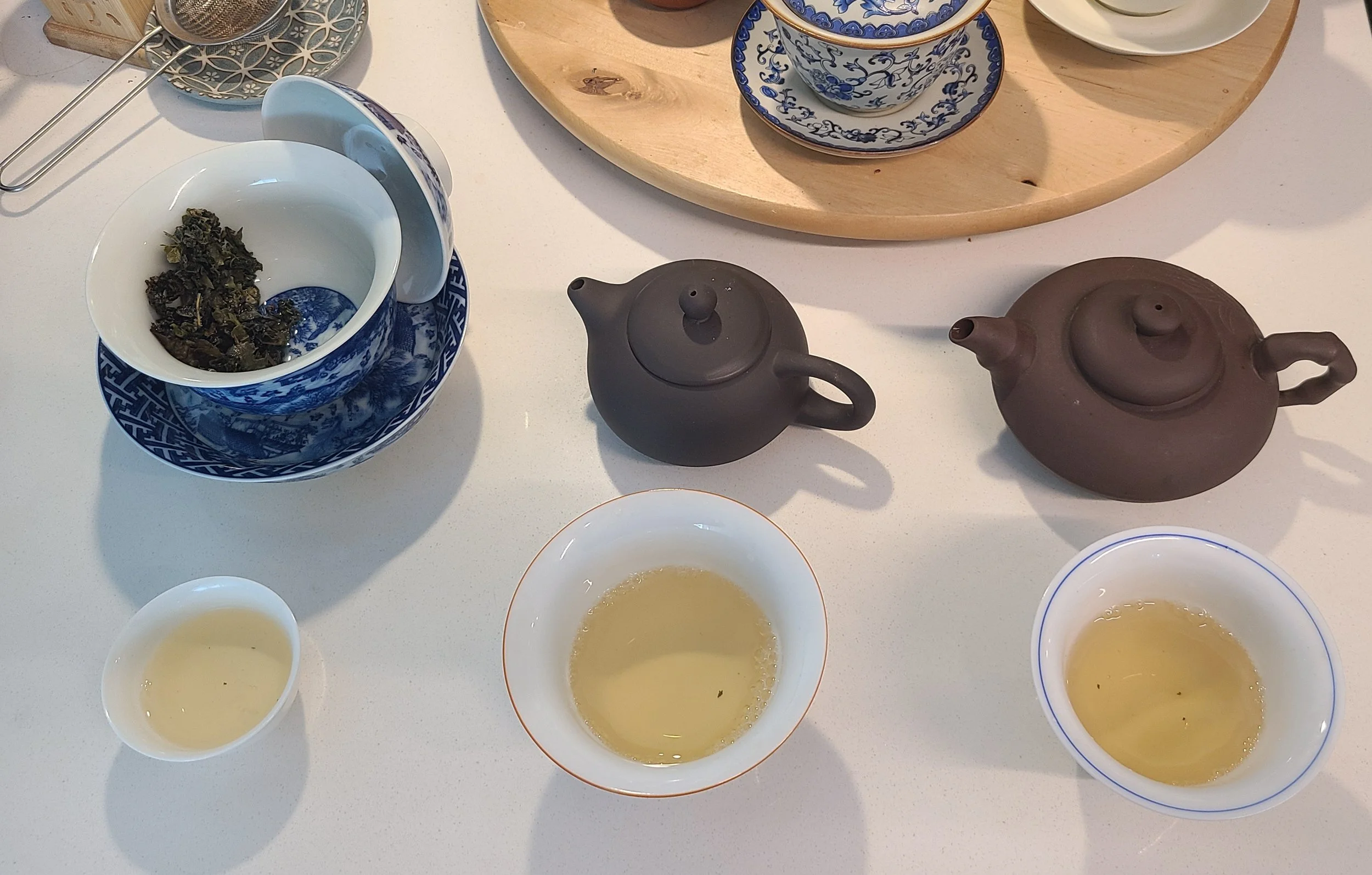
There was a noticeable difference in flavour between the 3 samples. The tea from the porcelain gaiwan gave me the smooth, sweet oolong I am used to. The Chinese teapot had a bit of astringency and rock flavour. The Vietnamese teapot (right) also seemed slightly more astringent than the tea directly from the gaiwan. If I had to choose I would keep brewing and drinking this tea from porcelain, or the Vietnamese pot. Perhaps the Vietnamese teapot needs seasoning with this tea. Notably the heat retention is lost quickly in the Chinese teapot but retains well in the Vietnamese vessel. The Chinese teapot did not work well with Ti Kuan Yin, but perhaps it would work with Da Hong Pao.[3] I’ll test that later. Or, I just keep it as a part of my collection to demonstrate the differences in ceramic quality.
Have you tried making tea with an unglazed tea pot? Did it fare well? Please share your experience(s) in the comments below.
[1] Excellent description on pairing your tea pot with a tea - Mei Leaf (2022) 10 Factors to Select Your Perfect Teapot. Video - posted SeptemberDa 17, 2022.
[2] For a description of Yixing teapot shapes - Zhen Tea (2024) Yixing Zi Sha Teapots: The Top 5 Shapes You Need to Know. Video.
[3] Da Hong Pao is a rock tea from the Wuyi Mountains in Fuji. This purple clay teapot and cups came with a Da Hong Pao gift set from Umi Tea Sets.