Caroline’s Greek Update
This past fall in October along with my friend and colleague, Debborah Donnelly, I returned to Crete and Greece where I had previously done archaeology work in the past on numerous occasions.
The weather was cooler but enjoyable in Crete; not so much in Athens where the fall weather had a cooler bent to it this year. The goal with this trip was for us to visit some familiar sites such as Knossos on Crete, and newer ones we had not had the time to go to before. We also had been discussing how fascinating ancient piracy in the Mediterranean region was (and also how unknown the topic is to many who are likely more familiar with the Caribbean based pirates of the past).
We met up in Heraklion to start and after a few days in town checking out the fine Venetian Fort remains near the port and noticing in our wanderings through old streets, just how many Ottoman and/or Venetian period structures were still standing. Although many of these are now just wall remains or stones re-used in more modern buildings. Debborah has a post on this piracy topic [1] so I will only add that Heraklion had other names in its past including Chandax (the Byzantines named it this after removing the Arab pirates who had run Crete basically as a base for trafficking slaves and stolen cargo).
Sadly there are no monuments or remains that we could find pertaining to this darker history in the island’s past, although we think a museum exhibit in future might be a worthwhile endeavour teaching visitors more about this history. The Fort is a magnificent structure and many tourists still flock to it to gaze out into the sea beyond. Nearby on one main street, there are partial remains of what look to be warehouses for storing boats perhaps or other cargo. There is one plaque posted by one of the walled remains but little else to describe its role.
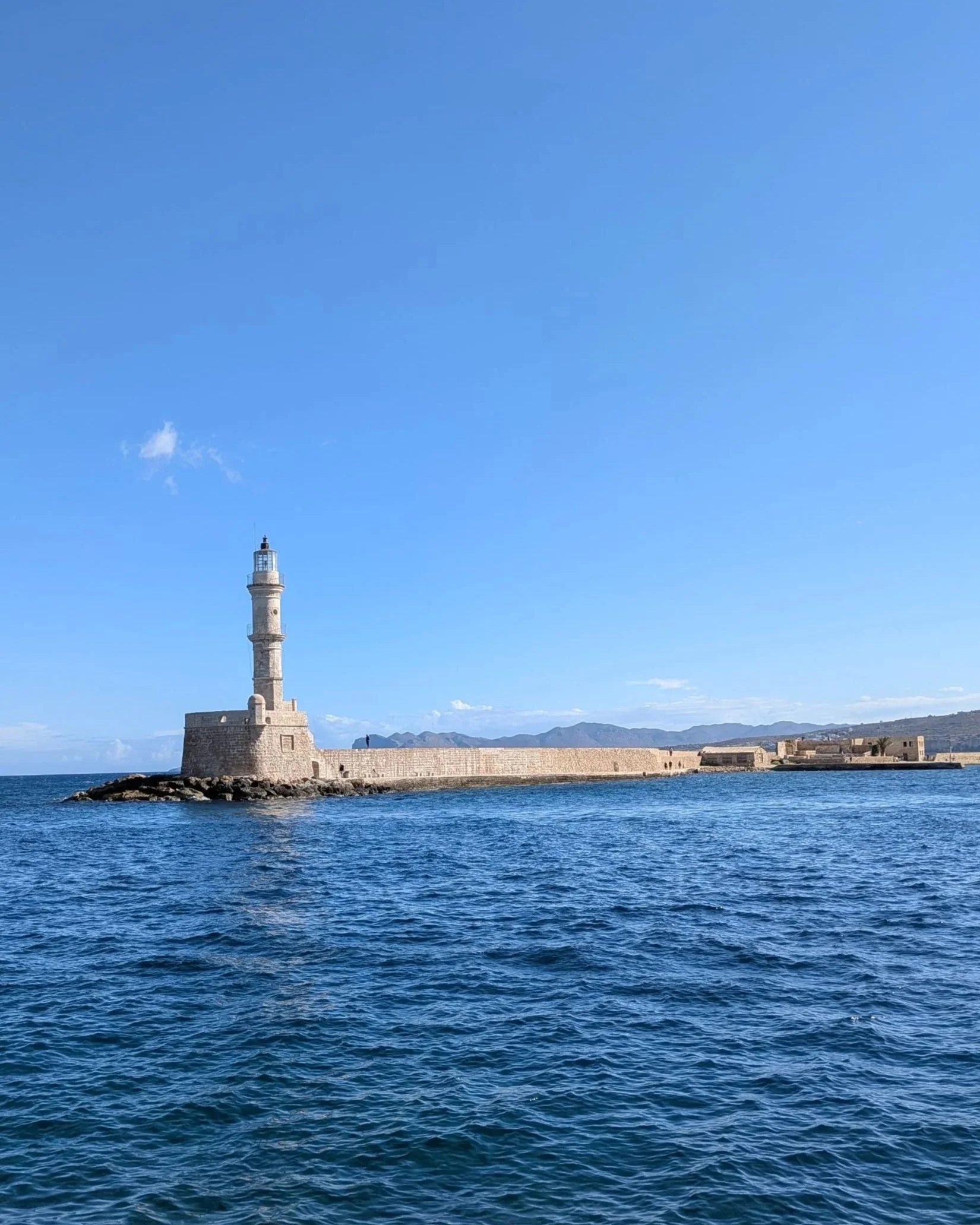
Chania lighthouse
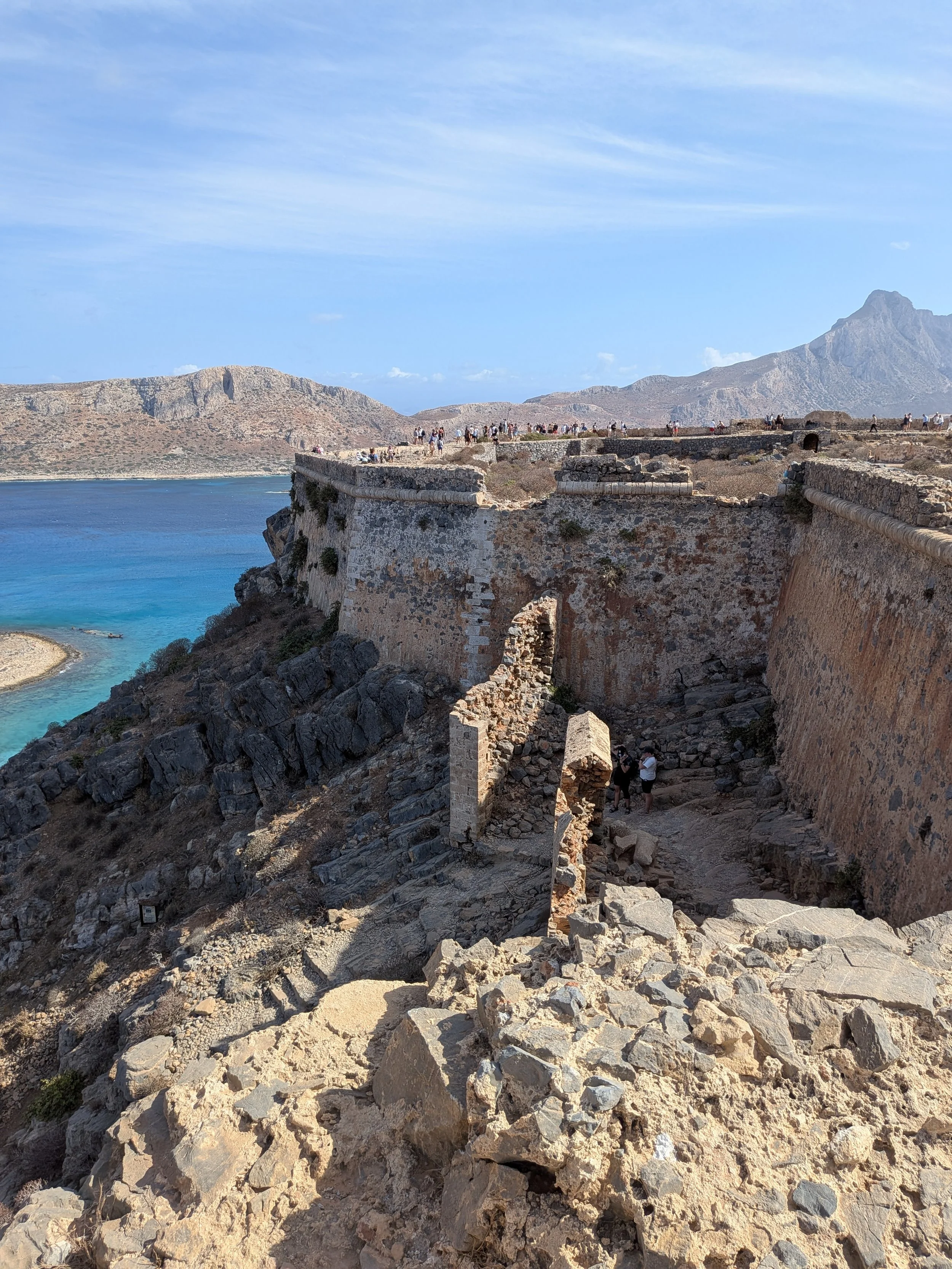
We journeyed as well to Chania on the western side of the island, where we saw more Venetian structures and history, including a lighthouse. We then went by ferry to Balos and the island of Gramvousa aka ‘Pirate Island.’
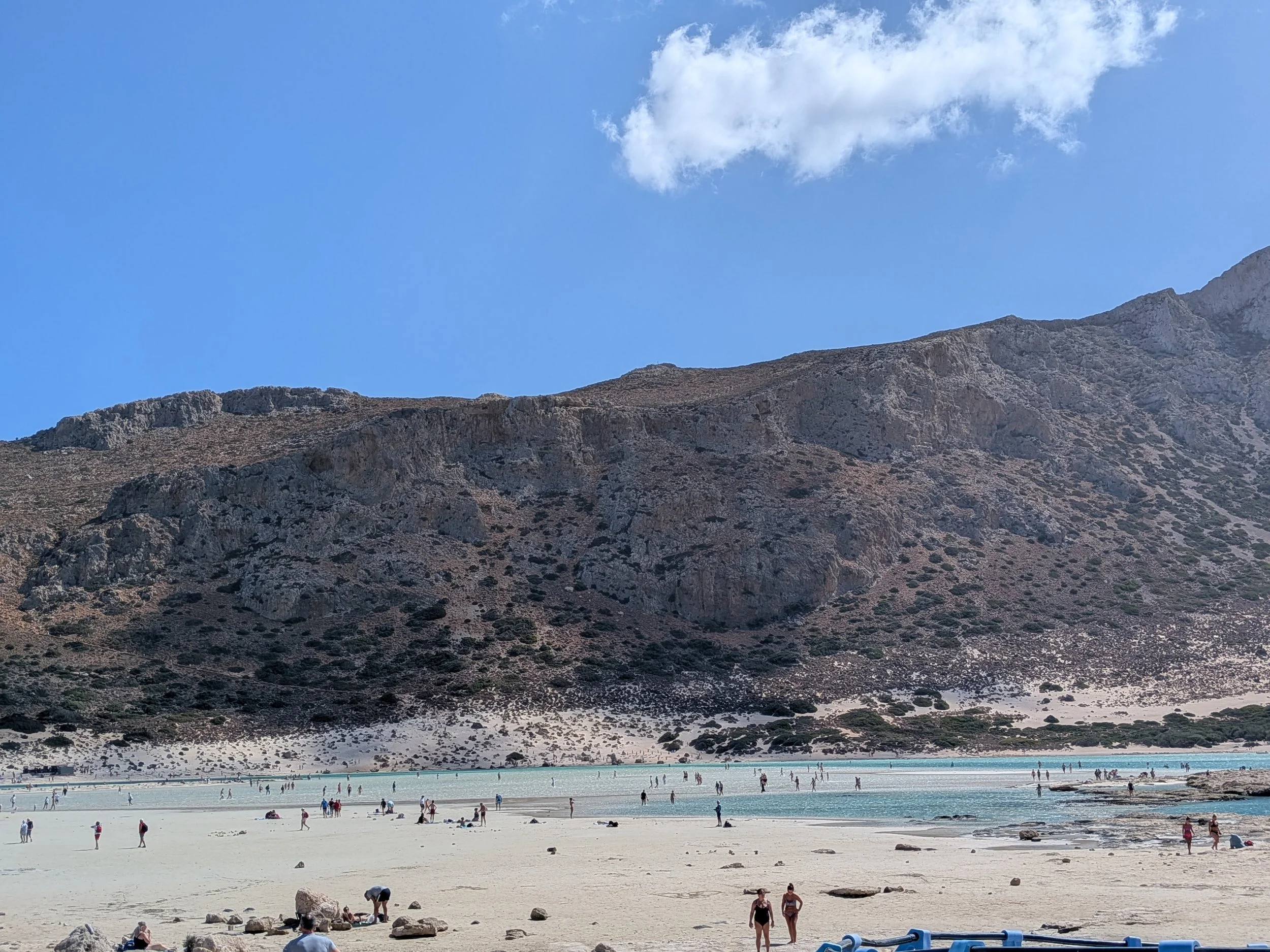
Balos has a gorgeous tropical lagoon where one can swim or shoot some scenic photographs. Its isolation and terrain which really does not permit farming, has led to no settlers so it is a rare Greek island. Perhaps this beautiful white sand island was the equivalent of a Florida break for the pirates on nearby Gramvousa.
Gramvousa, despite its relatively small size, has had a history of quite a few settlers who claimed ownership over it. It’s a rocky island surrounded by some very dangerous reefs which led to many shipwrecks in the past. On the top of the island up some stone stairs, sits a Venetian fort and church which allows for wonderful views of the sea and no doubt, incoming boats. It changed hands throughout the medieval period up to the 19th century between the Ottomans, Venetians and finally, a group of Cretan rebel fighters who seized it and used it as a base to carry out attacks on the ruling Ottoman forces in Crete.
Not being able to grow food, they quickly turned to piracy of ships to obtain food and necessary supplies. This went on for a few years until the Europeans (English and French) along with the Greek forces, took the island back from the rebels/pirates.
There are no buildings from this period unfortunately or any plaques or information on that time period on the island. Perhaps a plaque or some interactive display might help in educating the visitors more on the pirates’ operations on the island and even, what happened to them once arrested, etc?
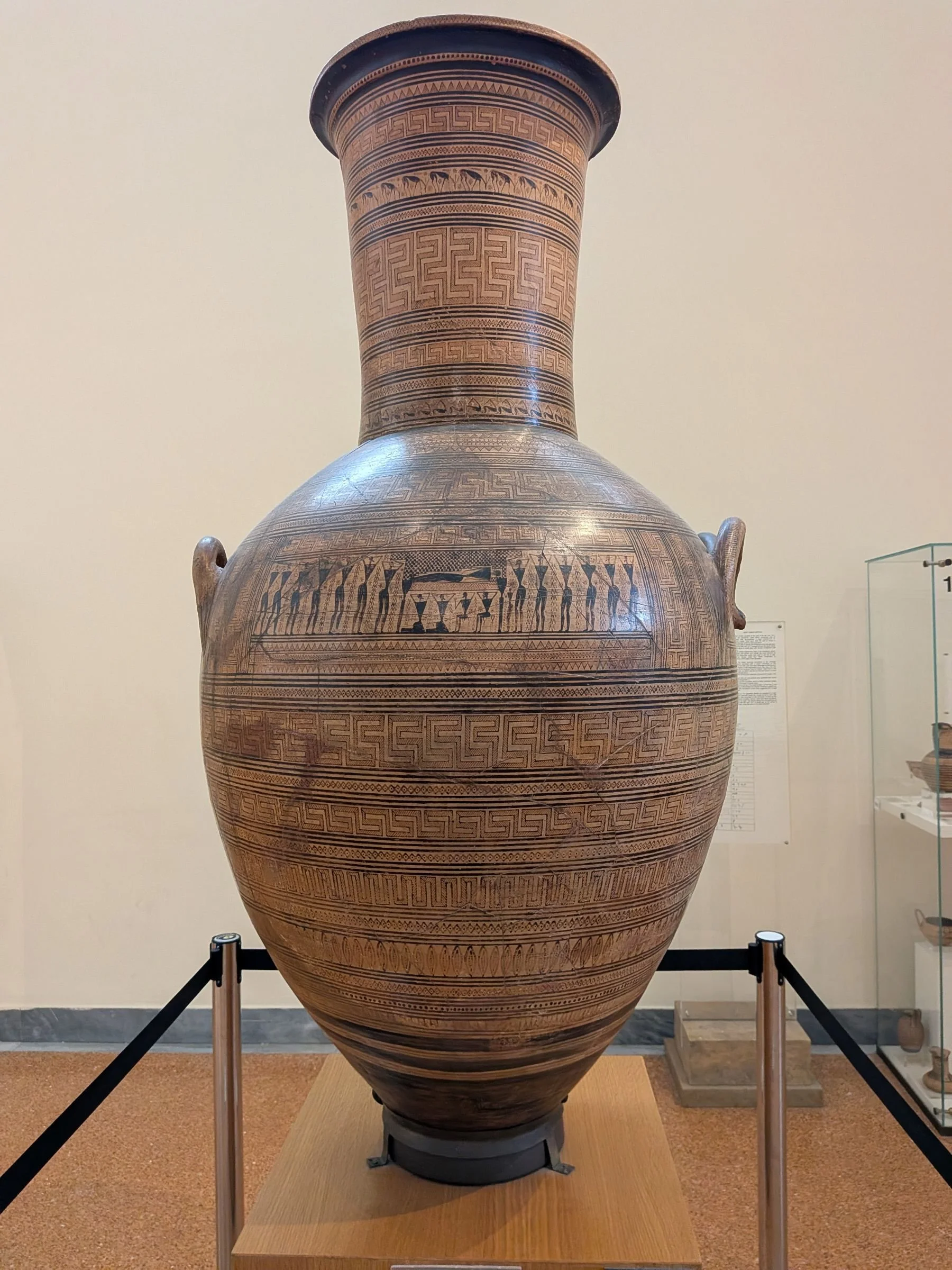
After about a week on Crete, our next phase of the journey led us back to Athens for a few days and then to ancient Corinth where we stayed in the area of Ancient Corinth (now part of a small village) at the ASCSA Archaeology research centre. In Athens, we did visit the National Archaeological Museum, where you can find a very wide range of ancient artifacts and statuary, many of them quite famous. There are large displays of ceramics covering all the periods including of course, the Classical and older Archaic and Minoan periods. The conservation work on many of these is remarkable and it’s great to see intact kouroi statues up close to admire the craftsmanship.
We also went to one of my favourite sites, the Agora in Athens. This site is excavated yearly in summer by the American School of Classical Studies as a live study and fieldwork site for students and some volunteers. So over the decades, quite a large area has been opened up. There is a nice smaller museum here too explaining the Agora history and origins etc. Agora means marketplace in ancient Greek.
Our final part of the trip took us to Corinth and to the top of the hill, ancient Corinth where I had worked briefly in the past at the museum on some collections management. It is still one of the more stunning sites in Greece and draws countless tourists even in fall.

It also brings in Christian tourists as it was the location of St. Paul’s preaching (Corinthians book in the Bible) and despite attempts to imprison and even have him executed by the Romans, he was spared and continued to work in Corinth and the Peloponnese.
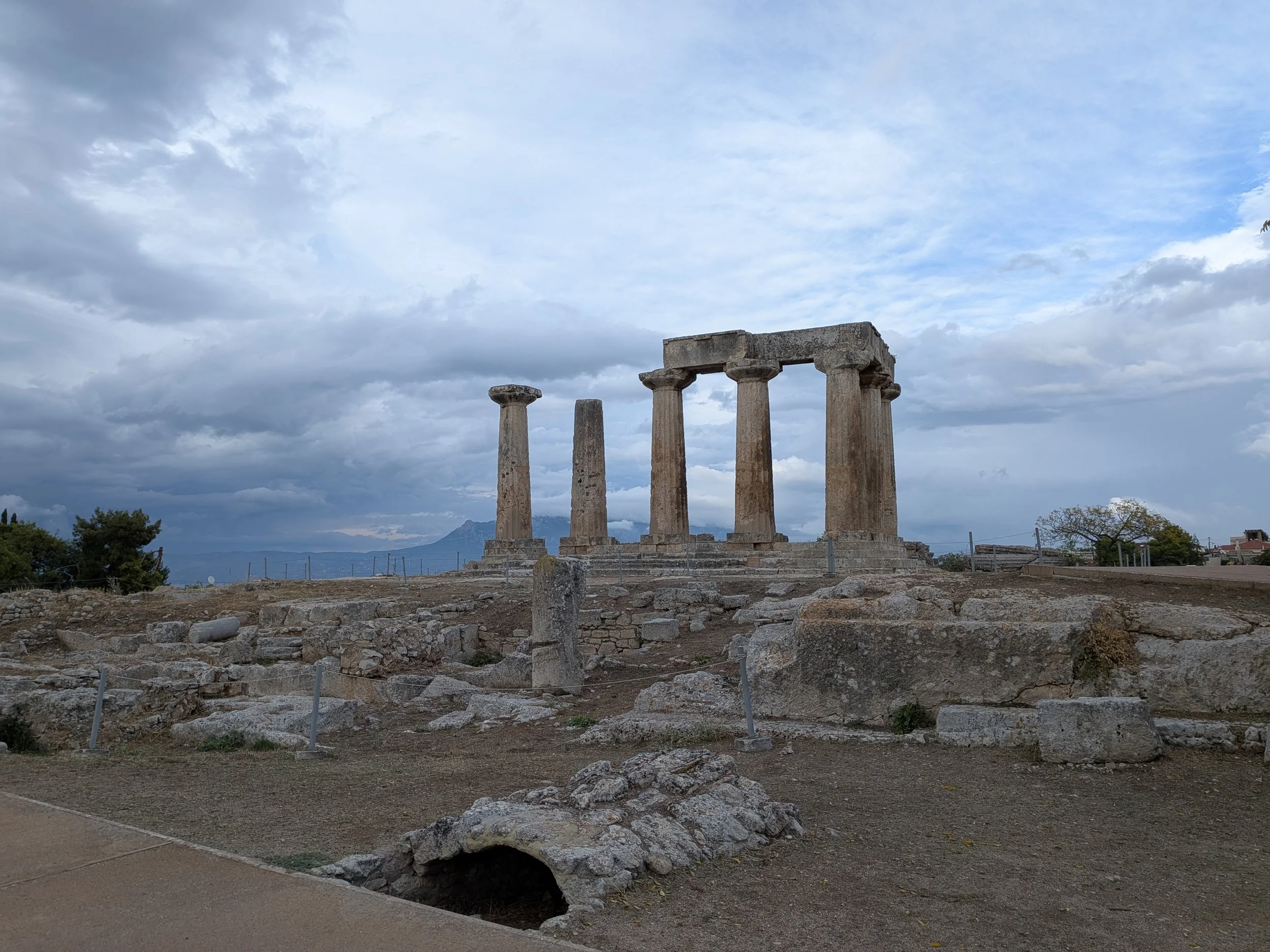
Temple of Apollo, Corinth
The Temple of Apollo or rather what remains of it, still stands front and centre in the site and Corinth is also excavated yearly by the ASCSA as well in summer. There is much more to the site, although excavations are limited by private land ownership. Corinth is a very large site and was lived in during both the Greek and Roman periods so it’s definitely worth checking out. Admission fees by the way to many of the larger sites now have increased greatly so you’re looking at 20 euros for some. There are some tourist passes I think so look into those if you plan on visiting many sites. It will save you money.
We also spent a day visiting the infamous Corinth Canal (still remarkable to see:) and walked to a nearby lesser known site, Isthmia. Sitting off a road which connected the city of Corinth with the Isthmus, the site was discovered by Oscar Broneer and first excavated in 1952 although it doesn’t look as if regular excavation work has been undertaken yearly.
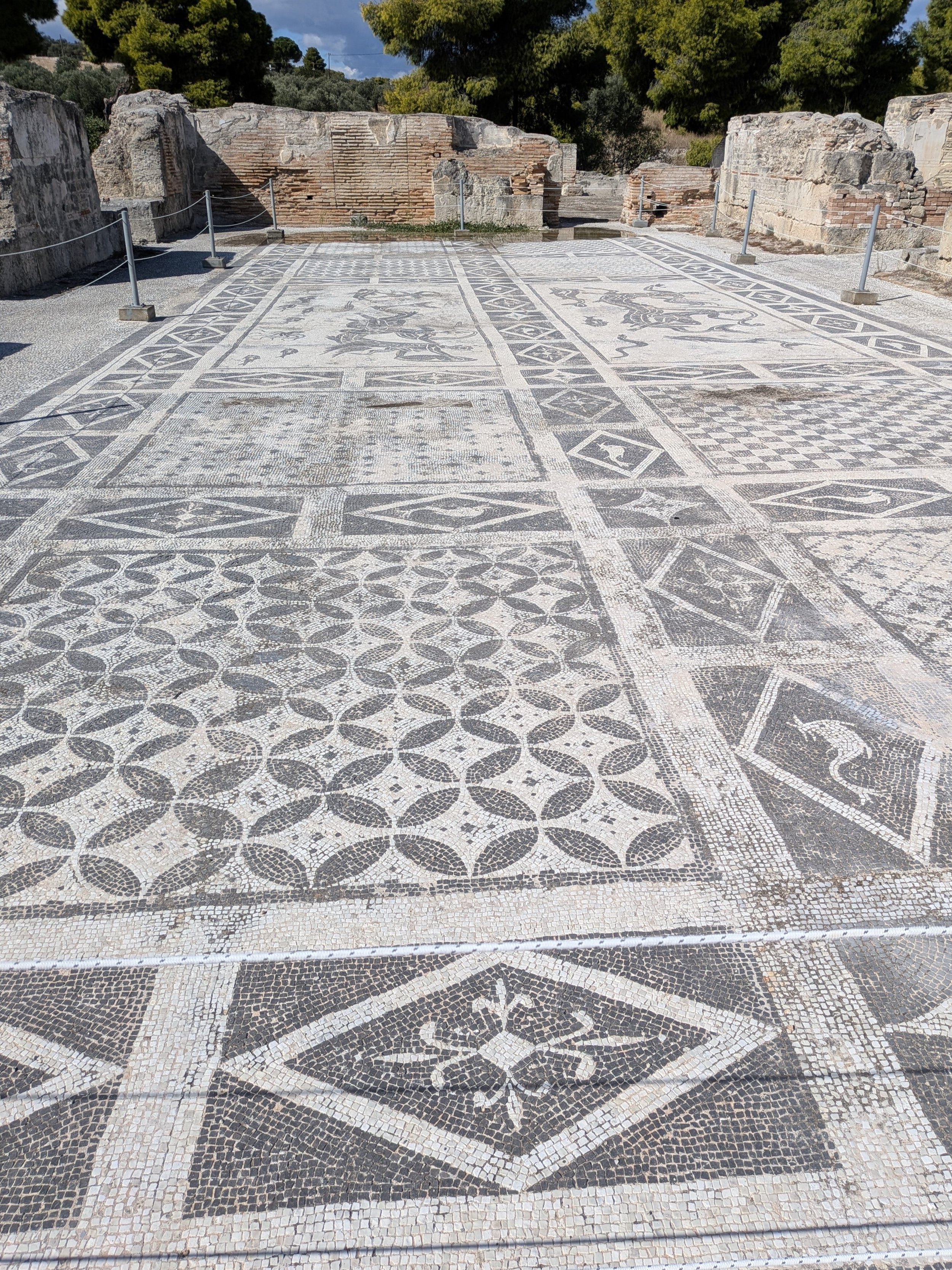
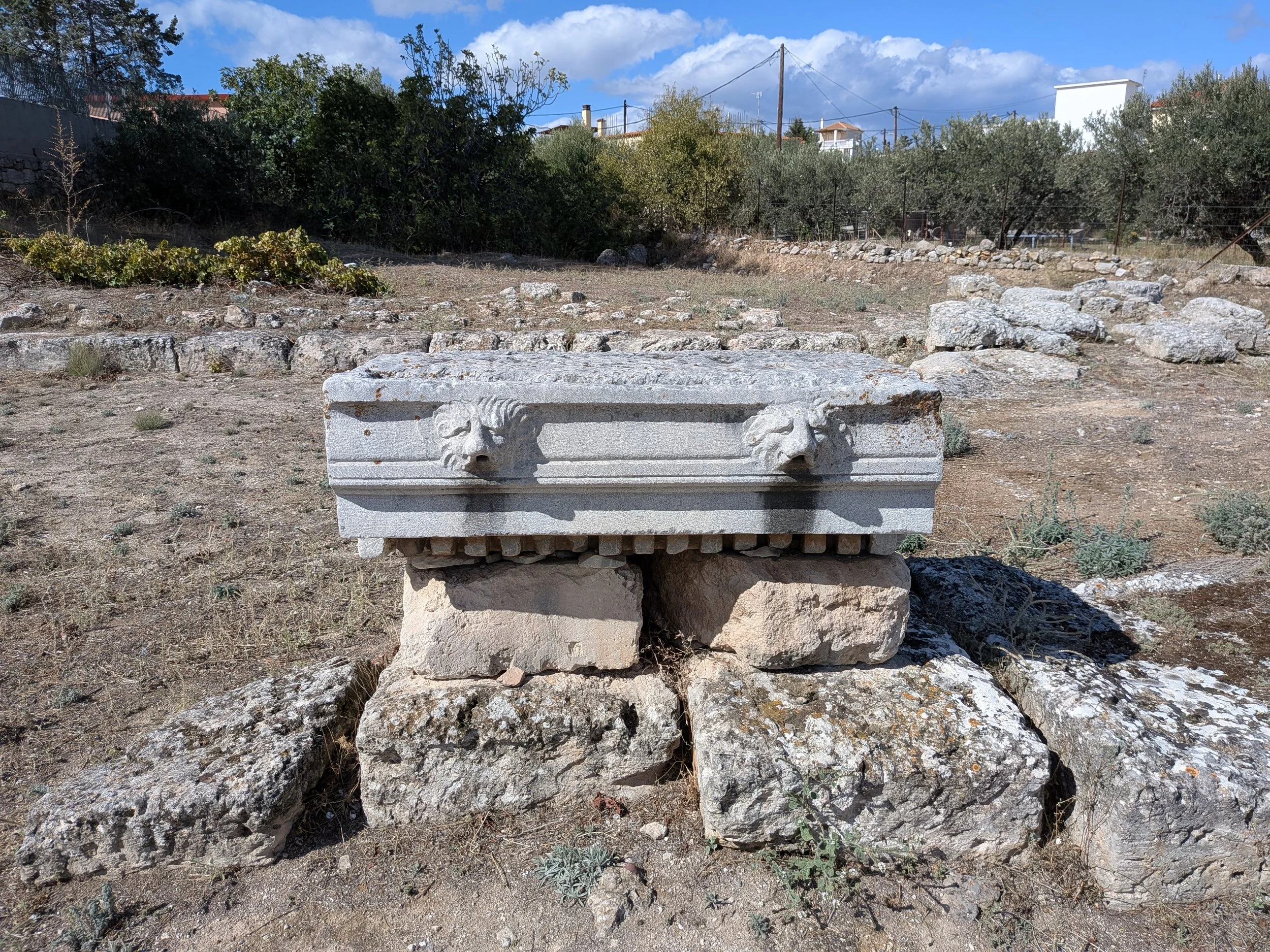
There are the remains of a Temple dedicated to Poseidon going back to the 11th century BC, although the site underwent some destruction in 146 BC when the Romans invaded Greece.
The Romans did alter the shrine there and added a bath which is one of the most photogenic parts of the site, having undergone conservation work on the floor mosaic. A long wall called the Hexamilion was also constructed running along the road all the way into modern Corinth (what remains of it is mostly stone blocks that hadn’t been removed through 2000 years of settlement).
Like the Olympics, there were athletic games held every two years (the Isthmian Games) dedicated again to Poseidon. Athletes competed in the usual classical sports such as wrestling, races, boxing, chariot races etc. An arena or Hippodrome is yet to be found and may never be found seeing as the modern town sits on most land near the site.
A small museum inside the building contains some of the statuary and artifacts excavated by the American teams over the decades and plaques explain its history. A nice site but sadly one not visited much it seems by tourists so definitely a hidden gem.
We also had a private tour to the remains of a Temple for Demeter in ancient Corinth up on the sloped hills leading to the Venetian Fort at the top. Not much was intact there but we did see one of the ‘underground’ cave dining areas where worshippers sat and ate food to celebrate the goddess (who was the goddess of agriculture). Stone benches still are visible but there are no signs or plaques explaining the significance of the site or what rituals the women who attended it might have participated in.
All in all, a busy road trip on Crete and on the mainland with still so much more to see in future! Not to mention how we miss fieldwork and being part of a survey team.
You can see many of Caroline’s shorts from the trip on her YouTube channel here: https://www.youtube.com/@thetemp5627